
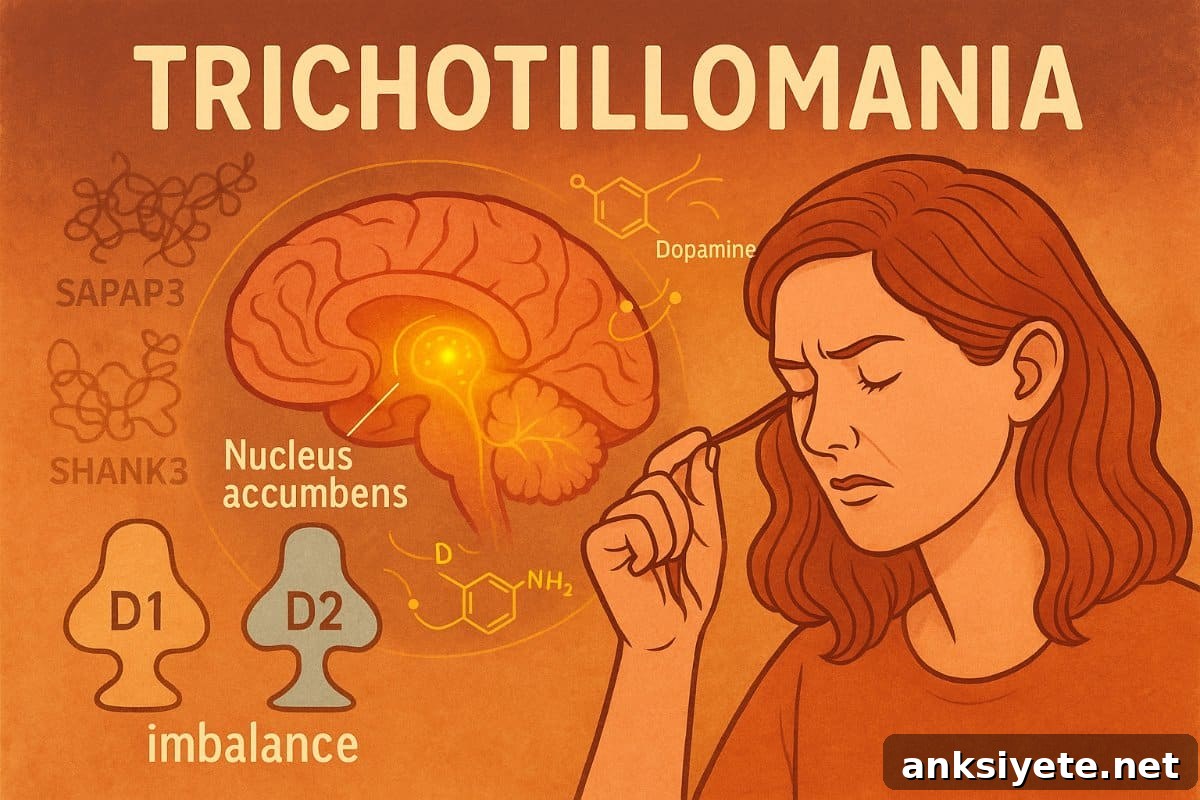
Summary: A recent study using Sapap3 knockout mice provides new insight into the neural mechanisms that may underlie trichotillomania (TTM), or hair-pulling disorder. These genetically modified mice exhibited compulsive grooming, increased aggression, and stress-sensitive behaviors that parallel core features of human TTM, with particularly pronounced effects in females.
Neural recordings and molecular analyses revealed reduced activity in the nucleus accumbens (NAc), imbalanced dopamine signaling, and altered interactions among synaptic scaffold proteins. Together, these results point to reward-circuit dysfunction and dopaminergic dysregulation as promising targets for future treatments of compulsive hair-pulling.
Key facts
- Circuit dysfunction: Sapap3 knockout mice showed reduced neuronal activity in the nucleus accumbens, a central hub for reward processing and habit control.
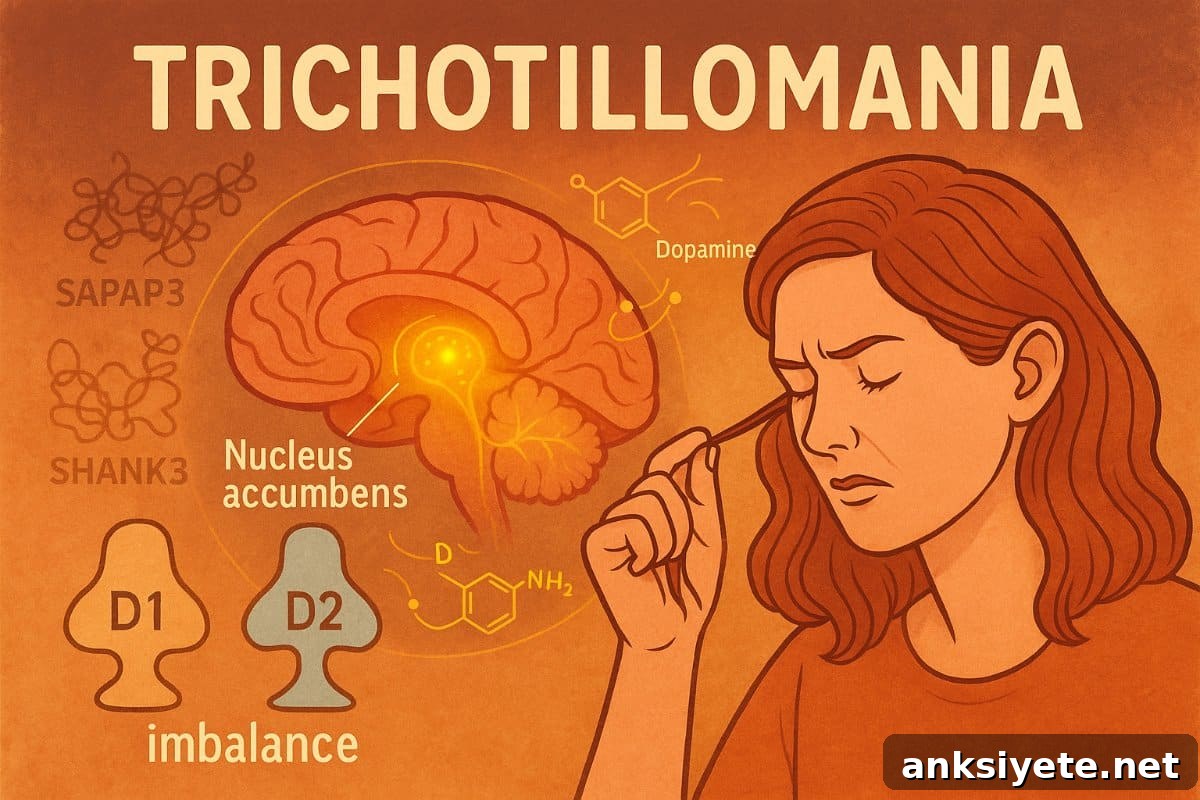
- Dopamine imbalance: The study found elevated dopamine levels, increased D1 receptor expression, and decreased D2 receptor expression in the NAc, a profile that may favor repetitive motor behaviors.
- Complex modulation by oxytocin: Acute oxytocin administration lowered aggression and the number of grooming episodes but paradoxically increased total grooming time, highlighting dose- and context-dependent effects.
Why this matters
- Advances biological understanding: The findings clarify how NAc circuit dysfunction and dopamine signaling could drive compulsive hair-pulling in TTM.
- Aligns with prior research: These results build on earlier studies linking basal ganglia dysfunction and compulsive grooming in obsessive–compulsive spectrum disorders.
- Therapeutic implications: Interventions that restore reward-circuit balance or selectively modulate dopamine and oxytocin pathways may offer new treatment strategies, but effects could be sex- and context-specific.
Source: Neuroscience News
Trichotillomania (TTM) is a psychiatric condition classified among obsessive–compulsive and related disorders in the DSM-5. Affecting roughly 1.7% of adults, TTM involves persistent urges to pull out one’s own hair, leading to noticeable hair loss and significant distress. Behavioral therapies can help, but pharmacological options are limited and the underlying neurobiology remains incompletely understood.
Sapap3 knockout mice mirror key features of TTM
Sapap3 is a synaptic scaffold protein concentrated in regions of the basal ganglia, including the nucleus accumbens. Mice lacking Sapap3 displayed a cluster of behaviors that resemble human TTM: prolonged grooming under stressful conditions, more pronounced anxiety-like behavior, and elevated social aggression. Female knockout mice showed especially long grooming episodes, reflecting the greater prevalence of TTM in women.
Behavioral testing demonstrated that aversive stimuli—such as bright light—amplified repetitive grooming. In social dominance assays, Sapap3-deficient animals more often displaced wild-type mice, indicating a dominance or aggression bias under challenge.
Dopamine imbalance and circuit hypoactivity
To investigate circuit dynamics, researchers used fiber-optic calcium imaging to monitor NAc neurons during grooming. Sapap3 knockout mice exhibited substantially lower calcium peak responses than controls, indicating hypoactivity in this reward-processing region. Molecular profiling revealed elevated dopamine concentration in the NAc, upregulation of D1 receptors, and downregulation of D2 receptors—an arrangement that may favor direct-pathway activation and repetitive motor output. The transcription factor CREB was also elevated, a change linked to amplified stress responses.
The study further identified disrupted interactions between SAPAP3 and SHANK3, another postsynaptic scaffold protein. SHANK3 levels increased in knockout animals, which the investigators interpreted as a possible compensatory response to maintain synaptic stability in the face of SAPAP3 loss.
Oxytocin’s complex role
Because oxytocin is well known for modulating social behavior and anxiety, the team examined its acute effects in Sapap3 knockout mice. Results were mixed: a single dose reduced the number of distinct grooming bouts and lowered aggressive behavior, yet total grooming duration rose. These seemingly contradictory outcomes underscore oxytocin’s context- and dose-dependent influence on neural circuits that control social interaction and repetitive actions.
Implications for TTM research and treatment
This study narrows the focus on NAc circuit dysfunction, dopaminergic imbalance, and altered scaffolding protein interactions as mechanisms that may drive compulsive hair-pulling. It also raises key questions about sex-specific vulnerability, the functional role of SAPAP3–SHANK3 coupling, and whether manipulating oxytocin signaling would benefit or exacerbate symptoms depending on timing and dose.
Limitations of the work include modest sample sizes, a predominance of male subjects in some molecular analyses, and a lack of chronic-treatment data. Nevertheless, by integrating behavioral, circuit-level, and molecular evidence, the study advances a biologically grounded framework for future, more targeted interventions in TTM.
About this neuroscience and trichotillomania research news
Author: Neuroscience News Editorial Team
Source: Neuroscience News
Contact: Neuroscience News Editorial Team
Image: Image credited to Neuroscience News
Original research: Open access. Title: “Exploring the nucleus accumbens circuit and oxytocin therapy in a Sapap3 knockout mouse model of trichotillomania” by Yuan Wang et al., Scientific Reports.
Abstract (summary)
Using Sapap3 knockout mice to model TTM, the study reports that under aversive conditions these animals show increased anxiety-like behavior, longer grooming durations, impaired social interactions, and greater aggression compared with wild-type controls. Calcium imaging revealed reduced NAc neuronal activity, while molecular assays documented dopaminergic alterations (increased dopamine, D1 upregulation, D2 downregulation), elevated CREB, and compensatory SHANK3 upregulation. Acute oxytocin reduced grooming bout frequency and aggression but increased total grooming time. Female knockout mice displayed more severe grooming than males. Overall, the results emphasize NAc circuit dysfunction and nuanced oxytocin effects as important considerations for future TTM research and treatment development.