
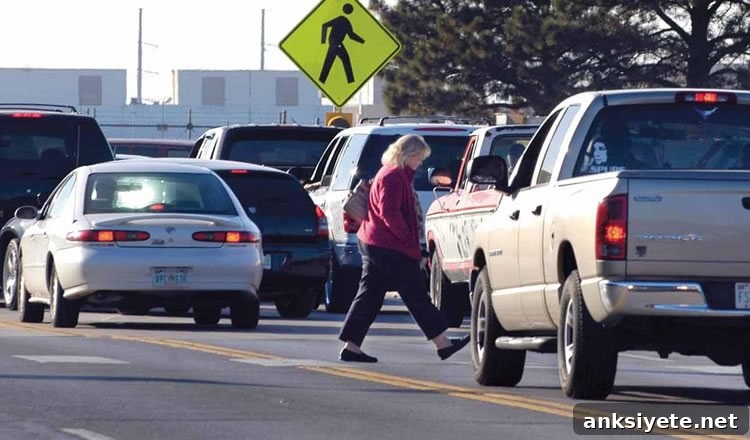
Summary: Researchers examine how the brain makes split-second decisions during stress and how those reactions shape behavior.
Source: Horizon.
Making decisions is an everyday activity, yet many choices—whether to hit the snooze button or how to respond to an unexpected threat—are made in an instant. New research is revealing how those rapid decisions arise in the brain.
Professor Karin Roelofs, a psychologist at Radboud University in Nijmegen, Netherlands, studies the freeze response and the subsequent fight-or-flight reactions that prepare the body for confrontation or escape. She argues these automatic responses have been underappreciated in psychology despite their broad influence on more complex choices.
These defensive reactions evolved in animals and early humans to survive predator encounters, but they remain relevant today. Freeze and fight-or-flight responses can shape everyday interactions—such as whether someone approaches a stranger—or critical professional judgments, like a police officer’s choice to use lethal force.
Over five years, Prof. Roelofs led experiments as part of the Neurodefense project to identify what happens in the brain when people make snap decisions under stress. The team first developed objective ways to measure the human freeze response. In one task, participants played a shooting-style game where they either could respond to threats or felt helpless. A mild electric shock simulated being hit after an error, and researchers tracked posture and heart rate as primary indicators of the freeze state.
The game was later repeated while participants were scanned in an MRI. The images showed that connections between midbrain regions and the amygdala—the brain’s fear-processing center—play a key role in freezing. Frontal brain regions become active when a person moves from freezing into action. These human findings mirror neural patterns previously observed in animal studies.
“This was the first demonstration in humans that similar neural circuitry underlies those defensive reactions,” Prof. Roelofs said, highlighting how the work bridges animal research and human neuroscience.
Following those results, the team explored how freeze-fight-flight responses differ in people with psychological disorders. They examined hormonal influences—such as testosterone—on the impulse to fight, and whether individuals with social anxiety or, at the opposite extreme, psychopathic traits show hormonal differences.
The researchers found that people with severe anxiety often have lower testosterone levels. In small-scale tests, administering testosterone reduced an immediate avoidance tendency. Those findings prompted anxiety clinics to begin trials combining testosterone supplementation with therapy for social anxiety disorders, aiming to reduce maladaptive avoidance while patients receive standard treatment.
Developmental studies
Beyond immediate reactions, Prof. Roelofs has studied how defensive responses develop over time. Her team followed children from 15 months to 17 years to determine whether atypical freeze-fight-flight patterns can be detected early. Data from the Neurodefense cohort revealed that infants who either froze excessively long or did not freeze at all when stressed were at higher risk of developing anxiety symptoms during adolescence.
Although freezing can appear as indecision, the researchers also found that a pronounced freeze response can be adaptive: it helps a person quickly gather information and select an appropriate reaction. “Freezing may be one of the core coping mechanisms that allows us to accurately perceive a situation and choose a response,” Prof. Roelofs explained.
Understanding the neural basis of these reactions opens the door to training people to manage them consciously. The team is developing a virtual reality training program initially aimed at police officers in the Netherlands to teach bodily relaxation techniques and better control over freeze-fight-flight reactions. Better physiological regulation may improve decision-making under stress and reduce errors, such as decreased shooting accuracy caused by stress-induced reactions.
Fast decisions also occur outside stressful, life-threatening contexts. Many everyday choices must be made within seconds—for example, deciding whether to take an exit while driving. Professor Birte Forstmann, a cognitive neuroscientist at the University of Amsterdam, investigates the mechanisms behind rapid yet deliberate decisions that are under voluntary control.
“I focus on strategic decision-making—how people intentionally adjust their choices and response strategies when time is limited,” Prof. Forstmann said.
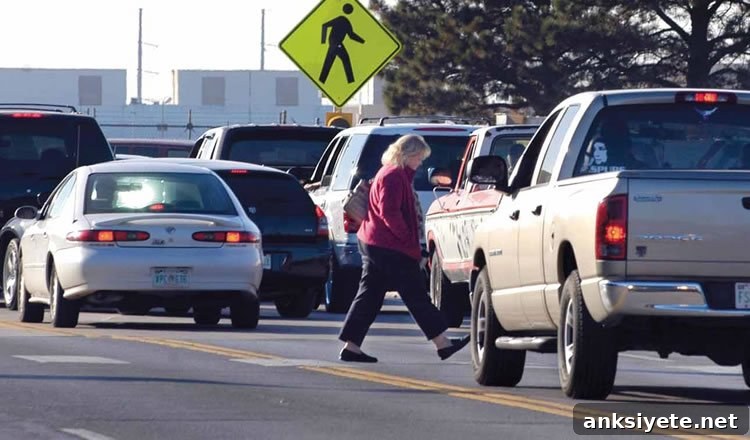
As part of the five-year Speed project, Prof. Forstmann and colleagues used high-resolution MRI to scan participants as they made rapid perceptual decisions. In one task, subjects judged whether a cloud of moving dots was drifting left or right within a few seconds. These controlled experiments allowed the researchers to tease apart components of fast decision-making and to examine individual differences, such as those seen in people with impulsivity-related disorders like ADHD.
The team paid special attention to the subthalamic nucleus (STN), a small deep-brain structure implicated in decision processes. Their research showed that STN activity increases when decisions involve multiple alternatives rather than just two options—a common feature of everyday life. For example, choosing among several soup brands or types of pasta can be more difficult than a simple binary choice.
Prof. Forstmann and collaborators plan to extend their work to other deep subcortical nuclei. Mapping how these structures contribute to decision-making could reveal neural hubs relevant to psychiatric conditions such as obsessive-compulsive disorder and depression, and point toward new treatment targets.
Funding: This research was supported by the European Research Council.
Source: Sandrine Ceurstemont – Horizon
Publisher: Organized by Neuroscience News.
Image credit: Margo Wright / US Air Force.
Horizon. (2018, September 11). How Do We Make Snap Decisions? Neuroscience News.