
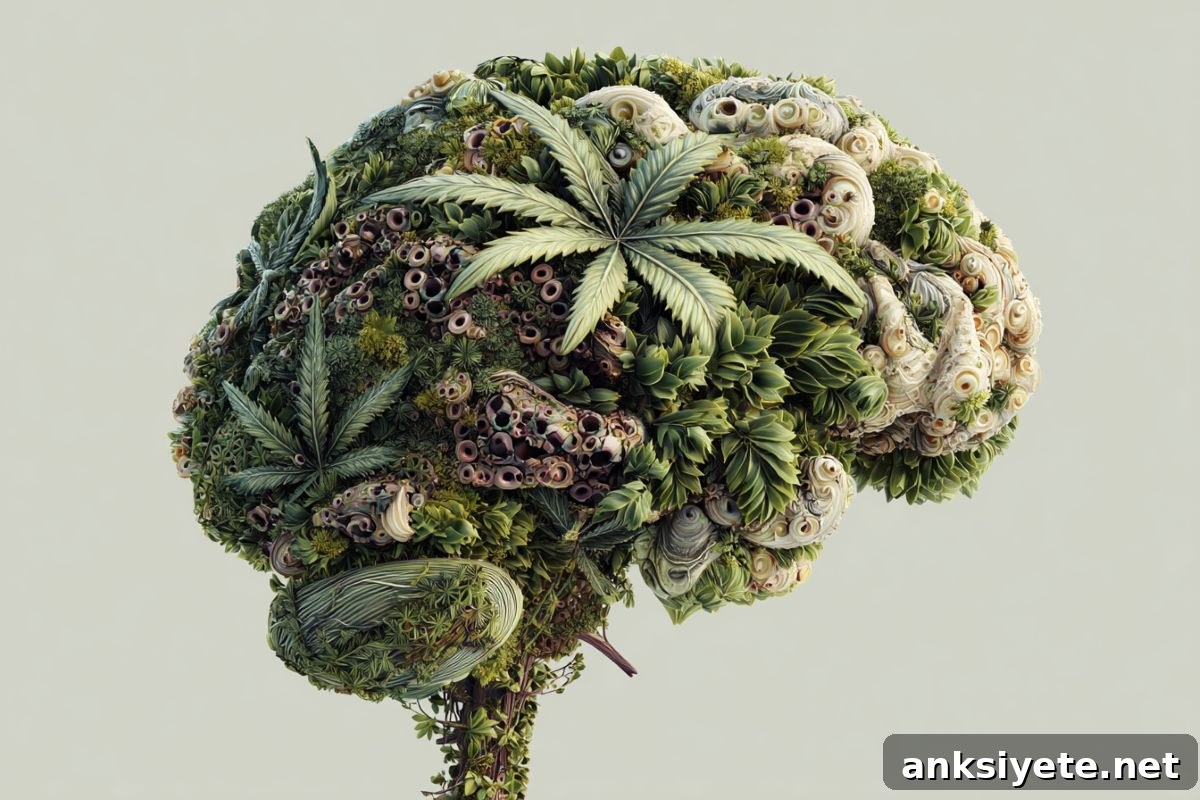
Summary: Does cannabis simply make you forgetful, or does it actually alter what you remember? New research shows that THC does more than blur memories — it can reshape them, increasing false recollections and interfering with everyday memory tasks.
In one of the most thorough examinations of cannabis and memory to date, researchers at Washington State University tested 120 regular cannabis users in a randomized, double-blind, placebo-controlled trial. Participants vaporized either placebo cannabis, 20 mg of THC, or 40 mg of THC and then completed a comprehensive battery of tests across multiple memory domains. The results show that acute intoxication from THC produced widespread memory disruptions, including a striking rise in false memories and a marked decline in the ability to remember future tasks (prospective memory).
Key findings:
- Heightened false memories: THC made participants significantly more likely to confidently recall words and details that were never presented.
- Source memory impairment: Cannabis use reduced the ability to pinpoint where information came from, making it harder to tell whether a detail was learned in conversation, on social media, or in a news article.
- Prospective memory problems: Intoxicated participants were less reliable at remembering to carry out planned actions, such as taking medication, attending appointments, or running errands.
- Wide-ranging effects: Of 21 specific memory measures tested, THC produced significant impairments on 15.
- No clear dose-response between 20 mg and 40 mg: Performance after 20 mg and 40 mg of THC was similarly impaired, indicating that even moderate doses can cause substantial disruption.
Source: Washington State University
Smoking or vaporizing cannabis can do more than cloud recall — it can change the content of memory.
Published in the Journal of Psychopharmacology, the study by Carrie Cuttler and Ryan J. McLaughlin is notable for testing multiple memory systems in a single, carefully controlled experiment. Prior research has focused mainly on verbal memory; this study expanded the scope to include visuospatial memory, prospective memory, source memory, false memory, episodic content, and temporal order memory.
Participants completed approximately an hour of cognitive testing after vaping their assigned dose. Compared with the placebo group, those who received THC performed worse on most tasks. The most pronounced deficits appeared in tests measuring false memories and source identification. For example, when participants heard lists of related words that omitted a central, theme-related word, people who consumed THC were far more likely to later assert they had heard that missing word — sometimes offering completely unrelated words as well.
Source memory problems were also common. When intoxicated, people struggled to trace where they had learned specific facts or details. That loss of source monitoring may increase the risk of unknowingly repeating unreliable information or misattributing the origin of important details — a concern in situations such as eyewitness testimony or legal and medical conversations.
Prospective memory — remembering to carry out intentions at a future time — was another casualty of acute cannabis use. Tasks that mimic everyday demands, such as remembering to perform a planned action when a cue appears or at a specific time, were significantly impaired in the THC groups. As the senior author noted, these are the types of memory we rely on constantly in daily life, so being impaired in this domain has clear practical consequences.
One domain that did not show a significant effect in this study was episodic content memory, the ability to recall personally experienced events. The authors caution that more research is needed before concluding whether episodic content is spared or affected in other contexts or with different doses and user populations.
Study design and implications
This randomized, double-blind, placebo-controlled study assigned 120 regular cannabis users to vaporize either 0 mg (placebo), 20 mg, or 40 mg of THC. After dosing, participants completed tests of immediate and delayed verbal and visuospatial memory, short-term and working memory tasks, event-cued and time-cued prospective memory, source memory, false memory susceptibility, episodic content memory, and temporal order memory. Compared with placebo, cannabis increased susceptibility to false memories and produced significant impairments in several verbal and visuospatial measures, event-cued prospective memory, source memory, and temporal order memory. Importantly, the moderate and high dose groups did not differ substantially, suggesting that many acute memory effects appear even at moderate dosing.
As cannabis use becomes more widespread where it is legal, understanding these acute cognitive effects is increasingly important. Because federal restrictions have historically limited research, many short-term cognitive consequences remain incompletely characterized. This study provides practical insights to help users make informed decisions about activities that rely on accurate memory and source judgment.
Key questions answered
A: This phenomenon is known as a false memory. THC appears to alter how the brain organizes and fills in missing information. In tests where lists of related words were presented without a central theme word, people under the influence often reported hearing that missing word even though it was never spoken.
A: Likely yes. The study found that moderate dosing (20 mg) produced similar impairments to the higher 40 mg dose across many measures, indicating that memory disruption can occur at doses that users might consider moderate.
A: Source memory impairment is particularly consequential. If you can’t reliably remember where information came from, you may inadvertently treat unreliable accounts as credible or misattribute critical details — a problem in everyday decision-making and high-stakes contexts like legal testimony.
Editorial notes
- This article was edited by a Neuroscience News editor.
- The full journal paper was reviewed for accuracy.
- Additional context was added by editorial staff.
About this research
Author: William Ferguson
Source: Washington State University
Contact: William Ferguson, Washington State University
Image: Image credited to Neuroscience News
Original research: “Mapping the acute effects of cannabis on multiple memory domains: A randomized, double-blind, placebo-controlled study” by Carrie Cuttler and Ryan J. McLaughlin. Journal of Psychopharmacology. DOI: 10.1177/02698811261416079. This research is open access.
Abstract
Mapping the acute effects of cannabis on multiple memory domains: A randomized, double-blind, placebo-controlled study
Background:
Acute cannabis use reliably impairs memory, but most prior work has emphasized verbal memory. Less is known about ecologically valid memory domains such as prospective memory and temporal order memory, which better predict everyday functioning.
Methods:
In this randomized, double-blind, placebo-controlled study, 120 regular cannabis users were randomly assigned to vaporize 0 mg, 20 mg, or 40 mg of THC before completing a comprehensive battery of memory tests covering verbal, visuospatial, prospective, source, false, episodic content, and temporal order memory.
Results:
Compared with placebo, acute cannabis increased susceptibility to false memories and impaired several verbal memory measures (immediate, delayed, working), visuospatial memory (immediate, delayed), event-cued prospective memory, source memory, and temporal order memory. No significant differences were observed between the 20 mg and 40 mg groups.
Conclusion:
This study demonstrates that acute cannabis intoxication broadly impairs multiple memory domains relevant to daily life, rather than selectively affecting a small subset of memory systems. The findings highlight potential real-world consequences for activities that require accurate recall, reliable source monitoring, and remembering future intentions.