
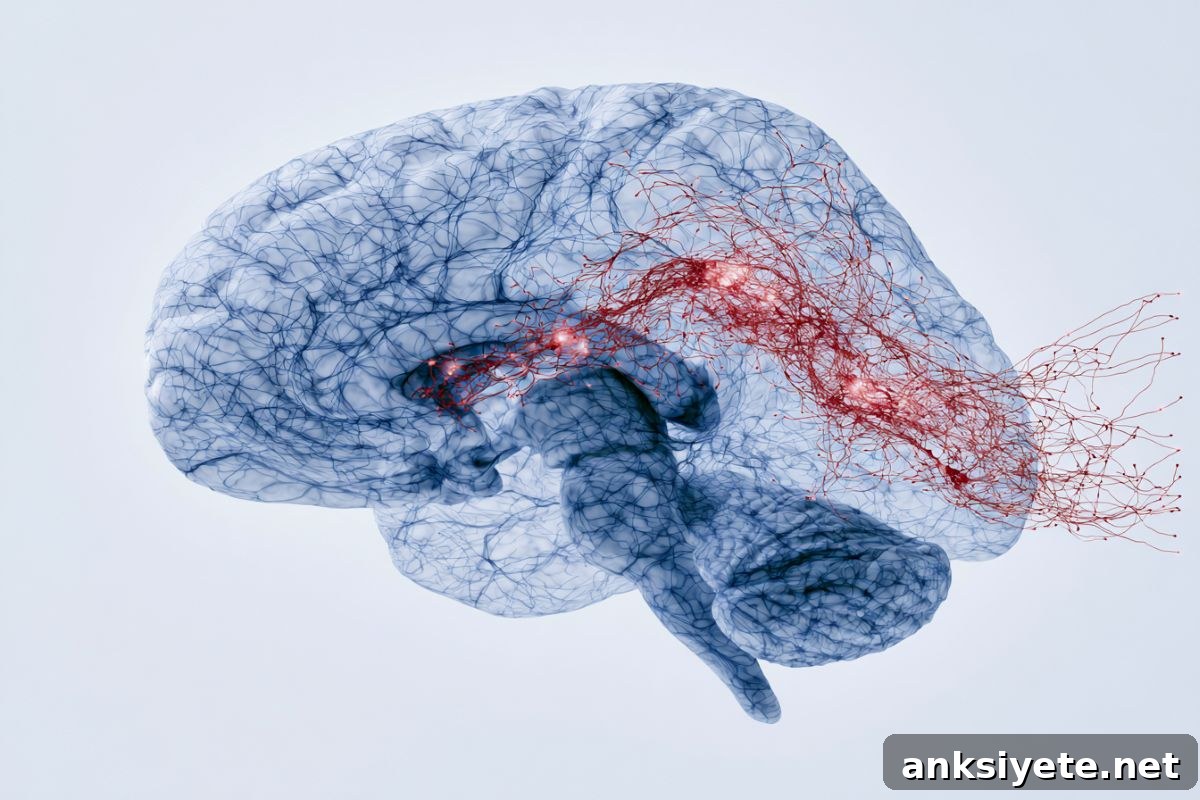
Summary: Researchers comparing people with autoimmune limbic encephalitis to healthy control subjects used spatial memory tests and brain imaging to show that errors in object-location memory are directly associated with clinical apathy. This behavioral change is independent of depression and general cognitive decline.
Neurobiological analysis revealed that patients who made more object-location errors and who displayed greater apathy also showed pronounced hippocampal atrophy and reduced functional connectivity between the hippocampus and the prefrontal cortex. These findings point to a shared neural pathway linking memory encoding and motivation, offering a potential target for interventions aimed at apathy in neurodegenerative disorders such as Alzheimer’s and Parkinson’s disease.
Key Facts
- Object-location memory deficit: People with autoimmune limbic encephalitis performed significantly worse than age-matched healthy controls on tasks that require binding objects to specific spatial locations, a deficit consistent with hippocampal dysfunction.
- Apathy is distinct from depression: Within the patient group, the frequency of object-location errors correlated specifically with clinical apathy—a loss of goal-directed motivation and initiative. Importantly, this relationship was independent of depressive symptoms and independent of overall cognitive test scores, indicating a discrete behavioral syndrome tied to neural circuit damage.
- Structural and functional circuit disruption: Elevated memory errors and greater apathy were associated with two measurable brain markers:
- Hippocampal atrophy: Reduced hippocampal volume measurable on structural imaging.
- Prefrontal disconnection: Weakened connectivity between the hippocampus and the prefrontal cortex, implicating disrupted communication along a circuit essential for integrating memory into goal-directed behavior.
- Broader implications for neurodegenerative disease: Because memory loss and apathy commonly co-occur in conditions such as Alzheimer’s disease and Parkinson’s disease, identifying a hippocampal–prefrontal circuit underlying both symptoms suggests a focused anatomical target for future therapeutic strategies to restore motivation across dementia populations.
Source: SfN
Patients with autoimmune limbic encephalitis frequently experience memory loss linked to hippocampal damage.
To clarify how hippocampal injury relates to changes in behavior, Bahaaeddin Attaallah (Imperial College London) and Maria Raquel Maio (University of Oxford) led a study comparing people with autoimmune limbic encephalitis to healthy control participants. The research, published in the Journal of Neuroscience, combined behavioral testing with structural and functional brain imaging.
In the behavioral task, patients struggled to pair objects with their precise locations in an environment, performing worse than matched controls. Crucially, within the patient group only, higher error rates on this object-location task co-occurred with more severe clinical apathy. This association held even when accounting for depressive symptoms and general cognitive ability, indicating the relationship is specific rather than a byproduct of overall cognitive decline or mood disorder.
Imaging results provided a mechanistic explanation: patients who made the most object-location errors and who showed stronger apathetic symptoms had smaller hippocampal volumes and weaker hippocampal–prefrontal functional connectivity. In other words, structural shrinkage of the hippocampus together with a breakdown in its communication with the prefrontal cortex mapped onto both memory impairment and reduced motivation.
These findings suggest a plausible circuit-level mechanism by which hippocampal damage produces not only memory problems but also a reduction in goal-directed behavior: the hippocampus supplies contextual and episodic information that the prefrontal cortex uses for planning and motivation, so when that input is degraded, motivation may decline.
The identified hippocampal–prefrontal circuit may therefore serve as an important anatomical target for developing treatments aimed at apathy across disorders that affect the hippocampus, including some forms of dementia and movement disorders where apathy is a major, hard-to-treat symptom.
Looking ahead, Attaallah notes plans to explore the relationship between apathy and cognition in other cohorts—such as people with Parkinson’s disease and other dementias—using large-scale data analysis and experimental tasks. These efforts aim to deepen understanding of how memory and motivation interact across different brain conditions.
Key Questions Answered:
A: Depression is primarily an affective disorder involving persistent low mood, sadness, and negative thoughts. Apathy, by contrast, is a reduction in goal-directed behavior, initiative, and emotional responsiveness—a dampening of drive rather than mood. In this study, apathy in limbic encephalitis patients correlated specifically with object-location memory errors and hippocampal–prefrontal circuit disruption, demonstrating it is biologically distinct from depressive symptoms and general cognitive impairment.
A: The hippocampus works together with the prefrontal cortex to provide contextual and episodic information that guides planning, decision-making, and motivation. If autoimmune inflammation reduces hippocampal volume and weakens its connectivity to prefrontal areas, the brain may lose essential memory-based inputs that support motivated, goal-directed action, producing clinical apathy.
A: Apathy is a common, debilitating symptom in many neurodegenerative diseases but is difficult to treat. Demonstrating that apathy correlates with hippocampal shrinkage and circuit failure to the prefrontal cortex provides a specific neural target. Interventions that protect, strengthen, or stimulate this hippocampal–prefrontal pathway may hold promise for improving motivation across broader dementia and movement disorder populations.
Editorial Notes:
- This article was edited by a Neuroscience News editor.
- Journal paper reviewed in full.
- Additional context added by staff.
About this memory and apathy research news
Author: SfN Media
Source: SfN
Contact: SfN Media
Image: The image is credited to Neuroscience News
Original Research: The findings appear in the Journal of Neuroscience.