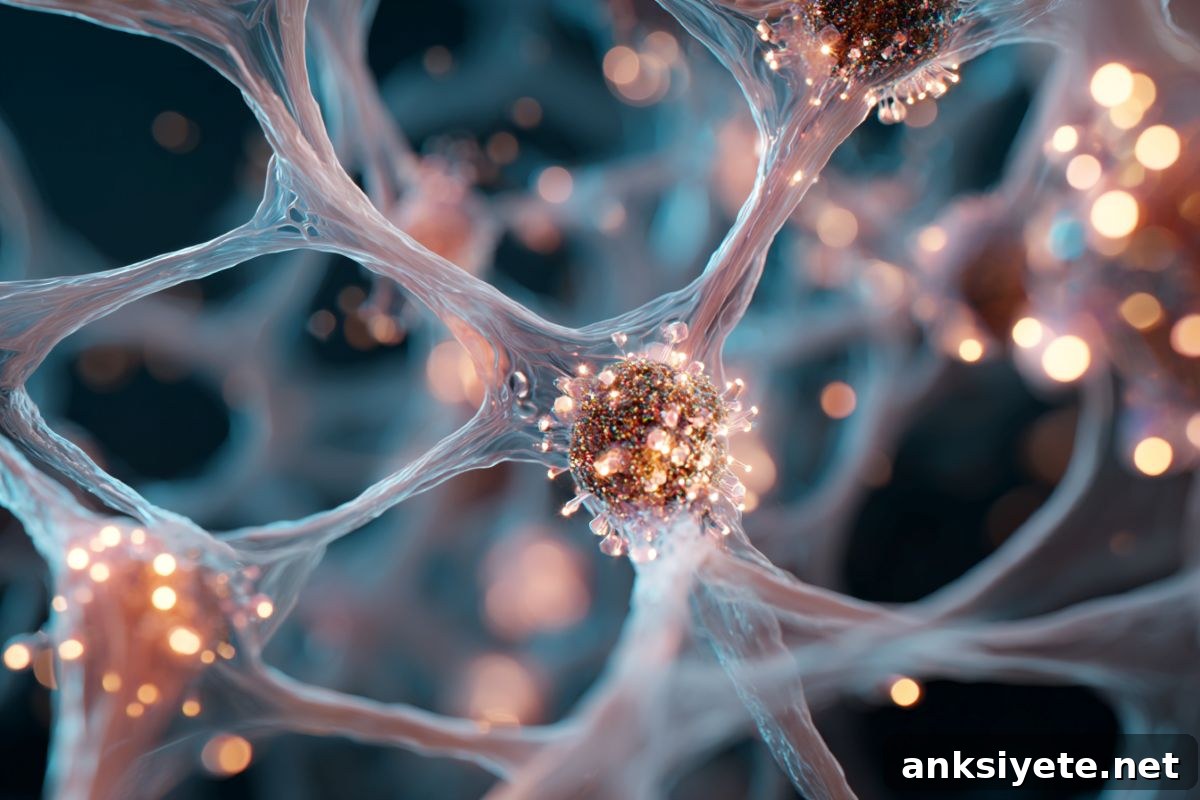
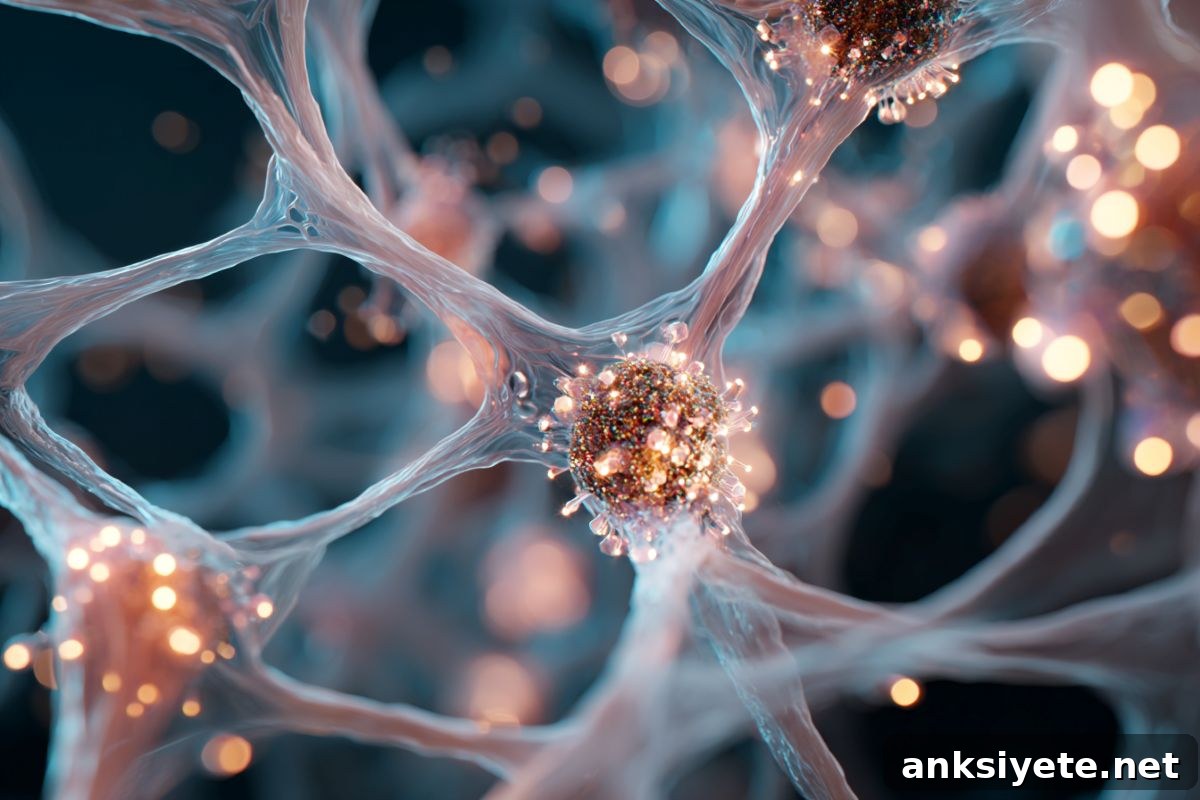
Summary: Researchers have engineered functional, brain-like tissue without using any animal-derived materials, a major advance toward more ethical and reproducible neurological research. By transforming a chemically inert polymer—polyethylene glycol (PEG)—into a porous, maze-like scaffold, scientists enabled donor brain cells to settle, organize, and form active neural networks.
This scaffold supports tissue growth without biological coatings, providing greater experimental control and consistency. The approach promises more reliable drug testing, reduced dependence on animal models, and the potential to integrate multiple organ-level tissue systems for comprehensive studies.
Key Facts:
- Animal-Free Platform: A PEG-based scaffold supports functional neural networks without the addition of animal-derived proteins such as laminin or fibrin.
- High Biological Fidelity: Interconnected pores and textured surfaces let cells grow, communicate, and form mature clusters that resemble native neural tissue.
- Long-Term Utility: The scaffold’s stability enables extended experiments and could allow future integration into multi-organ tissue models.
Source: UCR
For the first time, scientists have grown functional brain-like tissue entirely without animal-derived materials or biological coatings, opening new possibilities for humane and controlled neurological testing.
Neural tissue engineering aims to recreate the structure and function of the human brain in vitro so researchers can study neurological diseases and test treatments in more reproducible settings. Existing platforms often rely on poorly defined, animal-derived coatings that introduce variability and ethical concerns. Those coatings also complicate efforts to replicate experiments precisely across labs.
“Many brain tissue platforms depend on biological coatings to help cells attach and thrive. Those coatings are poorly defined, which hinders reproducibility,” said Iman Noshadi, an associate professor of bioengineering at UC Riverside who led the study.
Relying on animal brains or animal-derived materials is also problematic because of the genetic and physiological differences between rodent and human brains. The new approach could reduce—or in some cases eliminate—the need for animal models, aligning with regulatory trends to phase out animal testing where possible.
Published in the journal Advanced Functional Materials, the new scaffold provides a synthetic matrix on which donor brain cells can grow to model traumatic brain injury, stroke, and neurodegenerative diseases such as Alzheimer’s.
The scaffold is primarily made from polyethylene glycol (PEG), a chemically neutral polymer that typically does not support direct cell attachment unless modified with proteins. The research team reshaped PEG into a bicontinuous, textured network of interconnected pores so that cells recognize, colonize, and use it to form functional neural circuits. Once mature, these donor-derived cells can display specific neural activity useful for testing targeted therapies.
“Because the scaffold is stable, it supports longer-term cultures,” said Prince David Okoro, the study’s lead author and a doctoral candidate in Noshadi’s lab. “Mature brain cells better reflect real tissue behavior, which matters when studying disease progression or recovery after trauma.”
To fabricate the scaffold, the team used a process that combines solvent transfer-induced phase separation with controlled microfluidics. A mixture of water, ethanol, and PEG flowed through nested glass capillaries, separated when it entered an outer water stream, and then was fixed in place with a brief exposure to light. The resulting porous architecture promotes efficient nutrient and oxygen flow, supporting long-term cell survival and network formation.
The porous structure enables donated stem cells to receive oxygen and nutrients throughout the volume, encouraging migration, proliferation, and differentiation into neuronal and glial lineages. In long-term cultures, cells formed 3D networks with increased synaptic activity, and collagen encapsulation further enhanced three-dimensional growth and compartmentalization reminiscent of native brain tissue.
The research began in 2020 and was supported by startup funds at UC Riverside; additional support for the lead author came from the California Institute for Regenerative Medicine. Presently the scaffold constructs are roughly two millimeters wide. The team is working to scale up the model and has also submitted related work focused on liver tissue engineering.
The long-term vision is to create interconnected organ-level cultures that replicate how body systems interact. Such integrated platforms would let researchers observe how different tissues respond to the same treatment and how dysfunction in one organ affects others—an important step toward more holistic disease modeling and drug screening.
Key Questions Answered:
A: Functional, brain-like tissue created entirely without animal-derived materials or biological coatings.
A: It enables more controlled, reproducible, and humane models for studying neurological disease and screening candidate drugs.
A: It eliminates variability and ethical concerns associated with animal-derived coatings and reduces reliance on animal brains, which differ from human tissue.
Editorial Notes
- This article was prepared by a Neuroscience News editor.
- The original journal paper was reviewed in full for accuracy.
- Additional explanatory context was provided by the editorial team.
Author: Jules Bernstein
Source: UCR
Contact: Jules Bernstein – UCR
Image: Image credit: Neuroscience News
Original Research: Open access. “Bicontinuous Microarchitected Scaffolds Provide Topographic Cues That Govern Neuronal Behavior and Maturation” by Iman Noshadi et al., Advanced Functional Materials.
Abstract
Bicontinuous Microarchitected Scaffolds Provide Topographic Cues That Govern Neuronal Behavior and Maturation
Three-dimensional tissue-engineered models offer a promising route to replicate the brain’s complex architecture and dynamic function in vitro, yet reproducing the subtle structural cues that regulate neural responses remains difficult. Many existing platforms fail to capture the multiscale geometries and surface textures that guide cell behavior.
This study introduces a bijel-based fabrication approach that combines solvent transfer-induced phase separation (STrIPS), microfluidics, and bioprinting to create a Bijel-Integrated PORous Engineered System (BIPORES) tailored for neural tissue engineering.
The resulting scaffolds feature interconnected micropores, textured surfaces with hyperbolic curvature, and integration into macroscale fibrous networks. Using STrIPS of a ternary precursor stabilized by amphiphilic nanoparticles, the team produced poly(ethylene glycol) diacrylate (PEGDA) BIPORES scaffolds that support neural stem cell adhesion within 30 seconds without added biological factors—an unprecedented outcome for PEGDA materials.
Long-term cultures in these scaffolds showed extensive migration, strong proliferation, and differentiation into both neuronal and astrocytic lineages, forming three-dimensional networks with enhanced synaptic activity. Encapsulating the system with collagen further promoted 3D growth and compartmentalization similar to native neuroanatomy. This multiscale fabrication strategy better approximates native neural tissue dynamics, with significant implications for disease modeling, drug screening, and regenerative therapy research.