
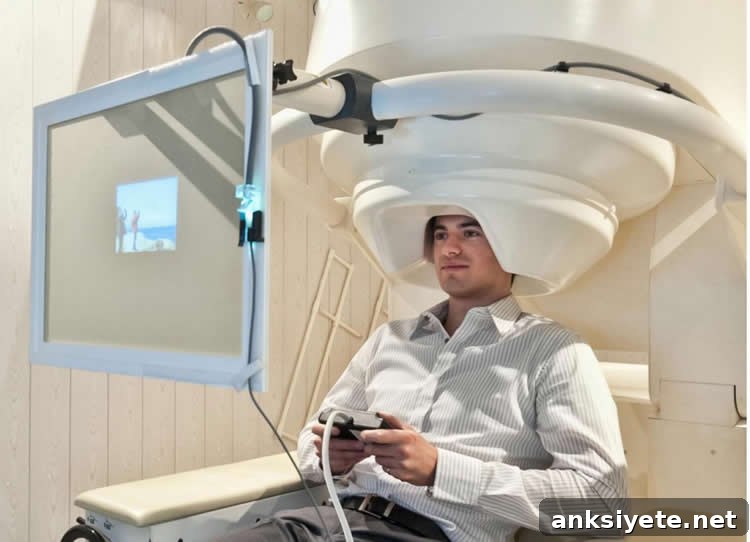
Summary: A new study shows that combining magnetoencephalography (MEG) brain imaging with machine learning can help identify whether a person has a concussion.
Source: PLOS
New machine learning method uses high-resolution brain scans to detect mild traumatic brain injury
High-resolution brain scans analyzed with machine learning algorithms can distinguish patients with concussion from those without, according to a new study published in PLOS Computational Biology. The research suggests that magnetoencephalography (MEG) combined with advanced classification techniques may provide an objective, quantitative tool to detect mild traumatic brain injury (mTBI), where standard clinical imaging often finds no visible abnormalities.
Diagnosing concussion today typically relies on self-reported symptoms and clinical assessment, which are sometimes subjective and imprecise. Earlier neuroimaging studies have indicated that concussion can disrupt communication between brain regions, but those investigations generally focused on average differences across patient groups rather than on reliably identifying injury in individual patients.
To address this gap, researchers led by Vasily Vakorin (now at Simon Fraser University, British Columbia), together with collaborators from the Hospital for Sick Children in Toronto and Defence Research and Development Canada, explored whether resting-state MEG recordings could reveal network-level changes that a machine learning classifier could use to detect concussion in single subjects. The team recorded resting-state MEG activity in adult men with and without a history of mild traumatic brain injury and reconstructed neural activity across 90 cortical and subcortical regions using an atlas-guided approach.
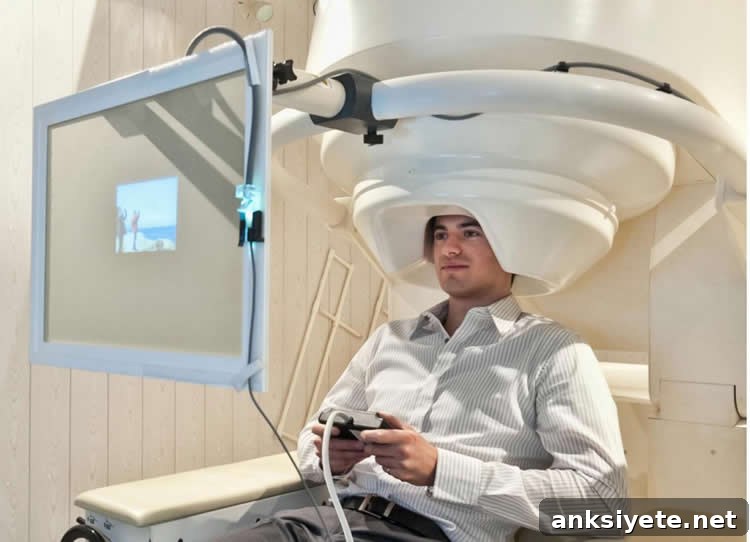
MEG provides millisecond-scale measurements of neural activity, enabling analysis of oscillatory phase synchrony—that is, how the timing of rhythmic activity aligns across different brain regions—across multiple frequency bands. The investigators found a distinct pattern in patients with mTBI: reduced connectivity in delta and gamma frequency ranges and increased connectivity in the alpha band (8–12 Hz). These changes in functional connectivity indicate altered communication across the brain following concussion and vary with the time elapsed since injury.
Importantly, when the team applied machine learning classifiers to the individual MEG connectivity profiles, they were able to predict whether a given participant had suffered a concussion with 88% accuracy. The classifier’s confidence scores also correlated with the severity of clinical symptoms reported by individual patients, suggesting the approach could both detect injury and provide insight into symptom burden.
“MEG-detected changes in inter-regional communication allowed us to identify concussion from individual scans in cases where standard clinical imaging such as MRI or CT often shows no clear abnormalities,” said coauthor Sam Doesburg. These findings point to the potential for MEG-informed machine learning tools to augment clinical assessment, help guide treatment decisions, and monitor recovery trajectories in people with mTBI.
Future work will be needed to validate these results in larger and more diverse populations, to refine the specific neural signatures associated with different symptom patterns, and to evaluate how MEG-driven classifiers perform over time as patients recover. If replicated and extended, this approach could contribute to more objective diagnosis, individualized prognosis, and better-targeted interventions for concussion.
Funding: This work was supported by the Canadian Forces Health Services and by Defence Research and Development Canada (DRDC) under contract W7719-135182/001/TOR. The funders had no role in study design, data collection and analysis, decision to publish, or manuscript preparation.
Competing interests: The authors have declared that no competing interests exist.
Source: Sam Doesburg – PLOS
Original research: Detecting Mild Traumatic Brain Injury Using Resting State Magnetoencephalographic Connectivity, by Vasily A. Vakorin, Sam M. Doesburg, Leodante da Costa, Rakesh Jetly, Elizabeth W. Pang, and Margot J. Taylor. PLOS Computational Biology. December 1, 2016. doi:10.1371/journal.pcbi.1004914
Abstract
Detecting Mild Traumatic Brain Injury Using Resting State Magnetoencephalographic Connectivity
Reliable, objective methods to detect mild traumatic brain injury (mTBI) remain limited. Conventional structural imaging often shows no clear abnormalities in the presence of post-concussive symptoms. In this study, resting-state MEG recordings were acquired from adults with mTBI and matched controls. Activity was reconstructed for 90 cortical and subcortical regions, and inter-regional oscillatory phase synchrony was calculated across multiple frequency bands. The results indicate that mTBI is associated with decreased network connectivity in the delta and gamma bands (>30 Hz) and increased connectivity in the alpha band (8–12 Hz). Temporal patterns of connectivity also correlated with the interval between injury and the MEG scan. Using resting-state MEG network synchrony features, a machine learning classifier detected mTBI with 88% accuracy. Classification confidence correlated with clinical symptom severity. These findings provide evidence that MEG connectivity imaging, combined with machine learning, can potentially detect and estimate the severity of mTBI.