
Fundamental UB discovery on acetylcholine receptor sheds light on rare genetic disease and advances prospects for “receptor engineering”
A new study from scientists at the University at Buffalo reveals how surprisingly small molecular changes can control whether a drug or neurotransmitter switches a receptor on or off. The findings clarify how the acetylcholine receptor (AChR) — a protein that mediates muscle contraction and plays related roles in cardiac and neural signaling — is activated, and they provide a foundation for improved drug design and future receptor engineering.
The research, published online ahead of print in the Proceedings of the National Academy of Sciences, shows that the activation potency of certain drugs and natural ligands can hinge on a single amino acid or even a single atom in the receptor’s ligand-binding site. That level of precision helps explain why some molecules trigger strong responses while others do not.
“This research represents a significant advance in our understanding of how drugs activate receptors,” says Anthony L. Auerbach, PhD, professor in the Department of Physiology and Biophysics in the UB School of Medicine and Biomedical Sciences and the study’s senior author. “In the acetylcholine receptor we studied, sometimes just one specific amino acid — or one atom in that amino acid — is sufficient to determine potency.”
Acetylcholine, released by motor neurons, binds to AChRs on skeletal muscle cells to produce contraction. Related AChR subtypes contribute to finely tuned physiological processes such as cardiac pacing and various neuronal signaling pathways. By dissecting ligand–receptor interactions at the atomic level, the UB team has begun to map how small energetic differences at the binding site translate into larger functional outcomes at the cellular and organismal level.
“We took the ligand–receptor interaction apart piece by piece to discover what makes muscles twitch,” Auerbach explains. “That meant examining single side chains and even single atoms to see how they contribute to the net energy that drives receptor activation.”
To the researchers’ knowledge, this study is the first to directly measure single ligand-binding-site energies in any receptor. The team measured energy contributions from eight different functional groups located at three distinct types of neurotransmitter binding sites in fetal and adult-type muscle AChRs. These precise energy measurements reveal how particular chemical groups in the receptor respond to acetylcholine and related agonists, and how those responses differ between fetal and adult receptor subtypes.
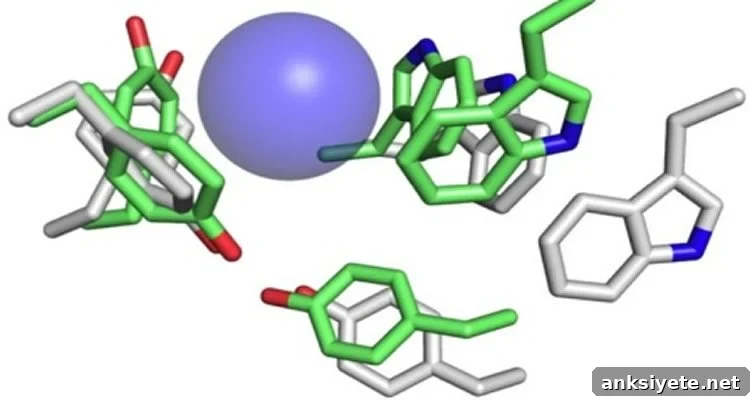
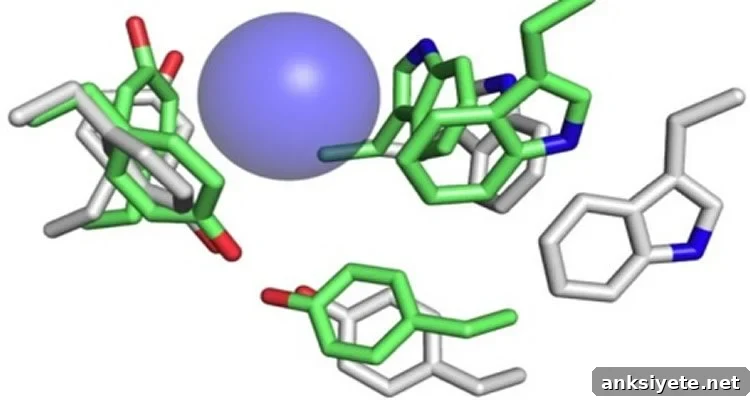
One striking finding is that an amino acid unique to the fetal-type AChR, but absent in the adult form, makes an outsized contribution to the binding energy for acetylcholine and for choline. This single-residue effect increases ligand potency at the fetal receptor. Computational simulations performed at UB’s Center for Computational Research supported the experimental measurements and helped reveal the structural basis of the energetic differences.
These results have direct relevance to a congenital condition known as multiple pterygium syndrome (Escobar syndrome), in which a subunit unique to the fetal AChR is defective. Because the switch from fetal to adult AChR composition is critical for normal synapse formation and neuromuscular development, understanding the energetic and structural basis of ligand interactions helps explain developmental communication between cells and why certain genetic defects lead to disease.
Beyond developmental biology and rare disease, the study carries implications for pharmacology and drug discovery. The UB team emphasizes measuring energy changes when ligands bind as a complementary strategy to the high-throughput screening approaches commonly used in industry. “Pharmaceutical researchers often scan large, random libraries of candidate molecules,” Auerbach notes. “We strategically disassembled the receptor–ligand system down to specific groups of atoms in the protein and predicted their dynamic interactions with ligands. The essential advance was quantifying the energies involved.”
Quantitative energy mapping of individual binding-site interactions opens the door to rational receptor modification — or receptor engineering — where receptors might be intentionally altered to increase or decrease responsiveness to natural ligands or therapeutic compounds. Once the precise mechanism of binding is known, receptors could be redesigned to make drug responses more predictable and effective.
The study’s co-authors include Tapan K. Nayak, PhD (postdoctoral associate), Iva Bruhova, PhD (postdoctoral associate), Shaweta Gupta, PhD (postdoctoral associate), Srirupa Chakraborty (doctoral candidate in biophysics), and Wenjun Zheng, PhD (associate professor, Department of Physics), all affiliated with the University at Buffalo departments noted above. Funding for the research was provided by the National Institutes of Health.
Contact: Ellen Goldbaum, University at Buffalo
Source: University at Buffalo press release
Image source: Adapted from the University at Buffalo press release
Original research: Abstract for “Functional differences between neurotransmitter binding sites of muscle acetylcholine receptors” by Tapan K. Nayak, Iva Bruhova, Srirupa Chakraborty, Shaweta Gupta, Wenjun Zheng, and Anthony Auerbach, published online December 9, 2014 in PNAS (doi:10.1073/pnas.1414378111)