
Summary: Disabling the gene required for detecting pheromones in ants produced dramatic deficits in social behavior and reduced survival in a colony, revealing key genetic contributions to social evolution.
Source: Rockefeller University.
Ant societies are highly coordinated. Individual workers perform distinct roles—foraging, defense, brood care, nest construction—and rely on precise communication to keep the colony functioning.
Researchers at Rockefeller University created the first genetically modified ants to investigate how chemical communication underpins social organization. By disrupting a gene required for odorant receptor function, the team produced ants that could not properly detect hydrocarbon pheromones. Those mutants displayed severe social impairments, struggled to survive in a colony setting, and showed major changes in brain anatomy. The work both clarifies a critical step in the evolution of ant societies and demonstrates that genome editing is a valuable tool for studying social insects.
Social beginnings
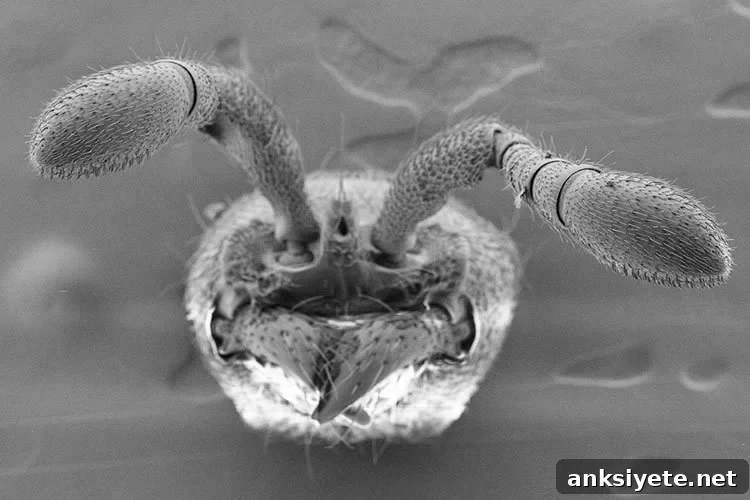
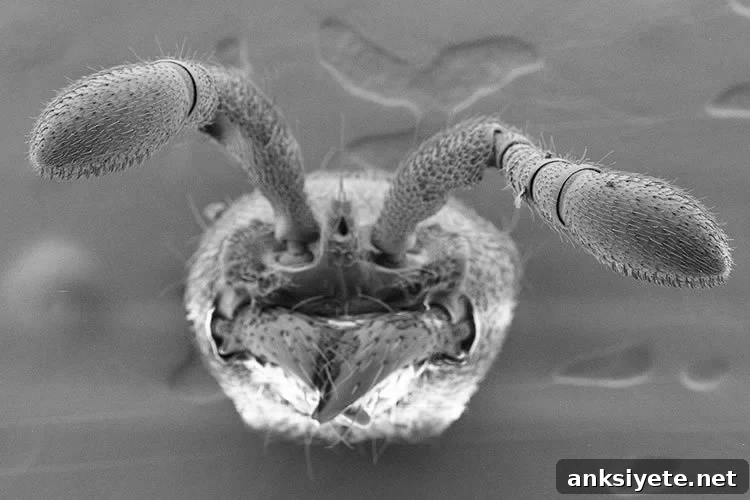
Hydrocarbon pheromones are central to ant communication. They convey information about species, colony and caste identity, and reproductive status. Ants sense these cues with sensory hairs on their antennae that house odorant receptors—proteins that bind specific chemicals and transmit signals to the brain.
Earlier work from the Kronauer laboratory identified a family of odorant receptor genes, known as 9-exon-alpha ORs, as primary detectors of hydrocarbons in the clonal raider ant, Ooceraea biroi. Comparative genomic analysis showed a striking expansion of this gene family in ants: while the common ancestors of bees and ants carried only one to three copies of these receptors, clonal raider ants possess roughly 180 copies. That rapid duplication coincided with the emergence of complex social behaviors, suggesting that expanding the repertoire of odorant receptors played an important role in the evolution of ant communication.
Communication interrupted
To test how odorant receptors contribute to social behavior, the researchers disrupted the gene orco, a co-receptor required for the function of virtually all insect odorant receptors. They introduced the mutation using CRISPR-based genome editing. Producing orco mutants was straightforward; the greater challenge lay in maintaining them in colonies. Mutant brood were vulnerable to rejection or destruction by nestmates unless conditions were carefully controlled.
Once mutant ants reached adulthood, their behavior diverged sharply from wild-type individuals. Ants normally follow pheromone trails in single file; mutants failed to do so. Using an automated tracking system that recorded the movements of color-coded ants and analyzed their trajectories, the team observed that mutants could not maintain coordinated trails or cluster with nestmates. These behavioral deficits provide direct evidence that odorant receptors are essential for perceiving pheromone cues that organize collective actions.
Beyond behavior, loss of orco altered brain structure. Mutant ants lacked most of the antennal lobe glomeruli—the spherical processing units in the olfactory centers of the brain—found in wild-type ants. Wild-type clonal raider ants possess roughly 500 glomeruli; orco mutants had a dramatic reduction. This anatomical effect was unexpected because orco loss does not produce the same brain changes in other insects such as Drosophila. The finding suggests that, in ants, functional odorant receptors are required for normal development or maintenance of highly complex olfactory circuitry, highlighting a fundamental difference between social and solitary insects.
Implications and next steps
The study links genetic changes in odorant receptor repertoires to the evolution and development of social behavior in ants. The dramatic expansion of hydrocarbon-detecting receptors in ant lineages, together with the severe social and neural consequences of disabling orco, support the idea that sophisticated odor detection was a prerequisite for the emergence of organized colonies.
With a reliable method to generate mutant ants, the Kronauer laboratory plans to investigate additional genes that influence division of labor, communication, and other facets of social life. Having demonstrated both loss-of-function effects and the feasibility of genomic manipulation in ants, the researchers aim to combine genetic tools with behavioral and neuroanatomical analyses to map how specific genes shape complex social systems.
Institution: Rockefeller University
Key methods: CRISPR genome editing in the clonal raider ant (Ooceraea biroi), behavioral tracking and automated movement analysis, neuroanatomical examination of antennal lobes.
Main finding: Disruption of orco abolishes normal odorant receptor function, which leads to impaired pheromone-driven social behavior and loss of most antennal lobe glomeruli in ants.
Primary publication: The detailed research on orco mutagenesis and its effects on antennal lobe glomeruli and social behavior is reported by Waring Trible, Leonora Olivos-Cisneros, Sean K. McKenzie, Jonathan Saragosti, Ni-Chen Chang, Benjamin J. Matthews, Peter R. Oxley, and Daniel J.C. Kronauer, published in Cell (published online June 29, 2017; DOI: 10.1016/j.cell.2017.07.001).
Abstract summary
Ant colonies use diverse pheromones to coordinate life inside the nest, but how these signals are perceived was unclear. By creating the first orco mutant lines in Ooceraea biroi, the study demonstrates that loss of odorant receptor function produces severe deficits in social behavior and fitness, and unexpectedly eliminates most antennal lobe glomeruli. These results indicate that odorant receptors are essential for ant social organization and that receptor activity may be required for development or maintenance of complex olfactory brain regions.
Research and reporting credit: Rockefeller University. Image credited to the researchers. Feel free to share this summary of the research.