

Summary: Researchers describe a possible new syndrome in infants whose mothers used fentanyl during pregnancy, characterized by distinctive facial features, small head size (microcephaly), short stature, and a range of congenital anomalies.
A clinical team at Nemours Children’s Hospital observed a pattern of similar features in newborns referred for feeding difficulties or complex neonatal care. After clinical evaluation, genetic testing, and facial analysis, the investigators report a consistent association between these shared findings and prenatal fentanyl exposure.
Key facts:
- Infants presented with microcephaly, short stature, and recognizable facial characteristics, along with congenital malformations such as cleft palate and “rocker bottom” feet.
- Relevant genetic and biochemical testing excluded established diagnoses such as Smith-Lemli-Opitz syndrome and fetal alcohol syndrome in these cases.
- All mothers in the reported cohort acknowledged using fentanyl during pregnancy, prompting concern that prenatal fentanyl exposure may be implicated.
Source: Nemours Children’s Health
Overview of the findings
In mid-2022, a genetic counselor and clinicians at Nemours Children’s Hospital, Delaware, identified multiple newborns with a distinct combination of growth and developmental differences. The team, led by Karen W. Gripp, MD, Chief of the Division of Medical Genetics at Nemours Children’s Health, Delaware Valley, enrolled six patients from their institution into an institutional review board–approved study and later included four additional cases referred by outside clinicians, bringing the total to ten reported infants.
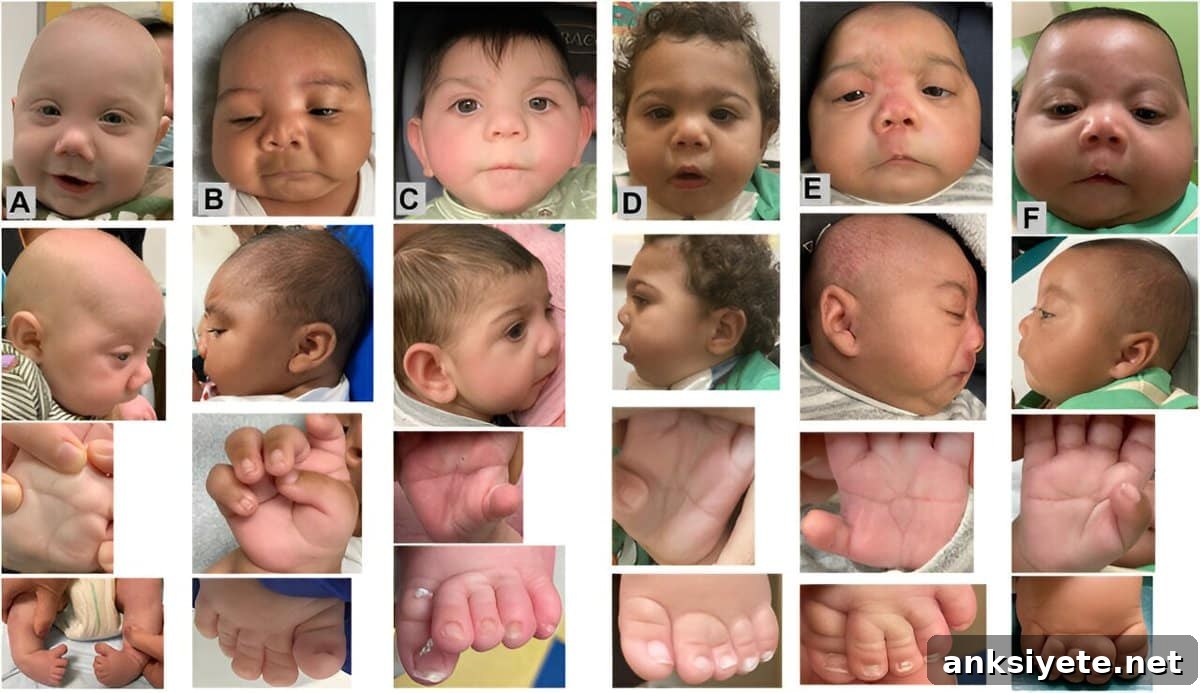
Across the cohort, clinicians documented consistent physical findings: microcephaly, short stature, and a set of distinctive facial features. Many infants also had cleft palate, musculoskeletal anomalies such as talipes equinovarus or “rocker bottom” feet, and genital malformations including chordee or hypospadias. Other recurring signs were short, broad thumbs, a single palmar crease, and mild 2–3 toe syndactyly. On neuroimaging, three of five evaluated infants showed a hypoplastic corpus callosum.
Early biochemical studies in some infants revealed transient abnormalities in cholesterol metabolism that resembled patterns seen in Smith-Lemli-Opitz syndrome; however, further genetic testing and comprehensive evaluation did not identify a shared genomic cause. Facial analysis using the GestaltMatcher algorithm also did not support fetal alcohol syndrome in these patients.
Given the exclusion of these known syndromes and the common history of prenatal fentanyl exposure, the authors propose that these findings represent a potentially novel, clinically recognizable syndrome associated with fentanyl exposure in utero. The team emphasizes, however, that causation has not been definitively established and that other factors—such as co-exposure to additional substances or contaminants—cannot yet be excluded.
Details about timing, frequency, and dosage of maternal fentanyl use were limited in the reported cases, and researchers caution that further systematic investigation is required. Additional laboratory experiments, expanded case series, and replication of findings will be essential to determine whether fentanyl acts directly as a teratogen or whether the association is mediated by other variables.
Clinicians participating in the study have noted anecdotal reports of other infants with similar but sometimes milder features, suggesting the condition may have a variable presentation or exist along a phenotypic spectrum. Of the ten infants in the report, six remain in ongoing Nemours care, three are followed by providers in other states, and one infant died.
“In the context of the ongoing fentanyl epidemic, recognizing patterns of prenatal exposure that lead to lasting physical and developmental effects is critically important,” Dr. Gripp said. The investigators advocate for heightened surveillance, careful documentation of prenatal substance exposures, and additional research to clarify the relationship between prenatal fentanyl exposure and congenital findings.
About this neurodevelopment and opioid exposure research
Author: Karen W. Gripp
Source: Nemours Children’s Health System
Contact: Karen W. Gripp, Nemours Children’s Health System
Image credit: Head image credited to Neuroscience News. Article images credited to Genetics in Medicine Open.
Original research: Open access. “A novel syndrome associated with prenatal fentanyl exposure,” by Karen W. Gripp, published in Genetics in Medicine Open. The study reports a cohort of ten infants with shared clinical features associated with prenatal nonprescription opioid exposure, particularly fentanyl.
Abstract (condensed)
A cluster of individuals demonstrated microcephaly, short stature, distinctive facial features, and congenital anomalies including cleft palate and rocker bottom feet. Initial biochemical testing showed transient abnormalities in cholesterol metabolism, but no common genetic cause was identified. All ten cases involved prenatal exposure to nonprescription opioids, most notably fentanyl, supporting the hypothesis that prenatal fentanyl exposure may be associated with a recognizable syndrome. Further research is necessary to evaluate causality and to characterize the full clinical spectrum.