
Summary: Researchers have engineered two linker proteins that stabilize the muscle cell basement membrane by connecting an alternative laminin to muscle fibers. In experimental models of congenital muscular dystrophy, these proteins restored muscle structure and function and markedly extended survival.
Source: University of Basel
The cell scaffold that protects muscle fibers
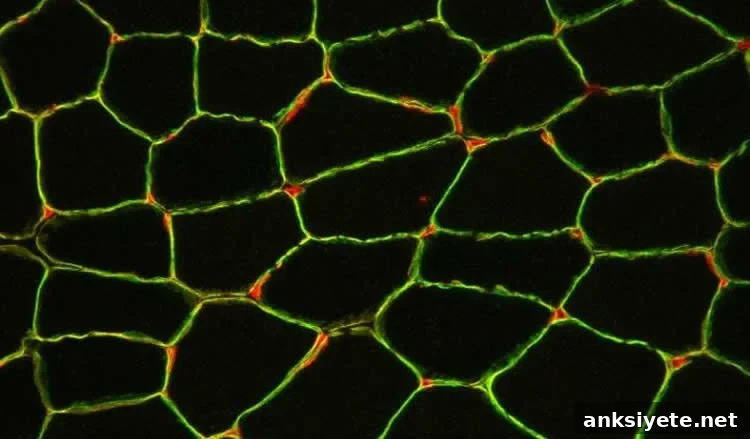
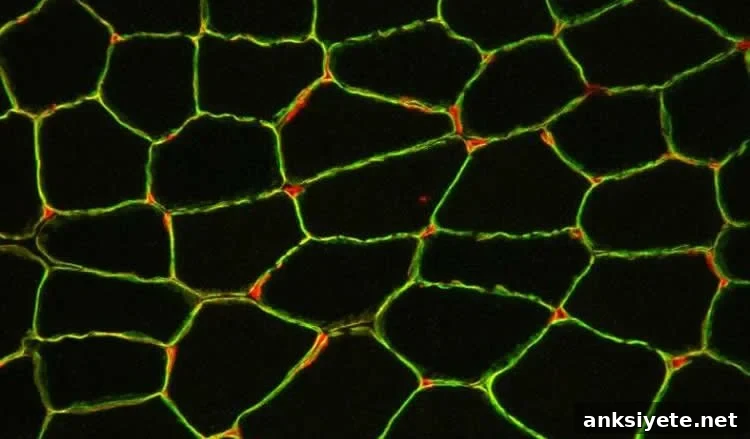
Muscle tissue relies on a specialized cell scaffold, the basement membrane, to maintain structure and resist mechanical stress. In many forms of muscular dystrophy this scaffold is compromised because essential components are missing or defective. When the basement membrane cannot attach properly to muscle fibers, routine activity causes damage, inflammation and progressive loss of muscle strength. A research team led by Prof. Markus A. Rüegg at the Biozentrum of the University of Basel has designed two linker proteins that reinforce this scaffold by anchoring a substitute laminin to the muscle fiber, restoring tissue stability and improving function. Their findings appear in Science Translational Medicine.
Congenital muscular dystrophy causes severe, early weakness
Congenital muscular dystrophy (CMD) is a group of rare, severe muscle disorders that present at or shortly after birth. Affected infants frequently display low muscle tone and generalized weakness, often described as “floppy” at birth. As the disease progresses, muscle wasting worsens, compromising mobility and respiratory function. Many children with severe CMD are unable to walk and have reduced life expectancy, with some patients dying before adulthood.
How a defective gene disrupts the basement membrane
One common cause of CMD is a mutation in the gene LAMA2, which encodes laminin-α2, a critical subunit of laminin-211 (also known as Lm-211). Laminin-α2 forms a key bridge between the basement membrane and the interior of muscle fibers, conferring mechanical stability. When laminin-α2 is absent or nonfunctional, muscle basement membranes become fragile. In these cases, the tissue sometimes produces laminin-α4 as a compensatory substitute. However, laminin-α4 integrates poorly into the basement membrane and does not provide sufficient anchoring to protect muscle fibers from stress and injury.
Engineered linker proteins re-establish connections and stabilize muscle
To address this deficit, the Basel team designed two recombinant linker proteins that promote incorporation of laminin-α4 into a functional basement membrane and tether it securely to muscle cells. One linker, called αLNNd, combines an N-terminal region of laminin-α1 with the laminin-binding domain of nidogen-1. The other, known as mini-agrin (mag), provides binding sites for laminins and for the cell-surface receptor α-dystroglycan. Together, these linkers improve laminin polymerization and strengthen cell attachment.
When the two linker proteins were expressed in a mouse model of LAMA2-related congenital muscular dystrophy, the results were striking. Basement membrane stability was restored, muscle fiber architecture improved, and muscle force and mass were recovered. Treated animals showed increased body weight and markedly extended lifespan: in the transgenic model, survival increased more than fivefold, with some animals living beyond two years—well past the typical survival seen in untreated littermates.
Evidence from human tissue
The research team also examined muscle biopsies from patients with LAMA2-related CMD and observed similar structural defects to those seen in the mouse model. In these human samples, laminin-α4 replaced laminin-α2 but failed to form a stable basement membrane, supporting the mechanistic rationale for using linker proteins to strengthen laminin-α4 integration.
Potential for therapy and next steps
These engineered linkers could form the basis of a gene therapy approach for LAMA2-related congenital muscular dystrophy. By enabling a naturally produced compensatory laminin to assemble into a stable basement membrane and to bind muscle cells effectively, the linkers address the primary structural deficiency underlying the disease. The authors note that this work illustrates how a deep molecular and cellular understanding of a disease can reveal new therapeutic strategies.
Ongoing questions include whether the linker proteins can improve muscle function and survival when administered at later, more advanced disease stages, and how best to translate these findings into clinical treatments. Further preclinical studies will be needed to evaluate safety, delivery methods, dosing and long-term efficacy before human trials can be considered.
Abstract (summarized)
LAMA2-related muscular dystrophy (LAMA2 MD, or MDC1A) is a severe early-onset form of congenital muscular dystrophy caused by mutations in LAMA2, which encodes laminin-α2 of laminin-211. Although muscles often express laminin-α4 (forming laminin-411) as a compensatory response, this substitute forms an unstable basement membrane and binds poorly to muscle cells. The investigators showed that two designed linker proteins—αLNNd and mini-agrin—enhance laminin-411 polymerization and cell binding in vitro. Transgenic co-expression of these linkers in a mouse model of LAMA2 MD fully restored basement membrane stability, improved muscle force and size, increased body weight, and extended lifespan substantially, supporting a mechanistic basis for potential therapeutic strategies.
Research team: Judith R. Reinhard, Shuo Lin, Karen K. McKee, Sarina Meinen, Stephanie C. Crosson, Maurizio Sury, Samantha Hobbs, Geraldine Maier, Peter D. Yurchenco and Markus A. Rüegg.
Image credit: University of Basel, Biozentrum.