
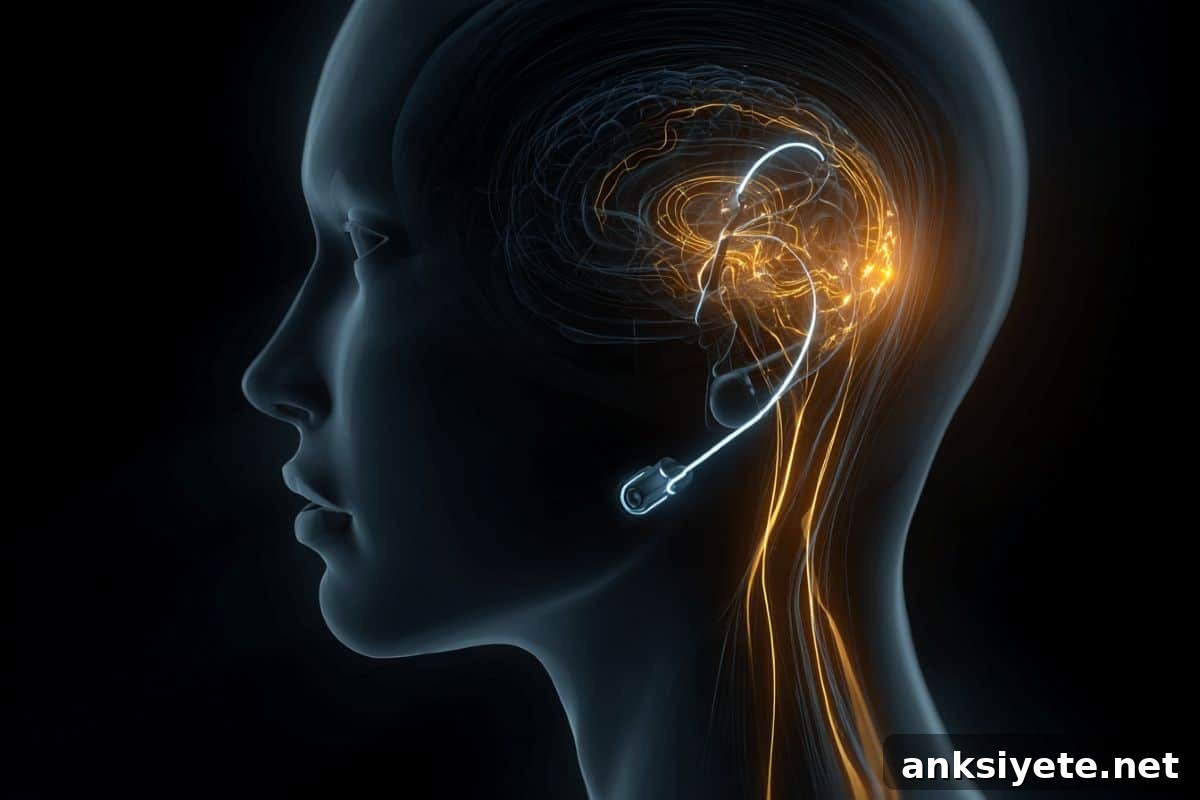
Summary: A precision neuroengineering study has provided the first localized evidence showing how noninvasive vagus nerve stimulation interacts with human motor pathways during active movement. The clinical trial tested transcutaneous auricular vagus nerve stimulation (taVNS) as an adjunct to physical therapy and demonstrated highly specific effects on movement-related brain activity and arousal, rather than broad physiological changes.
By delivering brief bursts of electrical stimulation timed to voluntary finger movements, researchers found that taVNS selectively amplifies motor cortical activity and triggers focused autonomic arousal without altering unrelated bodily systems. These results suggest new ways to optimize neurorehabilitation protocols for stroke and other mobility impairments by pairing stimulation with movement.
Key Facts
- Addressing a knowledge gap: The vagus nerve is a major bidirectional pathway linking the brain with internal organs. Noninvasive ear-based stimulation (taVNS) is increasingly explored in rehabilitation, but until now it was unclear how brief electrical bursts interact with active motor networks in real time.
- Movement-paired design: The study delivered short, targeted bursts of taVNS to 36 healthy volunteers engaged in a computer-cued task that required them to tap or withhold tapping their fingers at randomized intervals.
- Highly localized cortical effects: Compared with no-stimulation trials, movement-paired taVNS produced an immediate increase in activity within movement-related brain regions. When stimulation was repositioned to a different ear location, the cortical boost disappeared, demonstrating strong anatomical specificity.
- Arousal indexed by pupil dilation: Pupillometry during movement-paired stimulation showed phasic dilation, indicating that taVNS promotes a transient, focused arousal state that may prime the nervous system to learn or relearn motor behaviors.
- No broad physiological side effects: Heart rate, galvanic skin response, EEG spectral slope outside motor bands, and other non-motor somatic measures remained unchanged, supporting the conclusion that taVNS selectively engages movement and arousal pathways without collateral physiological drift.
- Confirmed in non-volitional testing: In a follow-up experiment, the investigators removed the voluntary decision element and used an external method to activate motor pathways in 19 still participants while administering taVNS. The combined manipulation produced localized finger twitches and localized cortical facilitation without altering peripheral physiological baselines.
Source: SfN
The vagus nerve links the brain to organs across the body and supports many core physiological functions. For people undergoing physical therapy, noninvasive transcutaneous auricular vagus nerve stimulation (taVNS) is an emerging adjunct that may enhance rehabilitation outcomes.
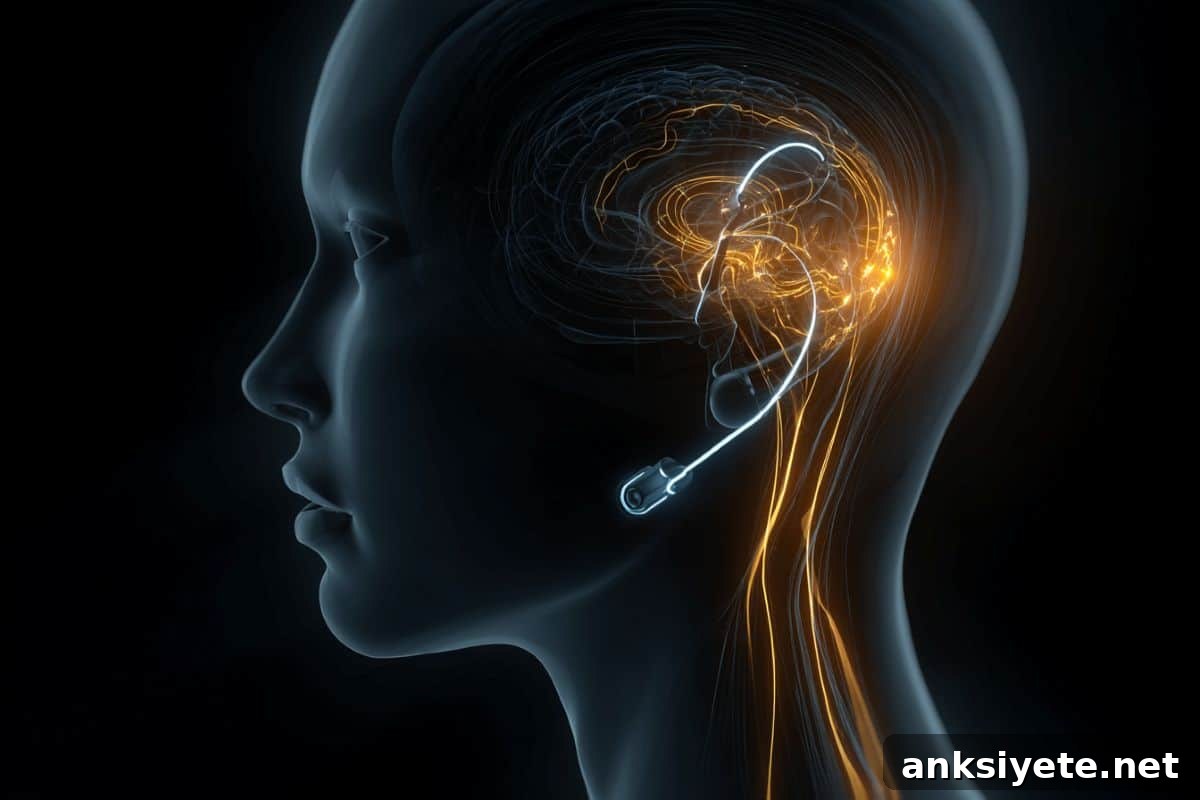
Published in the Journal of Neuroscience, the study led by Dane Donegan and Paulius Viskaitis at the Federal Institute of Technology Zurich set out to determine how taVNS delivered while people move affects brain and body systems. The investigators used tightly timed 2-second stimulation bursts delivered to the ear while participants performed randomized go/no-go finger-tapping trials.
In the main experiment, 36 healthy adults completed trials across three stimulation conditions—taVNS, an earlobe sham, and no stimulation—and across movement (go) and still (no-go) contexts. Measures included EEG to monitor cortical activity, pupillometry to index neuromodulatory arousal, and autonomic metrics such as heart rate and galvanic skin response. In a second experiment, transcranial magnetic stimulation (TMS) measured corticospinal excitability using motor evoked potentials (MEPs) while taVNS was applied.
Results showed that taVNS selectively increased EEG sensorimotor activity during movement but not during stillness. Consistent with a direct impact on corticospinal output, taVNS increased TMS-evoked MEP amplitudes when stimulation coincided with motor engagement, indicating transient facilitation of motor pathways. Pupillometry revealed a clear phasic dilation in response to stimulation both during movement and still conditions, signaling activation of neuromodulatory systems that support alertness and attention. Crucially, autonomic indices did not show additional modulation from phasic taVNS beyond what movement alone produced.
These findings identify a state-dependent window in which taVNS preferentially boosts task-engaged motor circuitry rather than generating broad, nonspecific autonomic effects. The combination of EEG, pupillometry, and MEPs provides converging biomarkers that can guide how and when to pair taVNS with physical therapy to enhance motor recovery.
Key Questions Answered:
A: The vagus nerve is a major conduit between body and brain. Delivering brief taVNS bursts exactly when a person moves produces an instantaneous increase in activity in primary movement control areas of the brain, effectively amplifying motor-circuit engagement during task execution.
A: Pupil diameter reflects neuromodulatory states related to attention and arousal. The study showed that movement-paired taVNS evokes phasic pupil dilation, indicating that the stimulation drives a focused arousal state that can make the nervous system more receptive to learning and plasticity during rehabilitation.
A: The data indicate it does not. While taVNS enhanced motor-circuit activity and pupillary arousal, autonomic measures such as heart rate and skin conductance remained unchanged beyond movement-related effects. This specificity supports the safety of movement-paired protocols for targeting motor recovery without broad physiological side effects.
Editorial Notes:
- This article was edited by a Neuroscience News editor.
- The journal paper was reviewed in full by the editorial team.
- Additional context was added by staff to clarify translational implications.
About this research
Author: SfN Media
Source: SfN
Image credit: Neuroscience News
Abstract (condensed)
Transcutaneous auricular vagus nerve stimulation (taVNS) is a noninvasive neuromodulation approach increasingly combined with physical therapy. Most prior studies examined taVNS at rest; this work focused on the neural and physiological effects when taVNS is paired with movement. Across experiments, phasic taVNS increased corticospinal excitability and sensorimotor EEG activity when delivered during active movement, and elicited phasic pupil dilation consistent with neuromodulatory engagement. Autonomic measures did not show additional taVNS-driven modulation beyond movement-related changes. These results support movement-paired taVNS as a targeted method to enhance task-engaged motor circuitry and identify pupil, EEG, and MEPs as useful biomarkers for optimizing stimulation timing and parameters in neurorehabilitation.