
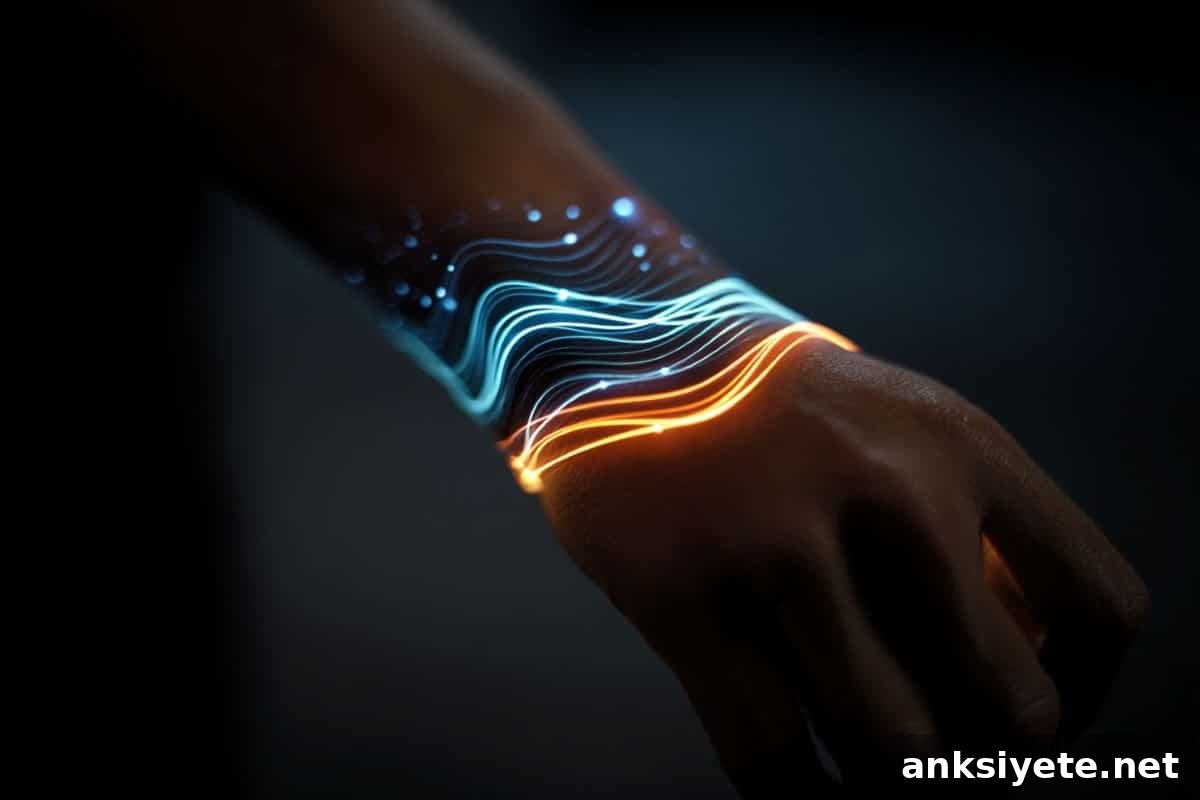
Summary: A new study reframes mobile vibration from a simple alert into a full expressive channel. The research introduces “tactons”—structured vibrotactile patterns crafted to convey emotions, support social connections, and represent personal memories—showing that haptic feedback can become a meaningful medium for communication and inclusion.
By treating vibration as an expressive medium rather than a mere technical notification, the study demonstrates how carefully designed haptic patterns can function like a reassuring touch for public speakers, offer discreet environmental cues for blind and low-vision users, and encode subjective experiences such as memory. The work combines experimental studies, wearable prototypes, and collaborative co-design to produce practical tools and design methods for expressive vibration.
Key Facts
- Expressive Tactons: The research goes beyond simple on/off alerts to build structured “tactons” that people interpret as nuanced emotional states—reassurance, encouragement, tension, and more.
- Social Support via Touch: In remote public speaking experiments, vibrotactile feedback acted like a “digital hand on the shoulder,” helping speakers reduce anxiety and stay focused without visual or auditory interruption.
- Tactile Memories: Participants successfully translated elements of personal memories into repeatable vibration patterns, showing that touch can hold abstract, subjective content.
- Inclusive Design: Through co-design with blind and low-vision participants, the study produced tactile cues for environmental awareness, offering a discreet, non-audio alternative to GPS or screen readers.
Source: Estonian Research Council
Overview of the research
In her doctoral thesis, Yulia Sion explores how vibration—commonly used in mobile devices for simple alerts—can be reconceived as an expressive channel that communicates emotion, supports social interaction, and encodes personal experience. The research develops a co-design framework for translating emotional and contextual meanings into tactile form, and it demonstrates practical implementations through wearable prototypes and a haptic design system.
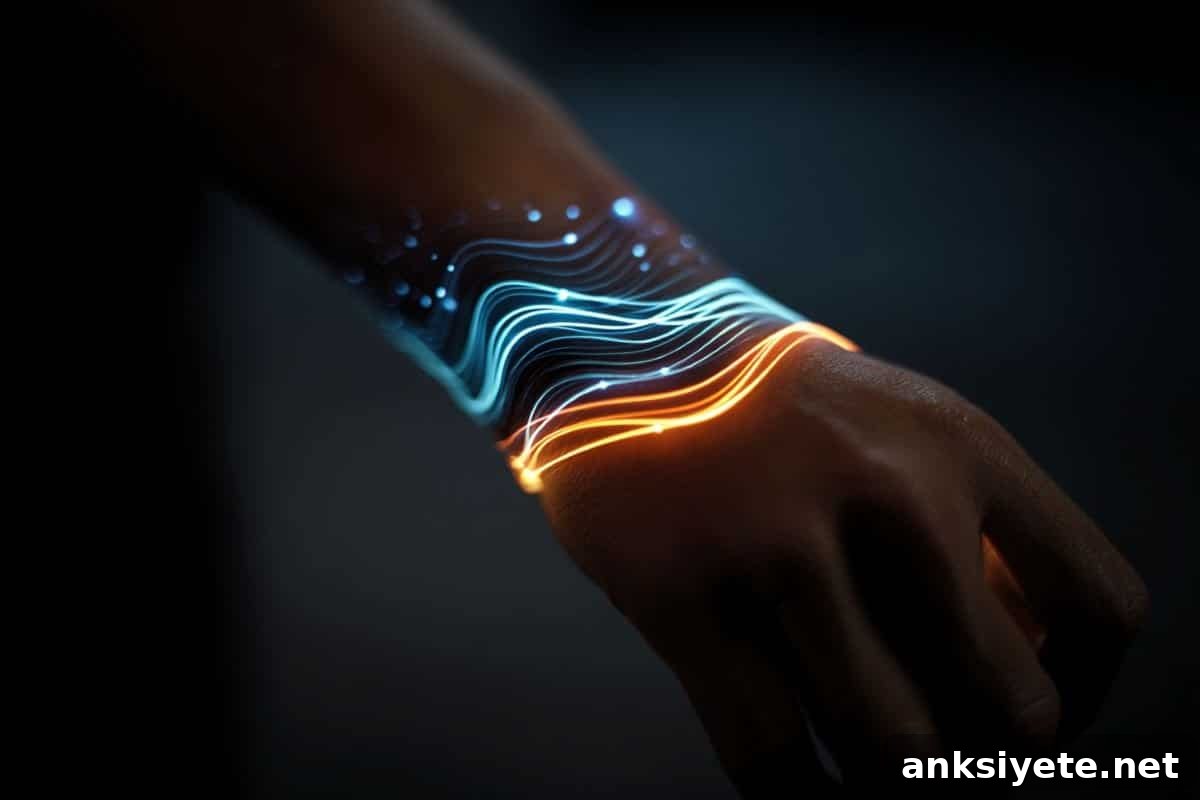
The study uses a Research through Design approach: iterative prototyping, user studies, and collaborative workshops inform the creation of “tactons”—structured vibrations with variations in rhythm, intensity, duration, and spatial distribution. These parameters are combined and tested across contexts to see how easily and reliably people interpret them and what meanings they attach.
The meaning of vibration in digital communication
Results show that vibration can communicate more than binary signals. Participants attributed emotional qualities to specific patterns: a slow, steady pulse suggested reassurance; rhythmic crescendos conveyed encouragement; abrupt, irregular pulses implied tension or urgency. In remote public speaking trials, subtle vibrotactile cues were experienced as social support, allowing speakers to manage stress and sustain concentration without breaking eye contact or listening to audio prompts.
In a separate line of inquiry, people translated personal memories into tactile sequences. By mapping tempo and intensity to emotional and temporal aspects of a memory, participants generated consistent patterns that they could later recognize. Co-design sessions with blind and low-vision participants produced tactile vocabularies for navigation and situational awareness, demonstrating an alternative, eyes-free channel for environmental information.
A co-design framework and practical tools
A central contribution of the thesis is a co-design framework that guides designers in turning subjective and contextual meanings into haptic form. Rather than treating vibration as a technical parameter to be tuned, the framework helps teams explore emotional intent, user interpretation, and situational constraints. The research also offers wearable vibrotactile devices and a haptic design system that developers and designers can use as starting points for inclusive, emotionally aware applications.
Helping designers create meaningful touch experiences
The work expands the role of touch in interaction design. Many digital products rely primarily on visual and auditory channels; this research shows touch can be a primary or complementary channel, especially when sight or hearing are overloaded or unavailable. The findings are relevant for accessibility designers, developers of remote communication tools, wellbeing product teams, and creators of multisensory narratives seeking to include tactile storytelling.
By reframing vibration as a carrier of meaning rather than a passive alert, the thesis advances design practices for more inclusive, emotionally intelligent haptic technologies. The methods and prototypes presented point to practical applications: discreet social support in professional or social situations, private contextual cues in public spaces, and new interfaces that empower blind and low-vision users with non-auditory navigation options.
Key Questions Answered:
A: Yes. The research found that structured vibrations—varying rhythm, intensity, and duration—encourage people to map social and emotional meanings onto them. A gentle rhythmic pulse is commonly interpreted as supportive, while sharp or irregular patterns are read as urgency or stress.
A: Visual and auditory channels can become overloaded or inappropriate in many settings. Vibration is private, eyes-free, and suitable for noisy or sensitive environments where checking a screen or using audio would be disruptive.
A: Through co-design, participants mapped memory attributes such as tempo and intensity to tactile patterns. Calm memories might use slow, fading waves, while exciting memories could use rapid, high-frequency pulses that mimic physiological arousal.
Editorial Notes:
- This article was edited by a Neuroscience News editor.
- Journal paper reviewed in full.
- Additional context added by staff.
About this neurotech research news
Author: Mikk Viilukas
Source: Estonian Research Council
Contact: Mikk Viilukas – Estonian Research Council
Image: The image is credited to Neuroscience News