
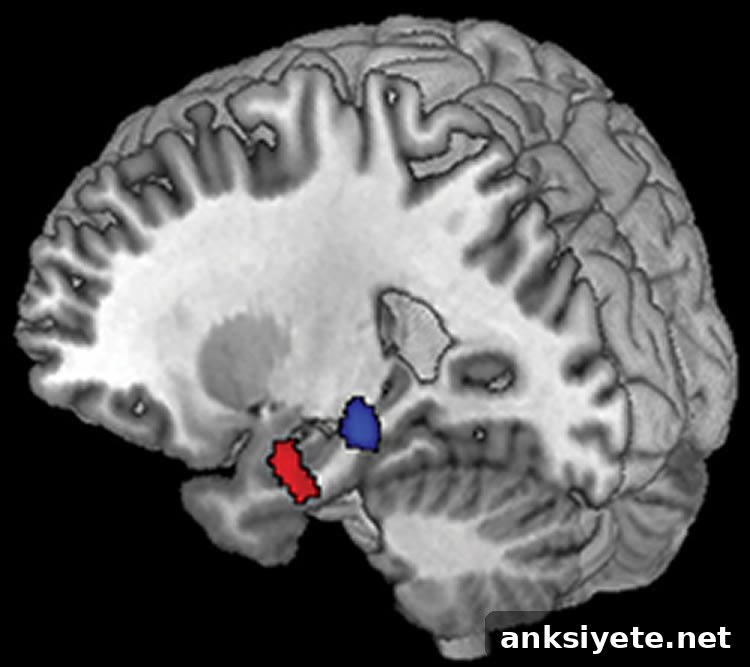
Summary: Researchers report that when the ventral tegmental area cannot supply the hippocampus with adequate dopamine, hippocampal function declines and this impairment may contribute to the earliest stages of dementia.
Source: University of Sheffield.
Reduced input from dopamine-producing neurons deep within the brain appears linked to impaired memory formation, offering a potential early marker for Alzheimer’s disease.
Researchers at the NIHR Sheffield Biomedical Research Centre, University of Sheffield, have identified a significant relationship between the health of dopamine-producing neurons in the ventral tegmental area (VTA) and the hippocampus, the brain structure central to forming new memories. The study suggests that loss or dysfunction of dopaminergic cells in the VTA may reduce hippocampal efficiency and contribute to memory decline associated with early Alzheimer’s disease.
The findings have important implications for early detection and monitoring of Alzheimer’s disease, which affects hundreds of thousands of people in the UK. They could lead to revised approaches for brain imaging and cognitive testing, prioritizing measures that reveal changes in VTA volume, VTA–hippocampal connectivity, and memory encoding performance.
Professor Annalena Venneri, lead author and researcher at the Sheffield Institute for Translational Neuroscience (SITraN), explained the significance: “Our findings suggest that if a small area of brain cells, called the ventral tegmental area, does not produce the right amount of dopamine for the hippocampus, the hippocampus will not work efficiently.” She emphasized the role of the hippocampus in forming new memories and noted the importance of detecting this change early: “The results point at a change which happens very early on, which might trigger Alzheimer’s disease. This is the first study to demonstrate such a link in humans.”
Co-lead author Dr Matteo De Marco and colleagues used high-resolution 3 Tesla magnetic resonance imaging (MRI) to examine structural and functional brain measures in a cohort that included 51 healthy adults, 30 patients diagnosed with mild cognitive impairment (MCI), and 29 patients with Alzheimer’s disease. The higher-field 3T MRI provided detailed images of small brain nuclei such as the VTA and fine-grained measures of hippocampal size and functional connectivity.
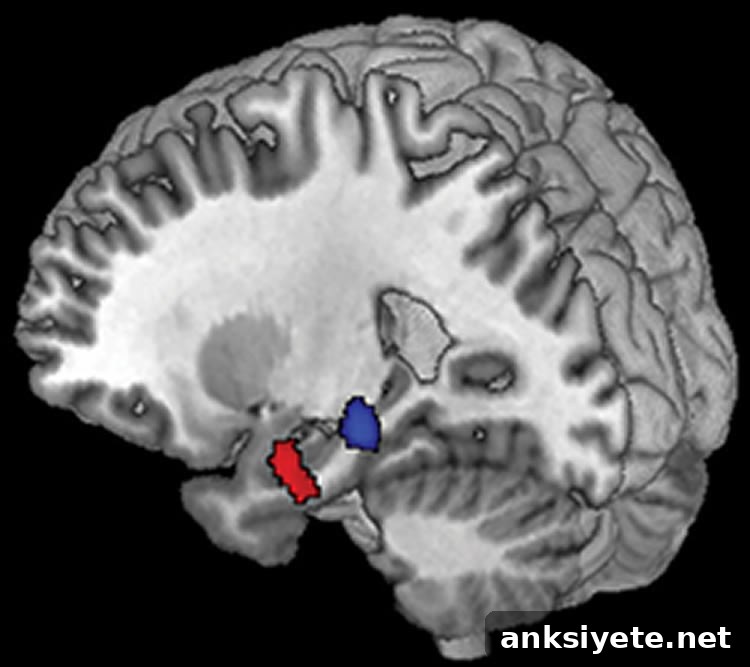
Analysis of the imaging and neuropsychological data revealed a clear association: smaller VTA volume and weaker VTA–hippocampal functional connectivity correlated with reduced hippocampal volume and poorer ability to learn and encode new information. These associations were strongest in the healthy control group, suggesting that VTA changes may appear very early in the disease cascade, even before severe cognitive symptoms emerge.
Professor Venneri noted practical consequences for screening and treatment: “More studies are necessary, but these findings could potentially lead to a new way of screening older adults for early signs of Alzheimer’s disease, altering how brain scans are acquired and interpreted and prompting the use of different memory tests. Another possible benefit is that it might lead to a different treatment option with the potential to change or halt the course of the disease very early, before major symptoms manifest.”
The research team plans to investigate how soon VTA alterations can be detected and whether existing treatments can counteract these early changes in dopaminergic function.
Funding: This study was conducted at the NIHR Sheffield Biomedical Research Centre (BRC), a partnership between the University of Sheffield and Sheffield Teaching Hospitals NHS Foundation Trust. The Centre focuses on translational neuroscience research for chronic neurological disorders.
Source: University of Sheffield.
Publisher: NeuroscienceNews.com.
Image Source: University of Sheffield.
Original Research: De Marco, Matteo; Venneri, Annalena. “Volume and Connectivity of the Ventral Tegmental Area are Linked to Neurocognitive Signatures of Alzheimer’s Disease in Humans.” Journal of Alzheimer’s Disease. Published online March 23, 2018. doi: 10.3233/JAD-171018
Abstract
Volume and Connectivity of the Ventral Tegmental Area are Linked to Neurocognitive Signatures of Alzheimer’s Disease in Humans
Background: Identifying the earliest biological events in the progression of Alzheimer’s disease (AD) is essential for early intervention. Animal studies have shown early loss of dopaminergic neurons in the ventral tegmental area (VTA), reduced VTA–hippocampal innervation, and worsening memory. Whether a similar pattern exists in humans has been unclear.
Objective: This study tested whether VTA volume and its functional connectivity are associated with established clinical markers of AD across healthy individuals, patients with mild cognitive impairment, and patients with AD dementia.
Methods: Structural and resting-state functional MRI scans and neuropsychological assessments were acquired from 51 healthy adults, 30 patients with mild cognitive impairment, and 29 patients with Alzheimer’s disease dementia. VTA volume was quantified and compared with control nuclei. Associations between nuclei volumes, hippocampal size, memory performance, and language-executive skills were examined, along with VTA functional connectivity.
Results: VTA volume, but not the volume of control nuclei, showed a strong association with hippocampal size and memory encoding performance, particularly in healthy adults. Additionally, functional connectivity between the VTA and hippocampus was significantly associated with both hippocampal volume and memory performance.
Conclusion: Reduced dopaminergic activity in the VTA may play a key role in the earliest pathological features of Alzheimer’s disease. These findings point to potential strategies for early screening and treatment targeting VTA–hippocampal pathways and suggest that memory encoding processes may be especially vulnerable to early VTA neurodegeneration.