
The motor cortex uses multiple brain-wave frequency bands to coordinate movement
Synchronized neuronal activity is essential for the brain to process information and produce coordinated behavior. Neurons that fire together within a region, and oscillatory brain waves that align across regions, support communication and timing for complex tasks. New research led by Tomoki Fukai at the RIKEN Brain Science Institute reveals how the motor cortex recruits several distinct brain-wave frequency bands to organize the planning and execution of voluntary movement.
Generating voluntary movement requires precise timing and sequencing of many muscle groups. The motor cortex orchestrates this coordination by shaping when and how populations of neurons fire. To investigate how brain waves contribute to this orchestration, Fukai and colleagues recorded local field potentials and single-neuron activity from the motor cortex of rats as the animals learned a sequential lever task: push, hold, then pull a lever to earn a food reward. The research team implanted multi-channel electrodes across cortical layers to capture temporal patterns of oscillations and spikes, and they applied a machine-learning method to separate and extract spike sequences of individual neurons from the recorded signals.
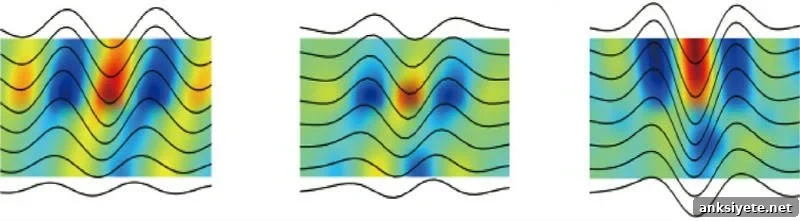
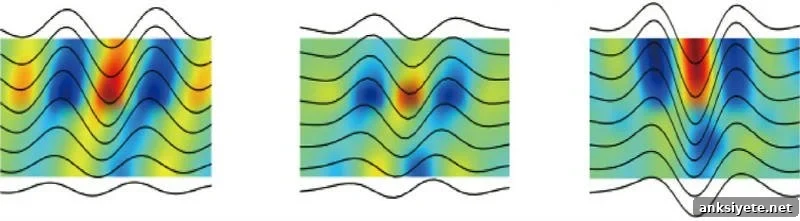
The recordings revealed that different frequency bands became prominent at distinct stages of the movement sequence. Fast gamma oscillations, around 100 hertz, dominated during the active push and pull phases when the rats executed the lever movements. In contrast, slow gamma oscillations in the 25–40 hertz range peaked during the hold period when animals paused and prepared for the next action. Theta oscillations (4–10 hertz) were strongest while the rats maintained the lever hold, and the precise initiation of the pull coincided with a particular phase of these theta cycles.
Importantly, the different gamma bands were not independent of the slower theta rhythm. Both fast and slow gamma activity were phase-coupled to theta oscillations so that peaks in all three bands occurred at aligned moments in time. This cross-frequency coupling suggests a hierarchical temporal organization: slower theta cycles may structure when bursts of gamma-band activity occur, and gamma rhythms may then coordinate more fine-grained spike timing among neurons involved in motor execution.
The researchers also found a clear mapping between cortical layers, cell types, and oscillatory timing. Distinct types of neurons located in different cortical layers synchronized their firing with particular frequency bands. Moreover, neurons that encoded different segments of the lever sequence—such as push, hold, or pull—tended to fire during distinct phases of the theta cycle. In other words, theta phase distinguished neuronal populations encoding successive movement elements, while gamma sub-bands related to active movement versus preparation.
Taken together, these results indicate that theta oscillations play a central role in coordinating neuronal activity across layers of the motor cortex to support both planning and execution of sequential voluntary movements. While theta rhythms are well known for organizing spatial and mnemonic processing in the hippocampus, this study is the first to show a comparable theta–gamma coordination code in motor cortical circuits during overt motor behavior.
The authors note that these findings bridge oscillatory dynamics and precise spike timing to explain how the motor cortex represents sequential actions. Ongoing work in the laboratory applies machine-learning analyses to further decode how phase-locked spikes across cortical layers carry motor information. The team is also investigating whether similar multi-frequency coordination occurs in prefrontal regions during decision-making, which would point to a broader principle of cortical computation based on cross-frequency phase relationships.
Notes about this neuroscience and movement research
Contact: Tomoki Fukai – RIKEN Brain Science Institute
Source: RIKEN press release summarizing the study
Image Source: Credit to J. Igarashi et al.; image adapted from the RIKEN press release
Original Research: Abstract for “A θ–γ Oscillation Code for Neuronal Coordination during Motor Behavior” by Jun Igarashi, Yoshikazu Isomura, Kensuke Arai, Rie Harukuni, and Tomoki Fukai in Journal of Neuroscience. Published online November 20, 2013, DOI: 10.1523/JNEUROSCI.2126-13.2013
#neuroscience, #movement