
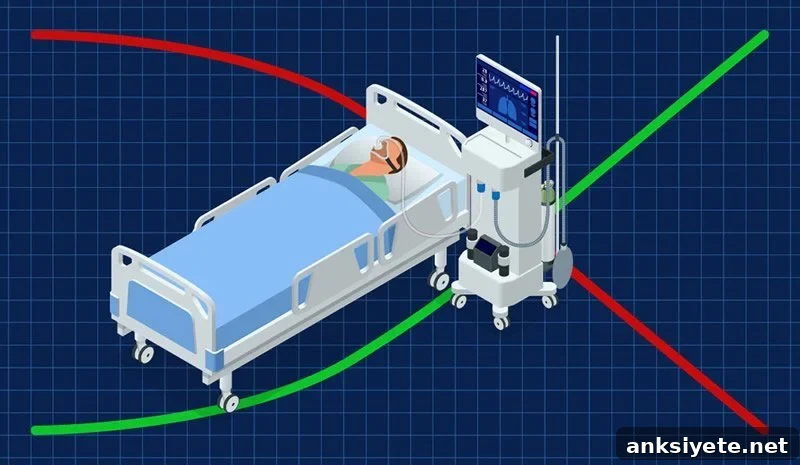
Summary: Researchers warn that, to prevent hospitals in the United States from facing the same extreme strain seen in Italy during the COVID-19 outbreak, even people with mild symptoms must promptly self-isolate to limit disease transmission.
Source: Yale
When Alison Galvani first observed the rapid spread of COVID-19 in China, she and colleagues at Yale’s Center for Infectious Disease Modeling and Analysis (CIDMA) recognized the risk to U.S. hospitals and began modeling how the outbreak might affect intensive care capacity nationwide. Their analysis focused on how quickly symptomatic people self-isolate and how that behavior would influence demand for ICU beds.
Their results, published in the Proceedings of the National Academy of Sciences, are stark: without significant changes in behavior and a concerted effort to expand critical care capacity, the U.S. health system risks being overwhelmed by patients requiring intensive care.
If the country is to avoid scenes like those in Italy—where hospitals became overcrowded and clinicians had to make wrenching decisions about who could receive life-saving treatment—Galvani and her team say it is essential that people with even mild symptoms stay home immediately and that hospital equipment and staffing capacity be expanded rapidly.
“To prevent a severe mismatch between ICU supply and demand, people must stay home at the first sign of illness,” said Galvani, the Burnett and Stender Families Professor of Epidemiology at the Yale School of Public Health and director of CIDMA. “Without self-isolation, the health care system will be overwhelmed. We are already seeing strains in major cities.”
The team simulated multiple scenarios varying three main factors: the proportion of symptomatic people who self-isolate, the delay from symptom onset to self-isolation, and the virus’s basic reproduction number (R0). Their goal was to project when the outbreak would peak and how many ICU beds would be needed at that peak.
In the study’s worst-case scenario—where no symptomatic individuals self-isolate and R0 is high—the United States would require nearly four times more ICU beds for critically ill COVID-19 patients than currently available. The nation has about 98,000 ICU beds, but roughly 65% of that capacity is typically occupied by patients with other serious conditions. Even modest improvements in self-isolation have a meaningful effect: if 20% of mildly symptomatic people isolate within 24 hours of symptom onset, peak ICU demand drops by nearly half, though demand would still exceed available capacity.
Galvani emphasized that “mildly symptomatic” covers a wide range of early illness signals—from a slight cough or fatigue to symptoms that keep a person in bed but do not require hospitalization. Encouraging prompt self-isolation among anyone experiencing such symptoms can substantially slow transmission, reduce the peak burden on hospitals, and save lives.
“Most ICU beds are already in use for other critical illnesses, and you cannot simply discharge those patients to make room,” she said. “A shortage of ICU beds raises mortality not only for COVID-19 patients but for anyone who needs intensive care.”
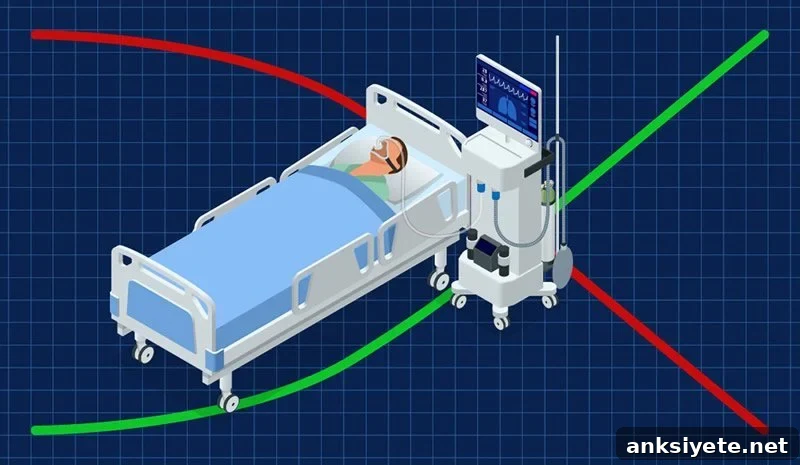
ICU beds require specialized equipment, staff, and resources beyond a standard hospital bed. Slowing the outbreak through self-isolation not only reduces how many patients will need intensive care at once but also delays the peak, providing crucial time to produce and deploy more ventilators, staff, and critical-care space.
“Self-isolation reduces and delays the peaks, both of which are fundamental to minimizing the number of deaths from COVID-19,” Galvani said.
The researchers note that policies enabling people to stay home—such as paid sick leave and expanded family sick leave—are key to making early self-isolation feasible for more people. The United States is unique among major economies in not guaranteeing paid sick leave broadly, and that gap can undermine public health measures designed to limit transmission.
“Providing the means for people to isolate when they or their children are sick is a public health priority,” Galvani added. “Combined with efforts to increase ICU capacity and ventilator availability, encouraging rapid self-isolation can help avert the worst outcomes.”
The study, titled “Projecting hospital utilization during the COVID-19 outbreaks in the United States,” models hospital resource needs under varying assumptions and highlights both the insufficiency of current critical care capacity and the considerable benefit of prompt self-isolation.
Yale contributors to the research include postdoctoral fellows Affan Shoukat, Chad Wells, and Pratha Sah, along with CIDMA Associate Director Abhishek Pandey.
About this coronavirus research article
Source:
Yale
Media contacts:
Brita Belli – Yale
Image source:
Image credited to Yale.
Original research (open access):
“Projecting hospital utilization during the COVID-19 outbreaks in the United States,” Alison P. Galvani et al., Proceedings of the National Academy of Sciences. DOI 10.1073/pnas.2004064117.
Please share this COVID-19 news responsibly.