Summary: For the first time, researchers have traced the causal brain circuitry responsible for obsessive-compulsive disorder (OCD). Instead of relying on conventional functional imaging—which can’t distinguish causes from consequences—the team applied a technique called Causal Network Mapping to rare historical cases of “lesional OCD”: patients who suddenly developed obsessive-compulsive symptoms after a focal brain injury such as a stroke or tumour.
Key Facts
- Solving the Lesion Paradox: The investigators identified 40 published cases in which patients developed OCD immediately following a stroke or tumour. When the physical lesions were projected onto a standard brain template, they appeared widely dispersed with no direct anatomical overlap. Using Causal Network Mapping, however, the team discovered that these distinct lesions all intersected the same underlying neural circuit.
- Four Core Hubs: Analysis isolated four primary, bilateral nodes as the core hubs linked to OCD pathology: the orbitofrontal cortex (OFC) and the basal ganglia in both the left and right hemispheres.
- Orbitofrontal Cortex and Urgent Signals: The OFC is critical for judgment and prioritization. In OCD, this region appears to send a persistent, high-importance signal—essentially an urgent alarm that overrides competing evidence—driving repetitive obsessive concerns.
- Basal Ganglia and Compulsion Reinforcement: The basal ganglia govern habit formation and action execution. When the OFC’s alarm triggers behaviour, the basal ganglia create a reinforced loop that makes it difficult to stop repeating the compulsive action.
- Applicability to Non-Lesional OCD: To confirm these hubs were not unique to post-lesion cases, the researchers used large-scale fMRI meta-analytic tools to compare non-lesional OCD datasets. Those results overlapped the same four hubs and distinguished the OCD network from patterns typical of comorbid conditions like depression and anxiety.
- Precision rTMS Opportunity: The discovery points to a path for improving repetitive transcranial magnetic stimulation (rTMS). A clinical trial funded by the Brain & Behavior Research Foundation is already testing standard rTMS coordinates against targets derived from this newly identified causal network.
- Move Toward Individualized Targeting: The ultimate aim is to abandon one-size-fits-all coordinates and instead use each patient’s MRI to identify the precise cortical millimeter that best connects to their personal OCD circuit, enabling personalized neuromodulation planning.
Source: Champalimaud Center for the Unknown
Obsessive-compulsive disorder (OCD) is a debilitating neuropsychiatric condition. Symptoms can include repetitive hand washing or showering, constantly checking appliances or locks, and intrusive thoughts that force time-consuming rituals. Severe OCD can prevent people from leaving home, maintaining employment, or forming and sustaining relationships.
At the Champalimaud Foundation, Gonçalo Cotovio and colleagues in the Neuropsychiatry Unit, led by Albino J. Oliveira-Maia, have been treating OCD with repetitive transcranial magnetic stimulation (rTMS). rTMS is a non-invasive, FDA- and European-approved brain stimulation method that has helped many patients who failed to respond to medication and psychotherapy. Still, for a number of individuals rTMS has limited benefit, and more precise approaches are needed.
rTMS delivers electromagnetic pulses via a coil placed on the scalp to modulate neural activity in targeted cortical regions. The underlying logic is straightforward: if abnormal activity in a brain area drives symptoms, then modifying that activity should relieve symptoms. The challenge in OCD, however, is identifying which cortical targets are truly causal rather than merely correlated with symptom expression.
Traditional functional MRI studies reveal areas that show abnormal activity in people with OCD, but they cannot reliably separate cause from effect. In contrast, when a previously healthy person develops OCD immediately after a localized brain lesion, that lesion provides causal evidence linking a brain region or network to symptoms.
Using this principle, the research team conducted a systematic search of the literature to collect cases of lesional OCD. Forty patients with clearly defined lesion locations were identified and included in the analysis. While the lesions themselves were spatially diverse, the researchers hypothesized that the shared clinical outcome—OCD—might arise from a common underlying network of connections.
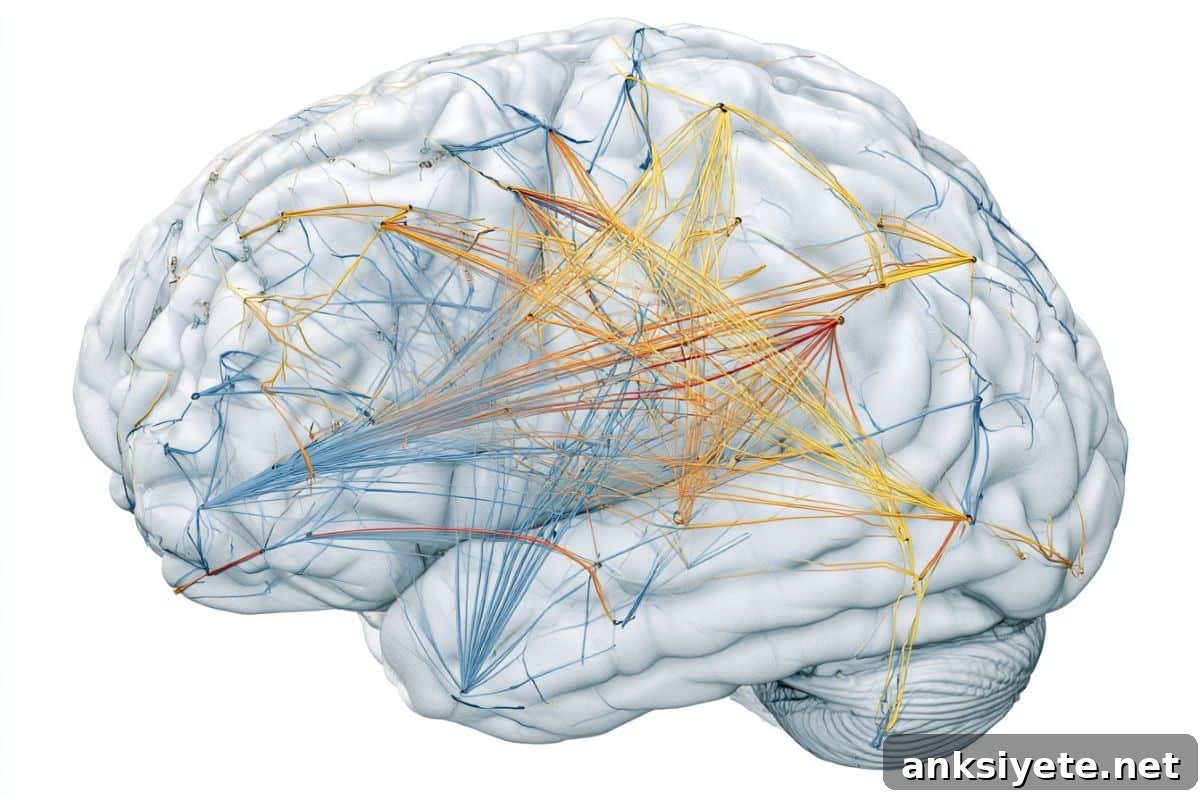
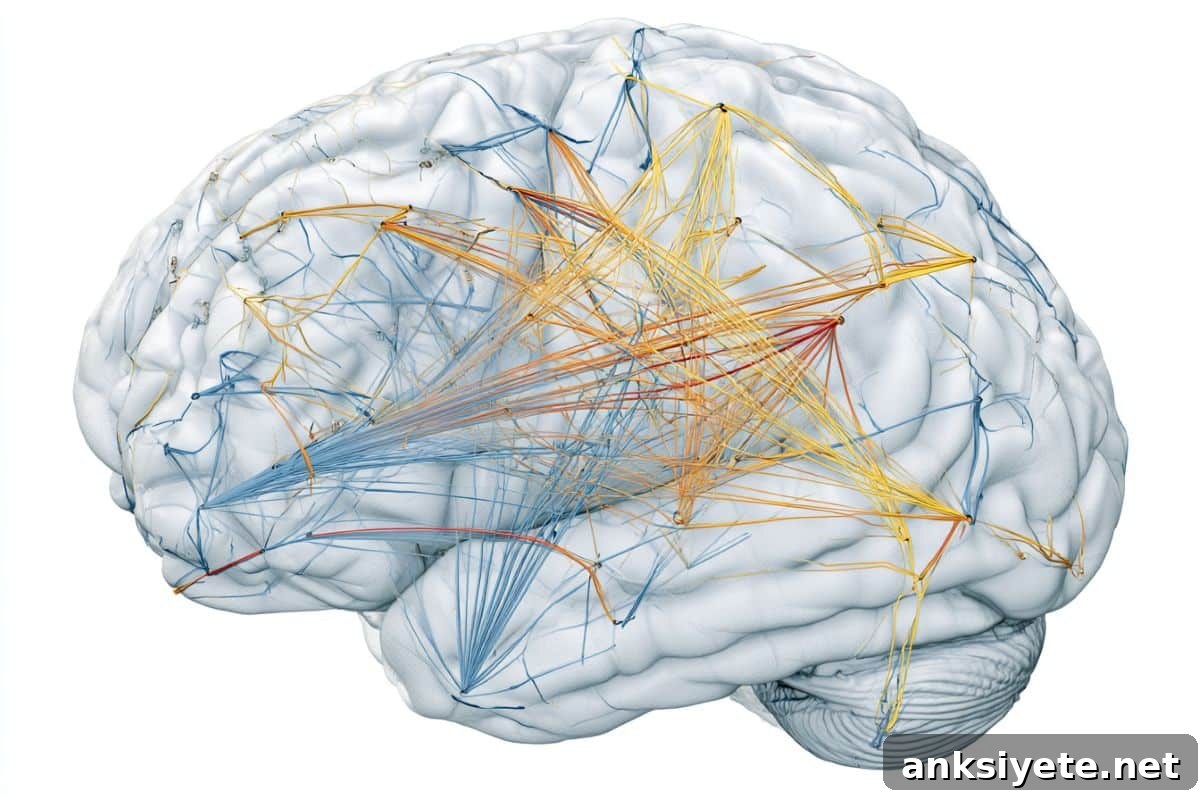
To test this, they applied Causal Network Mapping, a method previously used to map circuits in other psychiatric syndromes. Each lesion location was connected to a normative human connectome derived from resting-state fMRI data of 1,000 healthy participants, producing a functional map for every lesion. Comparing maps from OCD-associated lesions to those from control lesions revealed an OCD-specific network.
This approach highlighted four core hubs: the bilateral orbitofrontal cortex and bilateral basal ganglia. Lesions that precipitated OCD were functionally connected to these hubs, suggesting that disruption of this network—rather than damage to a single anatomical spot—underlies the emergence of obsessive-compulsive symptoms.
Cotovio explains that the OFC contributes to judgment and valuation: in OCD it appears to issue an exaggerated imperative signal—“this is urgent, do it now”—that dominates other information. The basal ganglia, which execute and reinforce habitual actions, then entrench the repeated behaviour, producing the compulsion cycle.
To verify the relevance of this lesional network to idiopathic OCD, the team examined existing non-lesional neuroimaging studies using a meta-analytic tool. Hotspots from primary OCD studies overlapped the same four hubs, whereas hotspots linked to depression or anxiety did not. Additional validation with brain imaging collected at the Champalimaud Foundation further supported these hubs as meaningful targets for non-lesional OCD.
These findings have immediate translational potential. An ongoing clinical trial funded by the Brain & Behavior Research Foundation is comparing outcomes when stimulating conventional rTMS targets versus the newly identified lesional OCD network. If the network-guided approach proves superior, clinicians could adopt individualized targeting, using each patient’s brain anatomy and connectivity to select the precise cortical entry point into their pathological circuit.
Key Questions Answered:
A: Functional scans of typical OCD patients show abnormal activity, but those findings can be either cause or consequence. When OCD appears suddenly after a localized brain lesion in someone with no prior psychiatric history, the lesion is causally linked to the disorder. By mapping 40 such lesions and tracing their shared connectivity, researchers located the network underlying OCD.
A: The study points to a disrupted loop between the orbitofrontal cortex and the basal ganglia. The OFC issues a persistent high-priority signal, while the basal ganglia lock in repetitive actions. Together they produce the intrusive urge and the reinforced compulsion cycle that characterizes OCD.
A: Rather than relying on average rTMS coordinates, clinicians could use the lesional OCD network as a guide and tailor stimulation to each patient’s anatomy and connectivity. A clinical trial is testing whether stimulating network-derived targets produces better outcomes than conventional targeting.
Editorial Notes:
- This article was edited by a Neuroscience News editor.
- The journal paper was reviewed in full.
- Additional context was added by staff.
About this OCD and brain mapping research news
Author: Afonso Vaz Pinto
Source: KREAB Portugal
Contact: Afonso Vaz Pinto – KREAB Portugal
Image: Image credited to Neuroscience News
Original Research: Open access. “Dysfunctional Brain Circuits Overlap in Lesional and Idiopathic Obsessive-Compulsive Disorder” by Albino J. Oliveira-Maia et al., published in Biological Psychiatry. DOI: 10.1016/j.biopsych.2026.05.001
Abstract
Dysfunctional Brain Circuits Overlap in Lesional and Idiopathic Obsessive-Compulsive Disorder
Background
Obsessive-compulsive disorder can arise after brain lesions, but the distribution and connectivity patterns of such lesions have been unclear.
Methods
The authors identified cases of OCD associated with focal brain lesions through a systematic literature search and compared them against control lesions (n = 608). Connectivity from each lesion site was estimated using a normative functional connectome (n = 1000), and an OCD-specific network was derived. The relevance of this network for primary OCD was then evaluated.
Results
Of 129 reported lesion-associated OCD cases, 40 had well-defined lesion locations suitable for analysis. OCD-related lesions intersected the orbitofrontal cortex and right temporal pole more often than control lesions and were associated with connectivity to a distinct brain network. This network overlapped with abnormal functional imaging and with effective brain stimulation targets in primary OCD.
Conclusions
Lesions that cause OCD map to a common functional brain network that aligns with imaging abnormalities and neuromodulation outcomes in patients with primary OCD, suggesting a potential pathway for improved, individualized treatment approaches.