
Summary: Researchers report that certain fat molecules help trigger a cellular stress response that can protect against neurodegenerative diseases such as Huntington’s, Parkinson’s, and Alzheimer’s.
Source: UC Berkeley
A newly discovered stress-response pathway uses specific lipids to support cellular health
Researchers at the University of California, Berkeley, have identified a surprising link between lipid metabolism and protection from protein-aggregation diseases. Studies in the nematode Caenorhabditis elegans and in cultured human cells indicate that modest increases in particular fat molecules can activate a protective program that reduces toxic protein aggregates associated with Huntington’s disease and other neurodegenerative conditions.
Huntington’s, Parkinson’s and Alzheimer’s diseases share a common problem: abnormal proteins misfold and accumulate as toxic aggregates inside or between neurons. These aggregates interfere with cellular function and trigger neurodegeneration, leading to progressive cognitive and motor decline. Huntington’s disease, for example, is caused by an inherited mutation that produces a glutamine-rich protein prone to clumping, which leads to motor dysfunction, psychiatric symptoms and dementia, often beginning in mid-adulthood.
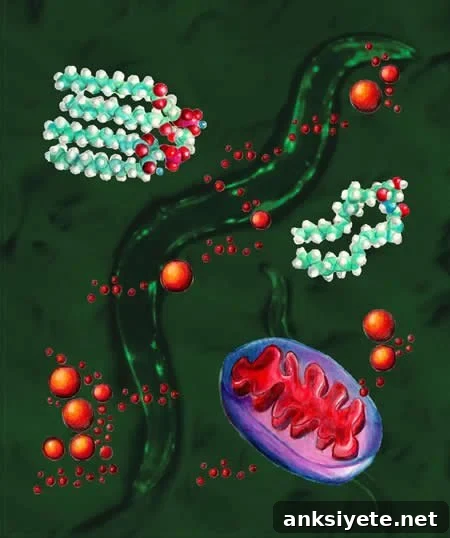
When UC Berkeley scientists disrupted mitochondrial function in a C. elegans strain engineered to model Huntington’s disease, the worms accumulated extra fat. The team traced this response to increased synthesis of a specific lipid, ceramide, which unexpectedly prevented the formation of harmful protein aggregates. The lipids were not merely byproducts; they were required to activate a gene program that protected both the worms and human cells from the toxic effects of misfolded proteins.
“When we activated this lipid-mediated response, both the worms and human cells were almost completely protected from Huntington’s aggregates,” said Andrew Dillin, Thomas and Stacey Siebel Distinguished Chair in Stem Cell Research in UC Berkeley’s Department of Molecular and Cell Biology and a Howard Hughes Medical Institute investigator.
The researchers also tested drugs that block the cell’s ability to sequester ceramide into storage droplets. Those treatments produced a similar protective effect, suggesting the pathway can be modulated pharmacologically. Dillin reported that these promising findings are moving toward mammalian testing in mouse models of Huntington’s disease.
Neuronal stress triggers systemic metabolic changes
In a related study published in the same issue of Cell, the team found that stressed neurons release the neurotransmitter serotonin as a signal that initiates a body-wide metabolic shift. Serotonin release from affected brain cells appears to rewire peripheral metabolism, changing which fuel sources tissues use and producing a systemic response that may prioritize resources for the brain.
“Serotonin release dramatically alters peripheral metabolic output and the fuels cells use,” said Dillin. “It may represent a strategy to protect vulnerable neurons by redirecting limited systemic resources to the brain, even at the cost of peripheral tissues.”
These findings connect brain-specific mitochondrial stress to global metabolic changes and suggest that drugs influencing serotonin signaling—already used for psychiatric symptoms—could have broader implications for age-related neurodegenerative diseases.
Mitochondria and protein-folding stress
Mitochondria, the cellular organelles that generate energy, also play central roles in signaling and protein quality control. Mitochondrial dysfunction has been increasingly implicated in aging and in protein-misfolding disorders such as Alzheimer’s, Parkinson’s and Huntington’s diseases.
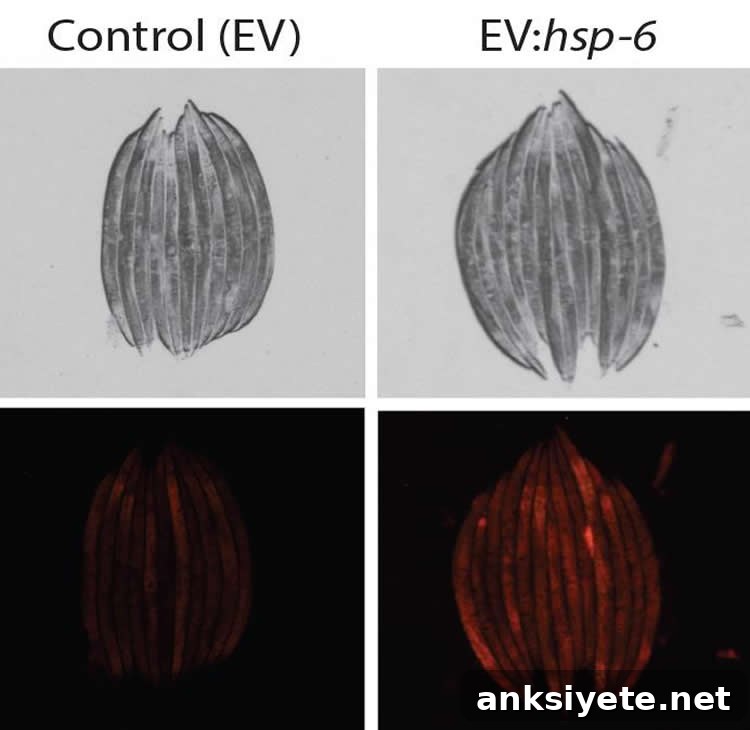
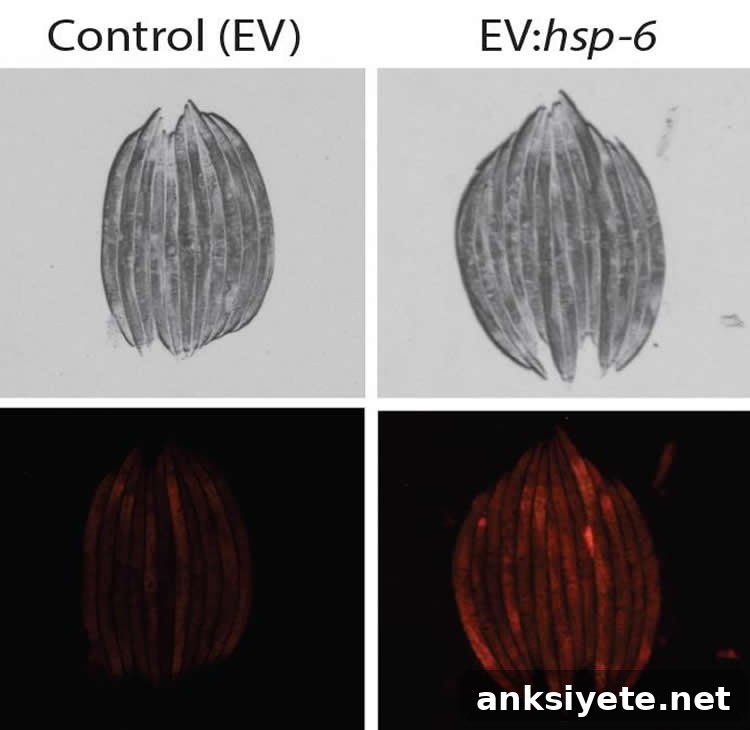
In their experiments, the scientists observed that the mutant Huntington protein aggregates associate with mitochondria and trigger a broad protein-folding response, releasing numerous heat-shock proteins that attempt to refold misfolded proteins. Surprisingly, partial knockdown of one particular mitochondrial chaperone, mtHSP70, initiated a distinct stress response that promoted lipid accumulation and improved protein folding in the cell cytosol.
The researchers named this adaptive mechanism the mitochondrial-to-cytosolic stress response (MCSR). Activating the MCSR—either genetically or with small molecules—reduced polyglutamine-mediated toxicity and decreased aggregate formation in both nematode and human cell models.
“You wouldn’t see these coordinated organism-level effects in a simple tissue-culture dish,” Dillin noted. “Using whole organisms like C. elegans allowed us to observe how mitochondrial signals and brain-derived communication combine to protect cells.”
Co-authors on the lipid and mitochondrial studies include Hyun-Eui Kim, Ana Rodrigues Grant, Milos Simic, Rebecca Kohnz, Daniel Nomura, Jenni Durieux, Celine Riera, Melissa Sanchez, Erik Kapernick and Suzanne Wolff at UC Berkeley. Additional collaborators on the signaling work include Kristen Berendzen, Ye Tian, Li-Wa Shao and Ying Liu.
Funding: The studies were supported by the Howard Hughes Medical Institute, National Institutes of Health, the Glenn Foundation for Medical Research and the Jane Coffin Childs Memorial Fund for Medical Research.
Source: Robert Sanders, UC Berkeley. Image credit: Hyun-eui Kim, UC Berkeley. Original research reported in Cell: “Lipid Biosynthesis Coordinates a Mitochondrial-to-Cytosolic Stress Response,” published online September 8, 2016. Authors: Hyun-Eui Kim, Ana Rodrigues Grant, Milos S. Simic, Rebecca A. Kohnz, Daniel K. Nomura, Jenni Durieux, Celine E. Riera, Melissa Sanchez, Erik Kapernick, Suzanne Wolff, and Andrew Dillin. DOI: 10.1016/j.cell.2016.08.027.
Lipid Biosynthesis Coordinates a Mitochondrial-to-Cytosolic Stress Response
Highlights
- Distinct disruption of mitochondrial proteostasis activates the mitochondrial-to-cytosolic stress response (MCSR).
- Fatty acid and lipid biosynthesis are required components of the MCSR.
- MCSR depends on stress-responsive transcription factors such as dve-1 and hsf-1.
- MCSR reduces polyglutamine-mediated toxicity and is amenable to small-molecule targeting.
Summary
Defective mitochondrial metabolism is increasingly linked to age-related protein-misfolding diseases including Alzheimer’s, Parkinson’s and Huntington’s. Compartment-specific unfolded protein responses (UPRs) in the endoplasmic reticulum, mitochondria and cytosol normally work in parallel to maintain protein homeostasis. This research uncovers a conserved mechanism that connects mitochondrial proteostasis to the cytosolic folding environment through changes in lipid homeostasis. Mitochondrial stress or small-molecule activators induce a coordinated gene expression program involving both mitochondrial and cytosolic UPRs, which protects cells from disease-associated misfolded proteins. These findings reveal new communication pathways between cellular stress responses and identify potential targets for treating protein-misfolding disorders.