
Summary: Researchers found that students learn better when their brain activity aligns with their classmates and teacher during real classroom lectures.
Source: NYU
New research shows that students whose brainwaves synchronize more closely with their peers and instructor tend to retain more information from class than students who show less “brain-to-brain synchrony.”
Published in the journal Psychological Science, the study provides new, ecologically valid evidence about how social dynamics in the classroom are reflected in brain activity and linked to learning outcomes.
“This is the first study to show that the degree of alignment between students’ and teachers’ brainwaves during real-world instruction predicts how well students remember material from a class,” says Ido Davidesco, lead author and assistant professor at the University of Connecticut’s Neag School of Education, who conducted the research while a postdoctoral fellow at New York University.
“Most human learning occurs through interaction, yet we know relatively little about how those interactions show up in the brain,” adds Suzanne Dikker, research professor in NYU’s Department of Psychology and a senior author on the paper. “Our results indicate that stronger neural synchrony among students and between students and the teacher corresponds with better learning.”
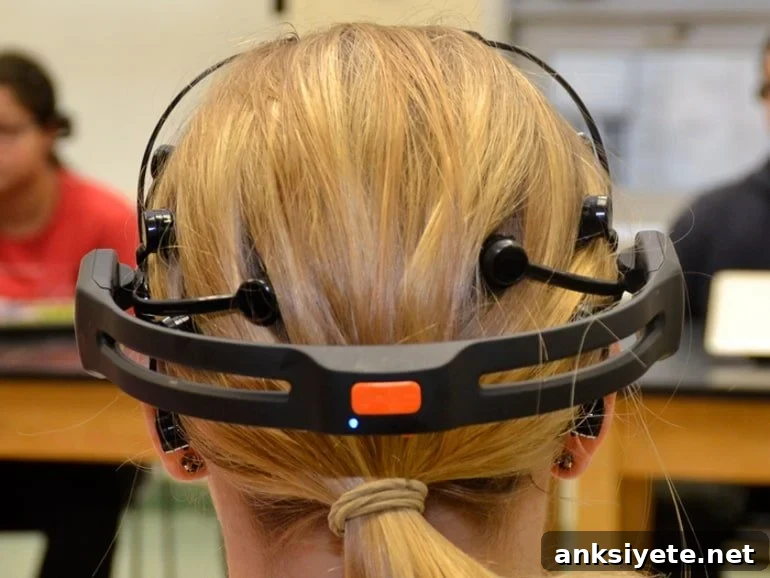
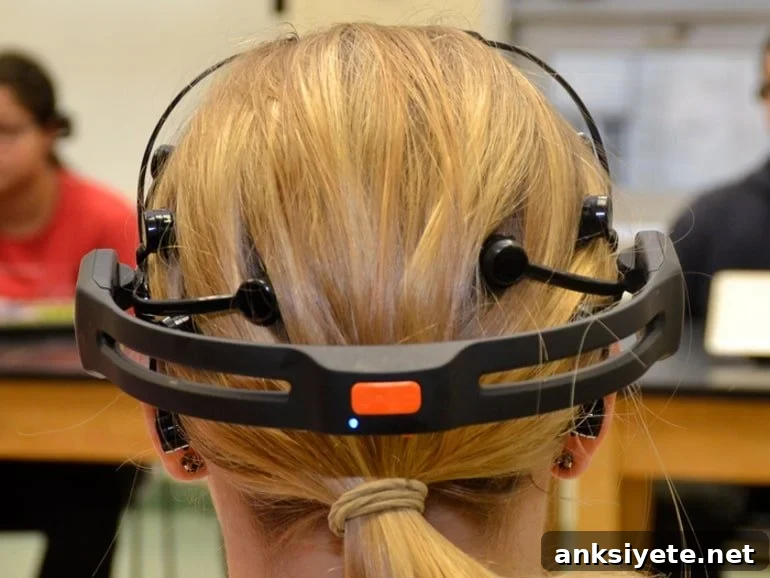
To study brain activity in a realistic group setting, the team used portable electroencephalography (EEG) caps to record electrical brain signals from small groups of undergraduates and their instructor. None of the participants knew one another beforehand. During short lecture segments on scientific topics, researchers recorded EEG from four students and the teacher simultaneously, then asked students to complete multiple-choice tests immediately after the lectures to measure learning.
Analysis revealed that students’ brainwaves became synchronized with one another while listening to the lectures. The team also observed synchrony between students’ brain activity and the teacher’s activity. Crucially, higher levels of this brain-to-brain synchrony—both student-to-student and student-to-teacher—were associated with better performance on the post-lecture tests.
The researchers were even able to predict which specific test questions students would answer correctly based on how synchronized their brain activity was during the lecture segments related to those questions. Notably, individual students’ brain signals alone did not predict learning; it was the shared neural dynamics across people that mattered most.
“Collecting brain data simultaneously from groups provides richer information about learning than recording individuals in isolation,” Davidesco explains. The study highlights the importance of social alignment in learning and suggests neural synchrony could serve as an objective marker of engagement and comprehension in classrooms.
Other authors on the paper include Emma Laurent (Harvard University), Henry Valk (Pison Technology, Inc.), Tessa West (NYU Department of Psychology), Catherine Milne (NYU Steinhardt), and David Poeppel (NYU Department of Psychology and Ernst Strüngmann Institute for Neuroscience).
Funding: The research was supported by the National Science Foundation (grant ECR-1661016).
About this learning research news
Author: James Devitt
Source: NYU
Contact: James Devitt – NYU
Image: Photo credit: Diane Quinn, © 2015 Trevor Day School
Original Research: Closed access.
“The Temporal Dynamics of Brain-to-Brain Synchrony Between Students and Teachers Predict Learning Outcomes” by Ido Davidesco et al., Psychological Science
Abstract
The Temporal Dynamics of Brain-to-Brain Synchrony Between Students and Teachers Predict Learning Outcomes
Social interaction plays a central role in human learning, but little is known about how these interactions are represented in the brains of students and teachers. This study concurrently recorded electroencephalography (EEG) from nine small groups, each composed of four students and one teacher, to examine whether neural synchrony predicts learning.
Participants were young adults from the northeastern United States. The researchers focused on alpha-band (8–12 Hz) brain-to-brain synchrony and found that higher synchrony among students predicted both immediate and delayed posttest performance. Specific lecture segments that elicited higher synchrony also corresponded to questions students later answered correctly.
Synchrony between students and the teacher predicted learning outcomes with an approximate 300-ms lag of the students’ brain activity behind the teacher’s, a timing consistent with spoken-language comprehension processes. These results underscore the value of recording neural data from groups in naturalistic learning environments to better understand how shared brain dynamics support education.