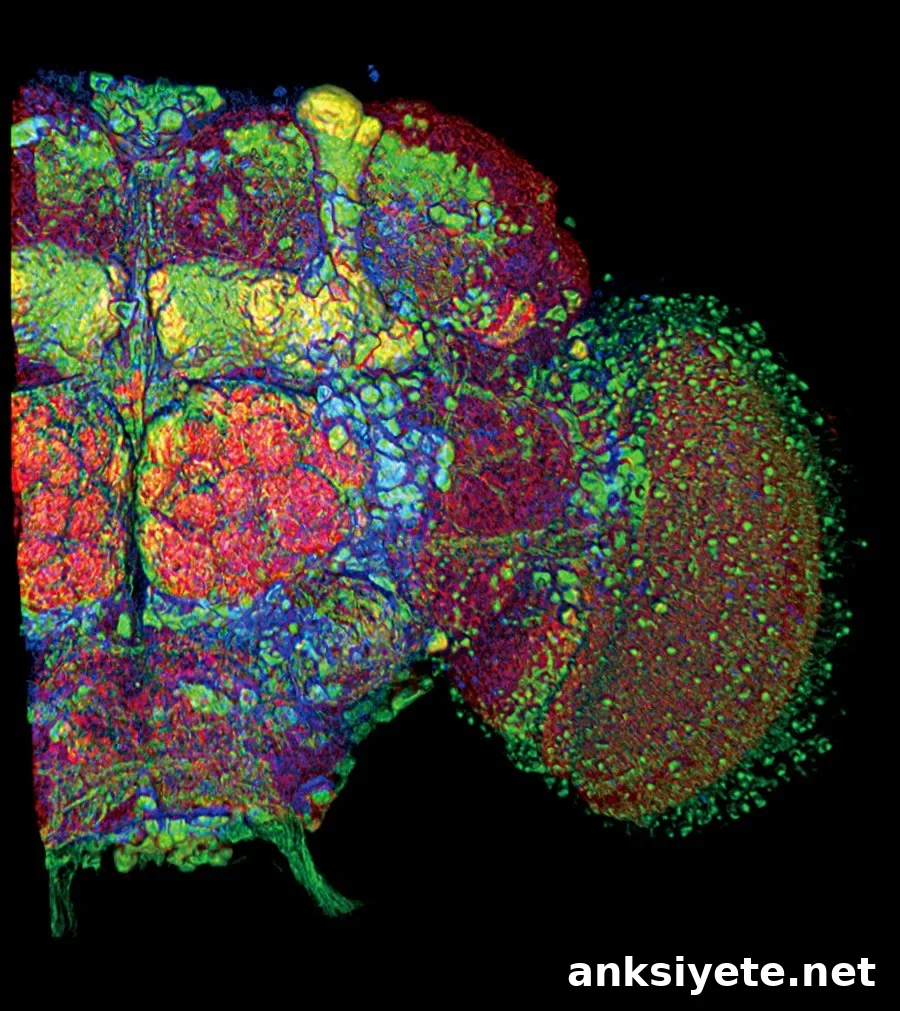
By providing a standardized nomenclature for insect brain architecture, University of Arizona neuroscientists have created a foundation that will improve studies of brain function and disease in humans.
Studying the brain is challenging enough without inconsistent terminology. An international team of neuroscientists has expanded the catalog of identified insect brain structures and established a clear, standardized lexicon to describe them. This unified nomenclature will make it easier for researchers to compare results, communicate findings and accelerate progress in brain mapping and disease research.
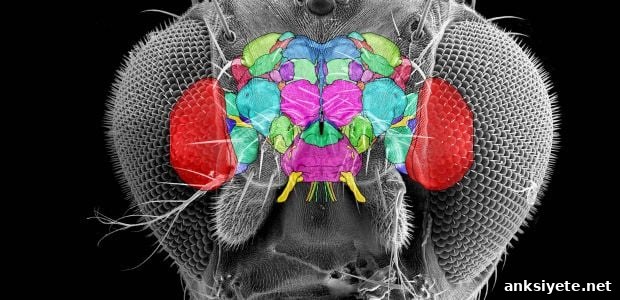
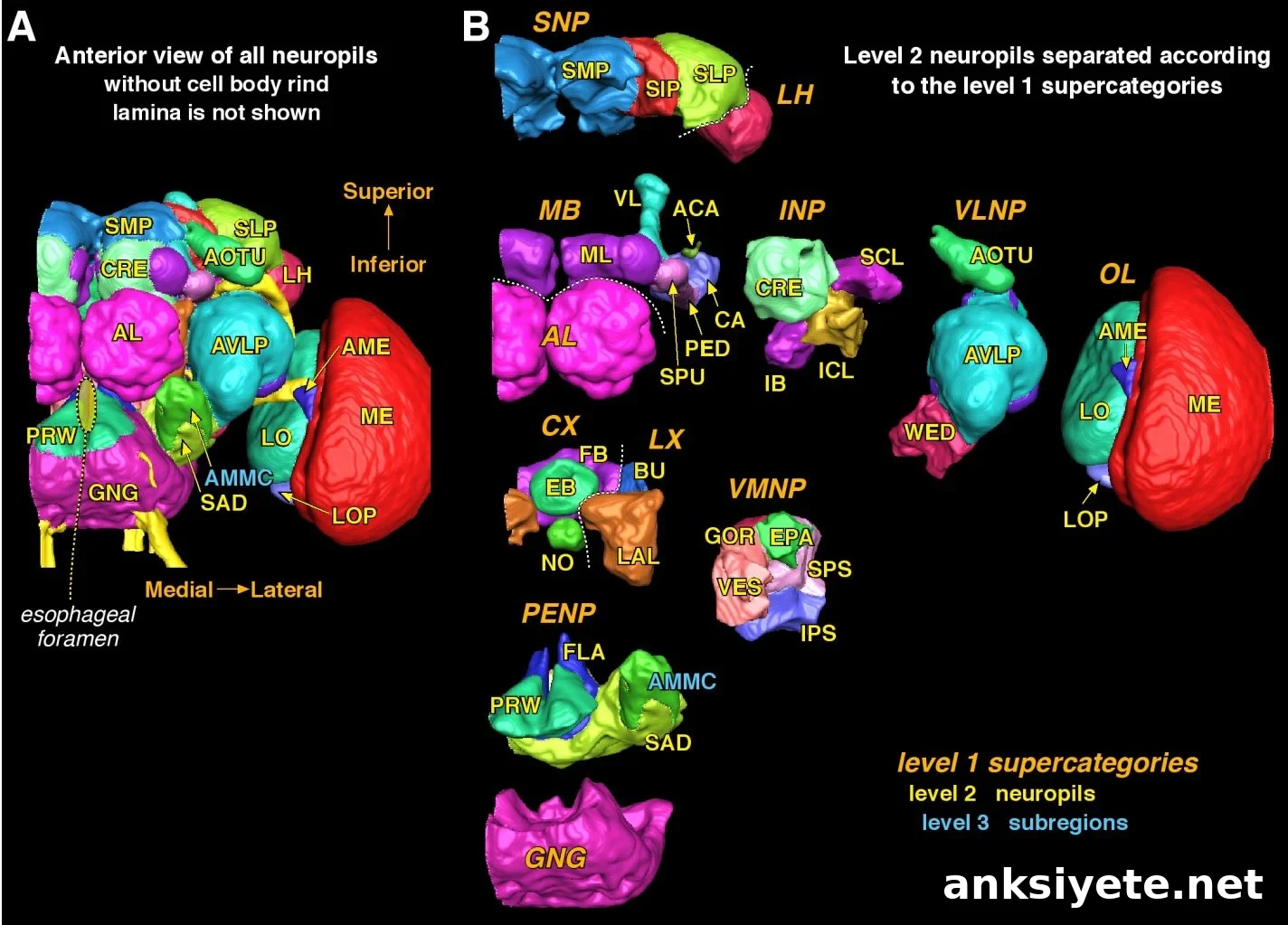
Led by Kei Ito of the University of Tokyo with major contributions from University of Arizona professors Nick Strausfeld and Linda Restifo and collaborators across Europe and the United States, the team produced a comprehensive atlas of neuroanatomical and computational centers in insect brains. Their work more than tripled the number of recognized brain centers and identified many previously unrecognized structures, offering a three-dimensional road map that applies across insects and other arthropods.
The study, published in the journal Neuron, includes an extensive online supplement and promises a public dataset that will be released within six months. The forthcoming materials—hundreds of images and 3-D video animations—will be an important resource for researchers, enabling more efficient analysis, reproducible comparisons and deeper insights into neural circuits and functions.
“This atlas provides a three-dimensional framework for describing structures across insect brains and enables meaningful comparisons with other arthropods,” said Strausfeld, director of the UA Center for Insect Science. “It has great value for describing network relationships among computational centers in the brain.”
The project is timely, aligning with major brain research initiatives such as the U.S. BRAIN initiative and the European Human Brain Project, both aiming to map how individual cells and neural circuits interact in space and time. To inform strategies for exploring the human brain—arguably the most complex structure known—researchers often study model organisms like the fruit fly (Drosophila). These models have simpler, more tractable nervous systems that nevertheless reveal principles relevant to human neurobiology.
Arthropods—such as insects, spiders and crustaceans—have long contributed to biomedical discoveries, from behavior and development to molecular mechanisms of disease. Because vertebrates and invertebrates share deep evolutionary roots, many neuroanatomical features and functional centers are conserved. Research in flies has already shed light on mechanisms underlying Parkinson’s disease and other neurological conditions, guiding therapeutic development.
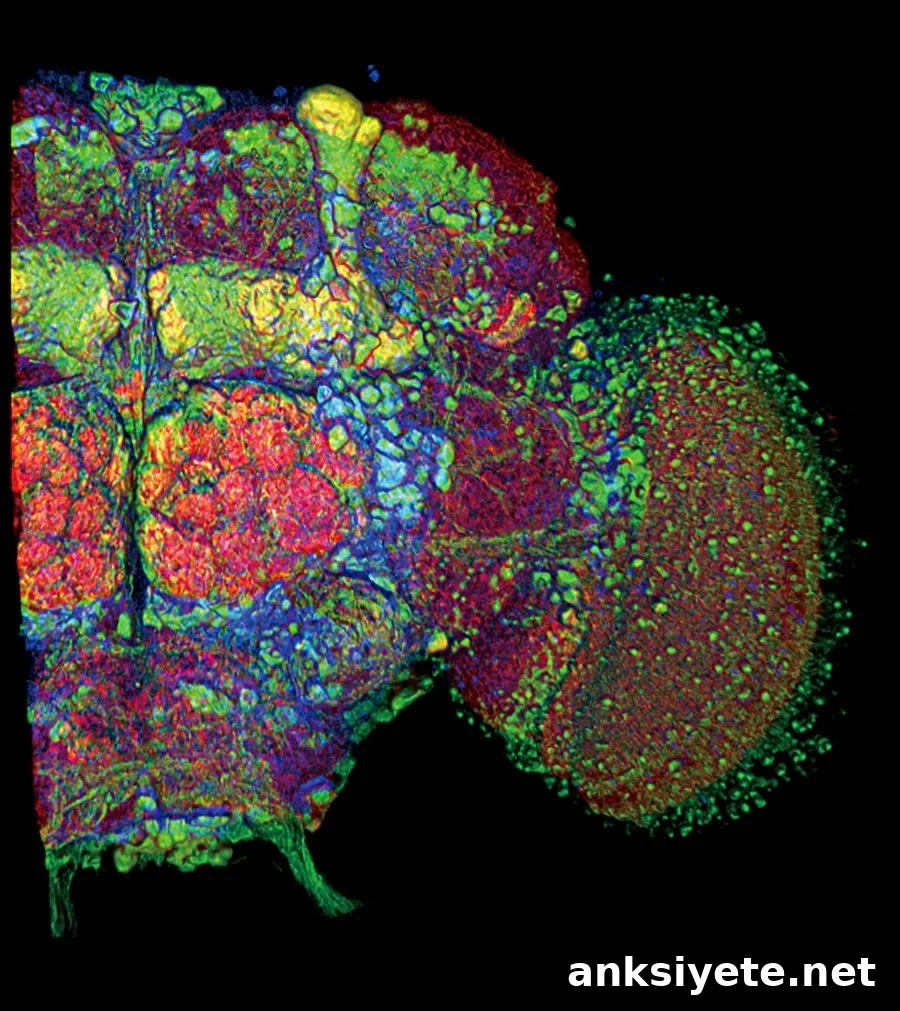
Through this collaborative mapping effort, the researchers found that the pinhead-sized brain of a fruit fly contains more than 50 anatomically distinct centers—an organizational complexity previously associated with larger animals such as fish or mice. Recognizing these discrete centers enables comparisons between insect and vertebrate brains despite roughly 600 million years of evolutionary divergence.
“There are fascinating parallels,” Strausfeld explained. “For instance, olfactory processing structures in vertebrates resemble olfactory lobes in crustaceans, and many visual processing tasks—color, motion, texture, shape—are managed by analogous systems across phyla, even if the details of perception differ between a fly and a human.”
The team used confocal fluorescence microscopy and related imaging techniques to generate virtual slices of the Drosophila brain down to single-cell resolution. Over five years and thousands of collaborative communications, they developed a consensus vocabulary so researchers worldwide can describe specific brain regions consistently.
“We now have a detailed map of neuron distributions within discrete centers and the connections among them,” Strausfeld said. Standardized terminology removes barriers to comparison and synthesis, turning disparate studies into a coherent body of knowledge.
Restifo, professor of neurology and member of the UA BIO5 Institute, emphasized the practical impact for modeling human behaviors and diseases. “These small but well-defined regions in insect brains likely contain specific neurons and connections that drive behaviors such as aggression or addiction. Because many genetic tools work exceptionally well in flies, they will often be invaluable—sometimes even more informative than rodent models—for probing disease mechanisms and screening drugs.”
Uniform concepts and terminology are essential for meaningful work on complex nervous systems. Until now, different names were used for the same structure across species or even within the same species, creating confusion. This new standardized nomenclature establishes a common foundation that will facilitate collaboration and accelerate discoveries in neuroanatomy, brain mapping and translational neuroscience.
Research team and acknowledgments
The paper’s authors include Kei Ito, Kazunori Shinomiya and Masayoshi Ito (University of Tokyo); J. Douglas Armstrong (University of Edinburgh); George Boyan (Ludwig-Maximilians-University, Munich); Volker Hartenstein (UCLA); Steffen Harzsch (University of Greifswald); Martin Heisenberg (University of Würzburg); Uwe Homberg (Philipps-University of Marburg); Arnim Jenett and Julie Simpson (Janelia Farm Research Campus, Howard Hughes Medical Institute); Haig Keshishian (Yale University); Linda Restifo (University of Arizona); Wolfgang Rössler (University of Würzburg); Nicholas Strausfeld (University of Arizona); Roland Strauss (Johannes Gutenberg University Mainz); Leslie B. Vosshall (The Rockefeller University); and the Insect Brain Name Working Group.
Contact: Nick Strausfeld, University of Arizona
Image credits: Kei Ito et al.