
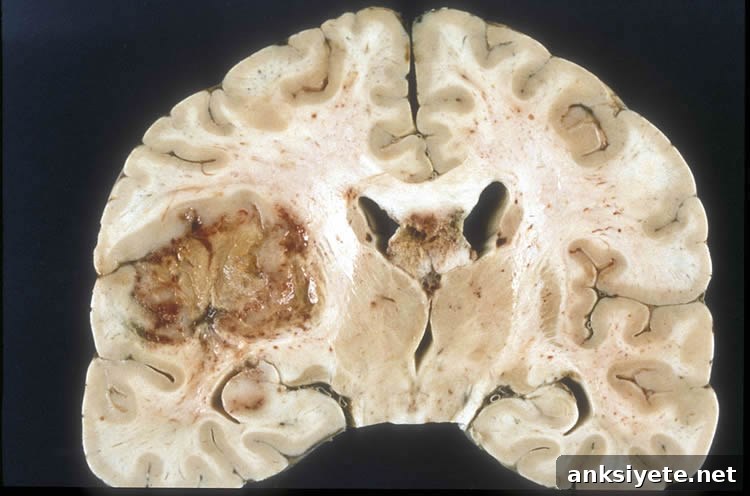
Summary: Researchers have uncovered a molecular mechanism that may drive progression in glioblastoma, suggesting potential avenues for new therapies.
Source: University of Edinburgh.
Two molecules, FOXG1 and SOX2, are identified as central drivers of growth in aggressive adult brain tumours.
New laboratory research reveals how glioblastoma cells exploit the same regulatory machinery used by normal neural stem cells, locking tumours into relentless growth and preventing them from differentiating into specialised brain cells. These insights could point to new therapeutic targets for a cancer that currently has very limited treatment options.
Scientists examined tumour cells derived from patients with glioblastoma, a relatively rare but highly aggressive type of brain cancer. Previous work has shown that many glioblastoma cells resemble normal neural stem cells — the progenitors that generate diverse cell types in the developing brain. This similarity led researchers to investigate whether the same transcriptional programs that define stem cell identity are active in tumours.
The team found two transcription factors, FOXG1 and SOX2, consistently expressed at high levels in patient-derived glioblastoma cells. These factors are also characteristic of normal neural stem cells, and the researchers demonstrate that they play complementary roles in maintaining a stem-like, proliferative state in glioblastoma.
SOX2 promotes continuous cell division, a hallmark of cancer, by supporting the expression of genes that drive the cell cycle. In contrast, FOXG1 interferes with the tumour cells’ ability to respond to signals that normally induce differentiation, effectively blocking the path toward specialised cell fates. Together, the elevated activity of FOXG1 and SOX2 rewires the transcriptional program of tumour cells, enabling unconstrained self-renewal.
Through transcriptional profiling, the researchers identified numerous downstream targets influenced by FOXG1 and SOX2. These include regulators of cell cycle progression and epigenetic control such as FOXO3, PLK1, MYCN, DNMT1, DNMT3B and TET3. Notably, FOXO3 emerges as a critical repressed effector whose regulation is mediated by a conserved cis-regulatory element bound by FOXG1 and SOX2. Experimental reduction of FOXO3, combined with treatment using a DNA methylation inhibitor, promoted dedifferentiation of astrocytes back toward a proliferative neural stem cell state.
Functional studies further clarified the distinct roles of the two factors. Deletion of FOXG1 using CRISPR/Cas9 in patient-derived glioblastoma stem cells did not substantially change proliferation in vitro, but when these cells were transplanted in vivo they showed increased astrocyte differentiation and up-regulation of FOXO3. By contrast, removal of SOX2 severely impaired cell proliferation and prevented expansion of mutant cells in culture. These results indicate that FOXG1 and SOX2 operate in complementary but non-redundant ways to sustain the stem-like identity and growth capacity of glioblastoma stem cells.
The researchers suggest that disrupting the activity of FOXG1 and SOX2, or restoring the function of their key downstream effectors such as FOXO3, could present new strategies to slow or stop tumour growth. Given the poor prognosis for patients with glioblastoma — where long-term survival is rare and current treatment options are limited — identifying molecular vulnerabilities like these is an important step toward more effective, targeted therapies.
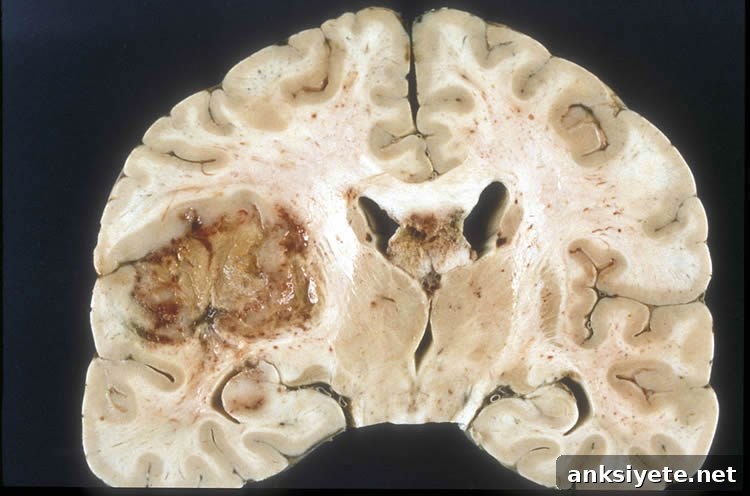
Glioblastoma is a fast-growing brain tumour with limited treatment options; only a small proportion of patients survive beyond one year after diagnosis. The study was led by the Medical Research Council Centre for Regenerative Medicine at the University of Edinburgh and appears in the journal Genes and Development. Funding was provided by Cancer Research UK and the Wellcome Trust.
Lead researcher Dr Steve Pollard, CRUK Senior Cancer Research Fellow at the University of Edinburgh, commented: “Brain cancer cells seem to be hijacking important cell machinery that is used by normal brain stem cells. The tactic they appear to use is to produce high levels of these key regulators. This locks the tumour cells into perpetual cycles of growth and stops them listening to the signals that normally control cell specialisation.”
Dr Áine McCarthy, Cancer Research UK’s Senior Science Information Officer, said: “While survival for many cancers has improved dramatically, brain tumours remain a major challenge and we urgently need kinder, more effective treatments. This research offers new insight into how two specific molecules may drive glioblastoma growth. The next stage will be to explore whether blocking these mechanisms can prevent tumour cells from surviving and to test those approaches in clinical studies.”
Source: Jen Middleton – University of Edinburgh
Image Source: NeuroscienceNews.com image is cited for illustrative purposes.
Original Research: Abstract for “Elevated FOXG1 and SOX2 in glioblastoma enforces neural stem cell identity through transcriptional control of cell cycle and epigenetic regulators” by Harry Bulstrode et al., Genes and Development. Published online May 2, 2017. DOI: 10.1101/gad.293027.116
University of Edinburgh. “Brain Cancer Discovery Reveals Clues in Quest For New Therapies.” NeuroscienceNews. May 10, 2017.
Abstract
Elevated FOXG1 and SOX2 in glioblastoma enforces neural stem cell identity through transcriptional control of cell cycle and epigenetic regulators
Glioblastoma multiforme (GBM) is an aggressive brain tumour driven by cells with properties of neural stem cells. GBM stem cells frequently express high levels of FOXG1 and SOX2. Increased expression of these transcription factors restricts astrocyte differentiation and can trigger dedifferentiation toward a proliferative neural stem cell state. Transcriptional targets include cell cycle and epigenetic regulators such as FOXO3, PLK1, MYCN, DNMT1, DNMT3B and TET3. FOXO3 is a critical repressed downstream effector, controlled via a conserved FOXG1/SOX2-bound regulatory element. Loss of FOXO3, together with exposure to a DNA methylation inhibitor, promotes astrocyte dedifferentiation. DNA methylation profiling in differentiating astrocytes identifies changes at multiple polycomb targets, including the FOXO3 promoter. In patient-derived GBM stem cells, CRISPR/Cas9 deletion of FOXG1 does not alter proliferation in vitro, but transplanted FOXG1-null cells show increased astrocyte differentiation and elevated FOXO3 expression in vivo. By contrast, SOX2 ablation reduces proliferation and prevents expansion of mutant cells in culture. Thus, FOXG1 and SOX2 work in complementary yet distinct ways to sustain uncontrolled self-renewal in GBM stem cells through transcriptional control of core cell cycle and epigenetic regulators.