
Summary: A mathematical algorithm developed by the Blue Brain Project enables objective, reproducible classification of neuronal shapes. Using topological methods, researchers have identified 17 distinct types of pyramidal neurons in the rat somatosensory cortex.
Source: EPFL
“For nearly a century scientists have struggled to name and agree on cell types using subjective descriptions. The Blue Brain Project has created a mathematical approach that objectively classifies neuronal shapes,” says Professor Henry Markram, Founder and Director of the Blue Brain Project. This method lays the groundwork for a standardized taxonomy of brain cells that will improve how researchers compare and share morphological data.
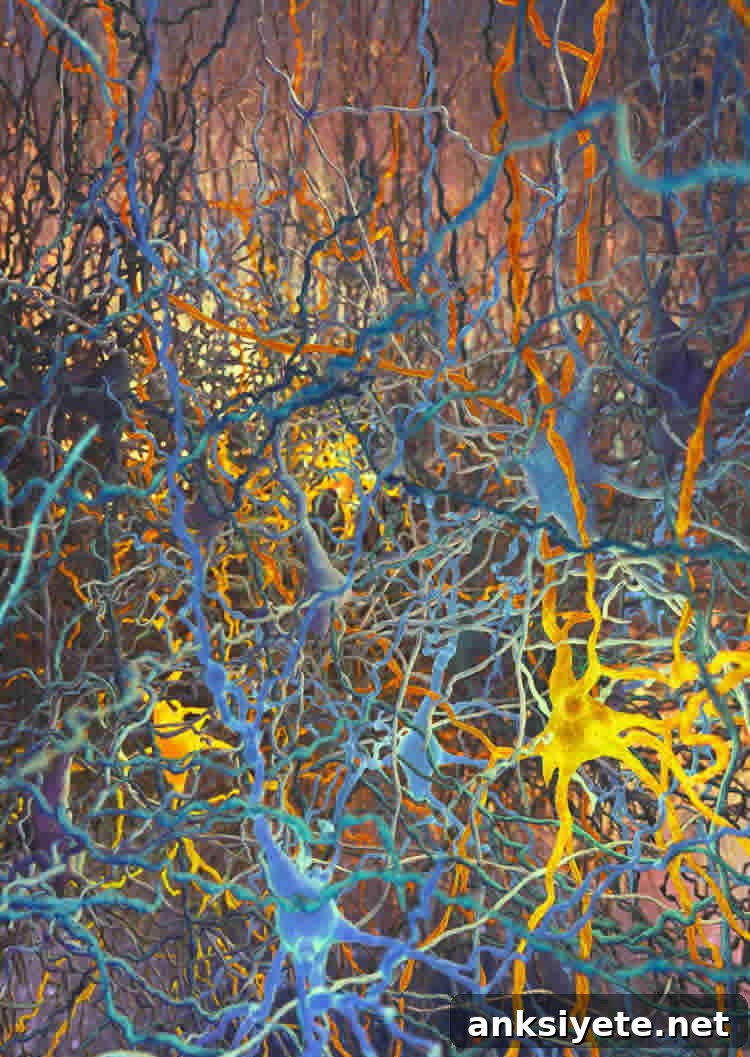
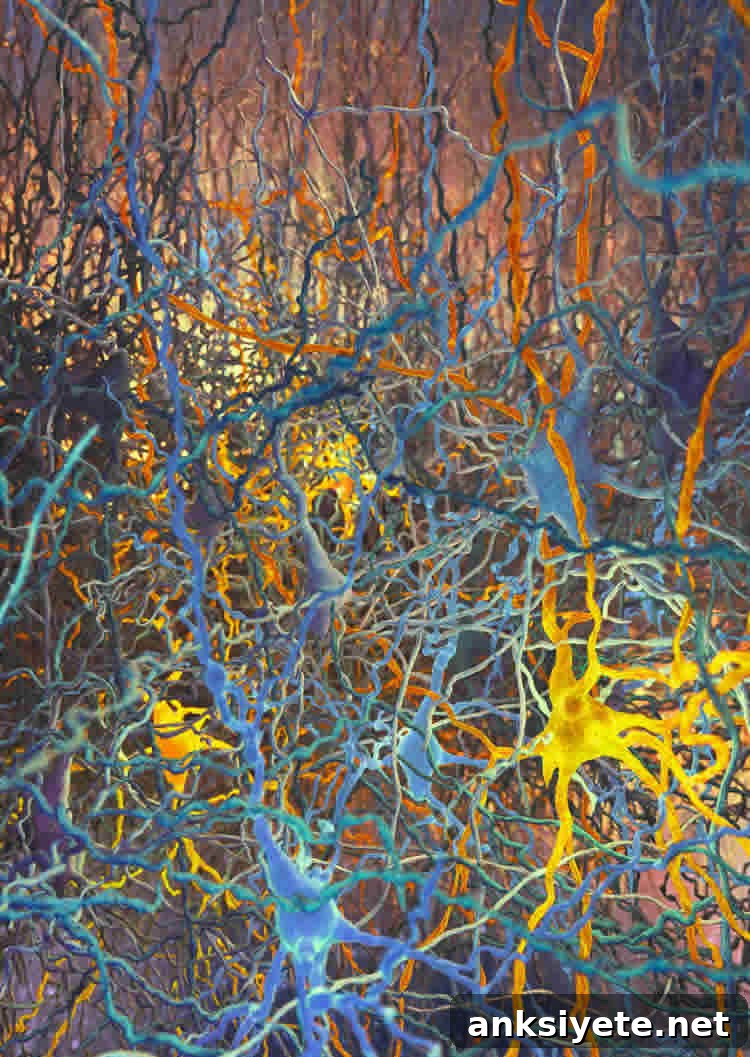
The research team, led by Lida Kanari, built an algorithm that distinguishes the forms of one of the neocortex’s most common neurons: pyramidal cells. Pyramidal cells, with their branching, tree-like dendrites, constitute roughly 80% of neocortical neurons and act like information collectors, integrating signals from many inputs. Functionally excitatory, they send waves of electrical activity across networks as we perceive, act, and feel. In visual terms they are the towering trees of the brain’s forest.
The father of modern neuroscience, Santiago Ramón y Cajal, first sketched pyramidal cells more than a century ago using microscopes and staining methods. Despite that long history, the field has lacked consensus on how many distinct morphological types of pyramidal neurons exist. Anatomists and neuroscientists have debated naming and classification for decades; even clearly different-looking neurons have not been consistently defined across research groups. This study offers a reproducible, objective solution.
Seventeen types of pyramidal cells
For the first time, the Blue Brain Project team demonstrates that objective classification of pyramidal cells is achievable by applying algebraic topology — a branch of mathematics that analyzes shape, connectivity, and how local features produce global structure. Working with Professors Kathryn Hess (EPFL) and Ran Levi (University of Aberdeen), the researchers developed a topological algorithm and applied it to digitally reconstructed neurons from the rat somatosensory cortex. The method produced a stable classification, identifying 17 distinct pyramidal cell types without requiring expert intervention.
Neuronal morphology often resembles a complex tree, with a long trunk and many branching twigs. By retaining persistent, large-scale components of the dendritic arbor and encoding smaller branches in a systematic way, the algorithm converts each neuron’s structure into a mathematical barcode. These barcodes serve as compact, comparable descriptors that can feed any machine-learning classifier to group neurons into reproducible morphological categories.
“Species” of brain cells
A central question in neuronal classification is whether observed differences represent discrete cell “species” or a continuous gradient of variation. Are two differently shaped neurons distinct types, or simply variants along a morphological continuum? The topological approach offers a quantitative answer: neurons can be grouped into distinct morphological clusters, each of which may contain internal variations or “strains.” This lets researchers determine when cells form sharp, reproducible categories versus continuous families.
Kanari explains, “The Blue Brain Project is digitally reconstructing and simulating brain tissue, and this topological classification is one of the solid foundations needed to assemble all neuron types coherently. By removing ambiguity, morphological classification becomes automatable and consistently comparable across studies.”
The implications extend across neuroscience. An objective, stable taxonomy of neuronal morphology will improve understanding of how cell shape relates to function, how local dendritic structure maps to long-range connectivity, and how different regions of the brain organize their constituent cells. Because the method provides a universal descriptor for tree-like structures, it can be applied broadly to neurons from various brain regions and to non-neuronal cells such as glia that exhibit branching arbors.
Funding: This work was supported by the Swiss government’s ETH Board of the ETH Domain, EPFL.
The authors declare no financial or other conflicts of interest.
Source:
EPFL
Media contacts:
Kate Mullins – EPFL
Image credit:
EPFL / Blue Brain Project (BBP).
Original research (open access):
Lida Kanari, Srikanth Ramaswamy, Ying Shi, Sebastien Morand, Julie Meystre, Rodrigo Perin, Marwan Abdellah, Yun Wang, Kathryn Hess, Henry Markram; “Objective Morphological Classification of Neocortical Pyramidal Cells”, Cerebral Cortex, Volume 29, Issue 4, 1 April 2019, Pages 1719–1735, doi: 10.1093/cercor/bhy339.
Abstract
The absence of consensus on the number of morphologically distinct pyramidal cell (PC) types in the neocortex reflects longstanding reliance on subjective expert classifications. This study shows that methods from algebraic topology applied to dendritic arborization allow objective identification of PC types. Using topological descriptors and machine learning, the authors identify 17 reproducible pyramidal cell types in the rat somatosensory cortex and provide a principled solution to determine whether two similar neurons belong to distinct types or to a continuum of the same type. The topological classification is stable, does not require expert input, and helps resolve whether cell types are discrete or continuous morphological variations.