
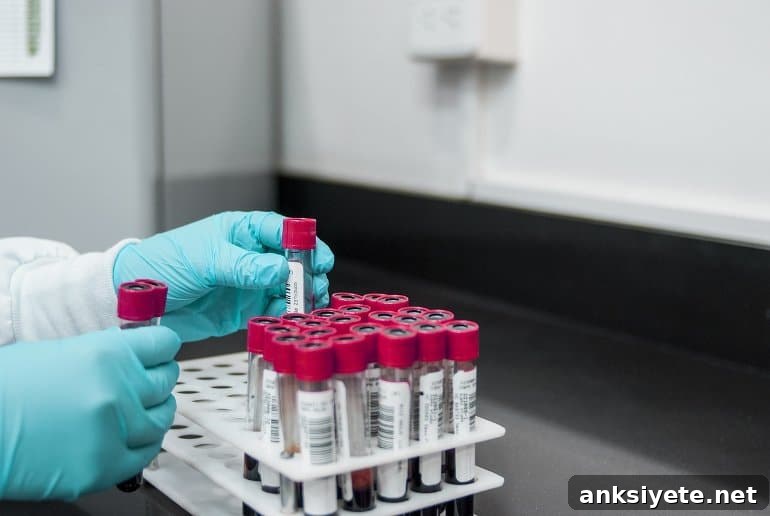
Summary: A blood test can now detect toxic amyloid beta oligomers linked to Alzheimer’s disease years before clinical symptoms appear, enabling earlier diagnosis and potential intervention.
Source: University of Washington
Most people today are diagnosed with Alzheimer’s disease only after memory loss or other cognitive symptoms appear. At that stage, treatments can at best slow progression rather than prevent it.
Research indicates that Alzheimer’s begins long before symptoms show. Misfolded amyloid beta proteins accumulate into small aggregates called oligomers, and these toxic oligomers are believed to initiate the cascade that ultimately leads to neurodegeneration. Detecting those oligomers early could transform diagnosis and treatment.
A research team led by the University of Washington has developed a laboratory assay that measures amyloid beta oligomers in blood. Published the week of Dec. 5 in the Proceedings of the National Academy of Sciences, the soluble oligomer binding assay (SOBA) detected these toxic oligomers in people later diagnosed with Alzheimer’s and in many individuals with mild cognitive impairment, while remaining negative for most people who showed no cognitive problems at the time of sampling.
Importantly, SOBA identified oligomers in the blood of 11 participants who were recorded as cognitively normal when their samples were collected. Follow-up medical records were available for 10 of these people; each later developed mild cognitive impairment or brain changes consistent with Alzheimer’s. In other words, SOBA detected disease-associated oligomers before clinical symptoms emerged.
“Clinicians and researchers have long sought a reliable diagnostic that not only confirms Alzheimer’s but also flags the disease before cognitive decline begins,” said senior author Valerie Daggett, a UW professor of bioengineering and member of the UW Molecular Engineering & Sciences Institute. “SOBA shows promise as the basis for that kind of early detection.”
SOBA targets a distinctive feature of toxic oligomers: when amyloid beta proteins misfold and aggregate, they adopt an uncommon structure called an alpha sheet. Alpha sheets are rare in natural proteins and have a tendency to bind other alpha-sheet structures. Daggett’s team created a synthetic alpha-sheet molecule that selectively captures oligomers from blood or cerebrospinal fluid. Once captured on the test surface, standard biochemical methods confirm that the bound material consists of amyloid beta proteins.
The researchers evaluated SOBA using blood samples from 310 volunteers who had donated samples and medical records for Alzheimer’s research. Samples were taken when participants were classified as cognitively normal, having mild cognitive impairment, Alzheimer’s disease, or another form of dementia. SOBA detected oligomers in samples from people with mild cognitive impairment and in those with moderate to severe Alzheimer’s disease. In 53 cases where autopsy later confirmed Alzheimer’s, 52 of the earlier blood samples contained toxic oligomers.
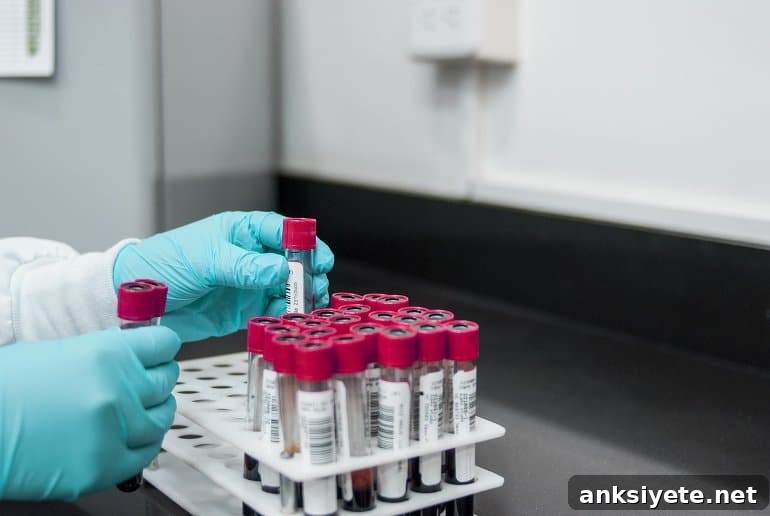
SOBA’s results were consistent across groups: it found oligomers in control-group members who later developed mild cognitive impairment and did not detect oligomers in control participants who remained cognitively unimpaired. These findings suggest SOBA can differentiate between those who are likely to develop Alzheimer’s-related pathology and those who are not, based on blood evidence of toxic oligomers.
The UW team is collaborating with AltPep, a University of Washington spinout, to advance SOBA as a clinical diagnostic test. The study also demonstrated that SOBA can be adapted to detect toxic oligomers formed by other disease-related proteins, including those implicated in Parkinson’s disease and Lewy body dementia.
“Many human diseases involve accumulation of toxic oligomers that form alpha-sheet structures—Alzheimer’s, Parkinson’s, type 2 diabetes and more,” Daggett said. “Because SOBA recognizes that distinctive alpha-sheet pattern, it has potential as a diagnostic and research tool across a range of protein-misfolding diseases.”
Daggett added that SOBA could serve multiple roles: identifying individuals at elevated risk for disease, detecting pre-symptomatic pathology, and providing a measurable readout to evaluate whether experimental therapies reduce oligomer levels—an important capability for developing effective early interventions.
The study’s lead author is Dylan Shea, a doctoral student in UW’s Department of Bioengineering Molecular Engineering Program. Co-authors include Elizabeth Colasurdo (VA Puget Sound Health Care System), Alec Smith (UW research assistant professor of physiology and biophysics), Courtnie Paschall (UW Medical Scientist Training Program), Dr. Suman Jayadev (UW assistant professor of neurology), Dr. Dirk Keene (UW professor of laboratory medicine and pathology), Douglas Galasko (professor of neurosciences, University of California, San Diego), Dr. Andrew Ko (UW assistant professor of neurological surgery), and Ge Li and Dr. Elaine Peskind (UW Department of Psychiatry and Behavioral Sciences and the VA Puget Sound Health Care System). Funding came from the National Institutes of Health, the Washington Research Foundation, and the Northwest Mental Illness Research, Education and Clinical Center.
About this Alzheimer’s disease research news
Author: James Urton
Source: University of Washington
Contact: James Urton – University of Washington
Image: The image is in the public domain
Original Research: The findings will appear in PNAS