
Summary: New research in humans and mice shows that brief bursts of beta-frequency brain activity — not a continuous increase in beta power — play a key role in filtering distractions so the brain can process sensory input.
Source: Brown University
Researchers investigating how beta brainwaves influence attention and perception have found that the critical factor is not a steady rise in beta power, but the occurrence and timing of distinct beta bursts. The study, conducted at Brown University and reported in the journal eLife, shows that short, high-power beta events around 20 Hz predict whether sensory stimuli are detected or missed.
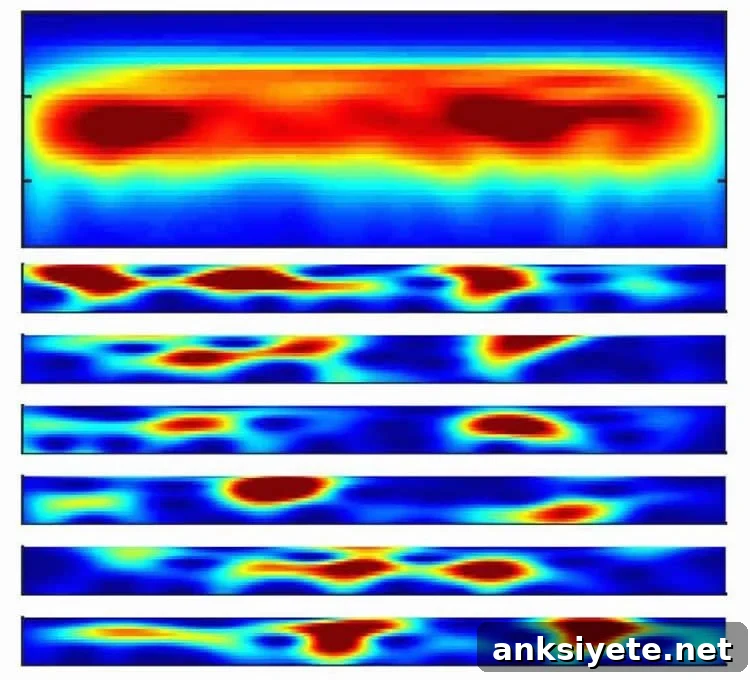
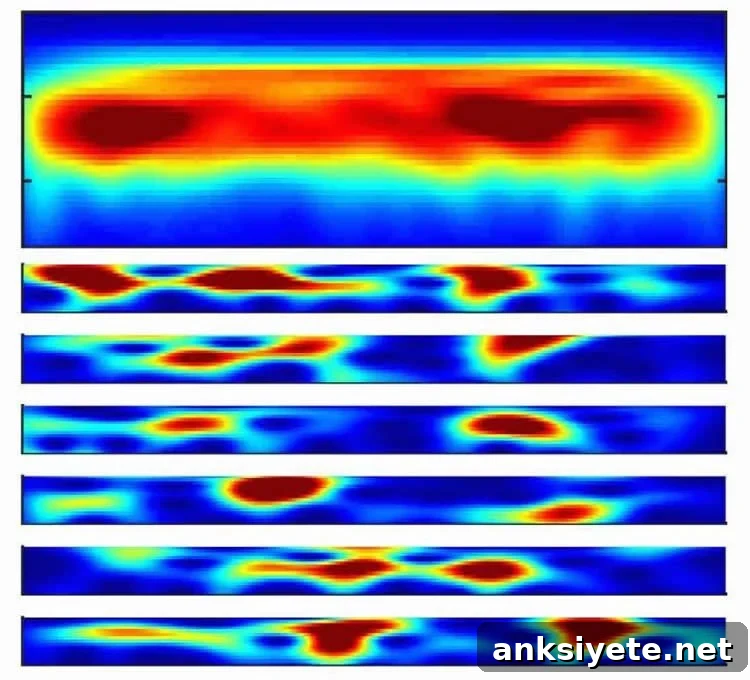
Previous work linked elevated beta activity with the suppression of distracting inputs, but much of that evidence came from averaged measurements across many trials. By analyzing single trials in both human and mouse recordings, the Brown team discovered that beta activity arises as discrete, transient bursts. Those bursts — their number and their precise timing relative to a stimulus — are what most strongly correlate with failures to perceive a touch.
“When people tried to suppress distraction in a particular cortical region, the likelihood of observing these beta events increased,” said Stephanie R. Jones, associate professor of neuroscience at Brown and senior author of the study. “The brain appears to modulate the expression of these brief beta events in a flexible way to optimize perception.”
Testing touch
Graduate student Hyeyoung Shin led experiments that measured beta activity in the primary somatosensory cortex of humans and mice during brief tactile detection tasks. Human volunteers wore magnetoencephalography (MEG) caps while mice were implanted with electrodes. The sensory events were simple: a tap to a fingertip or to a foot in human participants, and a whisker deflection in mice.
Participants and animals were trained to signal detection — humans by pressing a button, mice by licking a sensor for a reward. The team compared beta activity in the cortical region corresponding to the stimulated body part with the likelihood that the stimulus was reported. Consistent with prior findings, greater beta activity in a region predicted a lower chance of reporting a sensation, suggesting beta helps filter out distracting or unwanted inputs.
For example, when human subjects were instructed to focus attention on their foot, beta power increased in the cortical area representing the hand; increased beta in that hand area made hand sensations less likely to be detected. “We think beta serves as a filtering mechanism,” Shin explained.
Beta bursts
Across multiple variants of the task and across species, the researchers found that beta did not present as a continuous elevated rhythm on individual trials. Instead, beta showed up as short, intermittent spikes of high-power activity. Only when data were averaged over many trials did those intermittent bursts appear as a sustained plateau of beta power.
The team then examined which burst features best predicted detection failures: the number of bursts, the bursts’ peak power, their duration, or their timing relative to the stimulus. Their analyses revealed two independent predictors: the number of bursts in the second before a stimulus and how close a burst occurred to the stimulus itself. Two or more bursts during the second preceding a stimulus significantly increased the chance the stimulus would go unnoticed. Separately, even a single burst that occurred within about 200 milliseconds before the stimulus raised the probability of a missed detection.
“The most disruptive pattern was many bursts that also occurred close in time to the stimulus,” Shin said.
A better idea of beta
While the study clarifies how beta manifests in the somatosensory cortex and how burst features relate to perception, it does not yet reveal the precise cellular or circuit mechanisms by which bursts interfere with sensory signals. The close agreement between human and mouse results, however, validates the use of mouse models to probe underlying neural mechanisms. Ongoing work in the lab is dissecting how different neural subpopulations contribute to beta bursts and how those bursts influence sensory detection. Co-author Robert Law is developing computational models to bridge the human and animal recordings and guide further experiments.
Clinically, these insights could inform noninvasive brain stimulation approaches, such as transcranial magnetic stimulation or transcranial alternating current stimulation. Rather than attempting to impose a steady beta rhythm, therapies might be more effective if they target the production or suppression of short, high-power beta bursts and time those interventions precisely relative to the brain activity they aim to influence.
“Most noninvasive stimulation strategies try to entrain continuous rhythms,” Jones noted. “Our results suggest the brain operates with an intermittent pattern, so interventions aligned with that pattern might yield better outcomes.”
The findings may also shed light on other conditions associated with abnormal beta activity, including Parkinson’s disease and obsessive-compulsive disorder, and could inform brain–computer interfaces that utilize beta signals.
Authors on the paper include Hyeyoung Shin, Robert Law, Shawn Tsutsui, Christopher I. Moore, and Stephanie R. Jones. The study was published in eLife.
Funding for the research was provided by the National Institutes of Health, the U.S. Department of Veterans Affairs, the National Science Foundation, the Brown Institute for Brain Science, and the Fulbright Association.
Abstract (summary)
Beta oscillations (15–29 Hz) are prominent in brain activity and are linked to perception, attention, and motor actions. In non-averaged neural signals, beta appears as transient, high-power events. Differences in averaged beta power across tasks and trials can reflect changes in event rate, power, duration, or frequency span. This work shows that functionally relevant differences in averaged beta power in primary somatosensory cortex are explained by changes in the number of high-power beta events per trial. Moreover, beta events occurring close to a stimulus are more likely to impair perception. These results hold across detection and attention tasks in human MEG and in local field potential recordings from mice, implying that an increased rate of beta events predicts failures to transmit sensory information through specific cortical representations.