
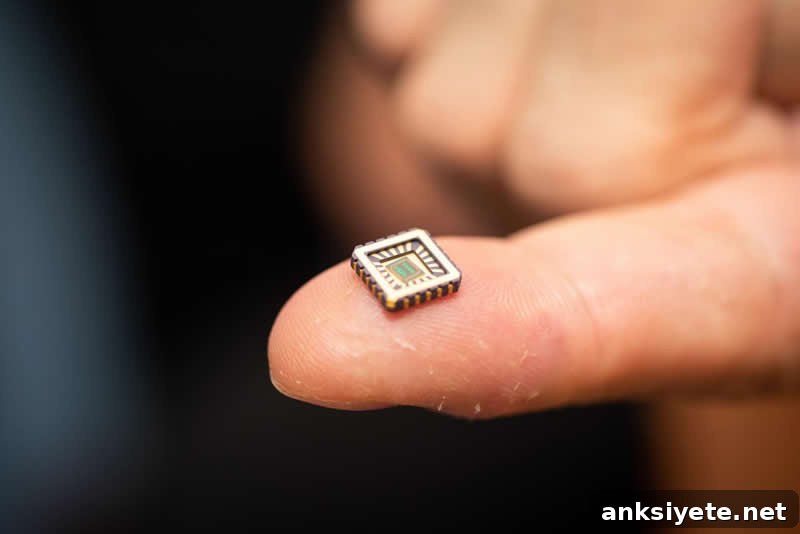
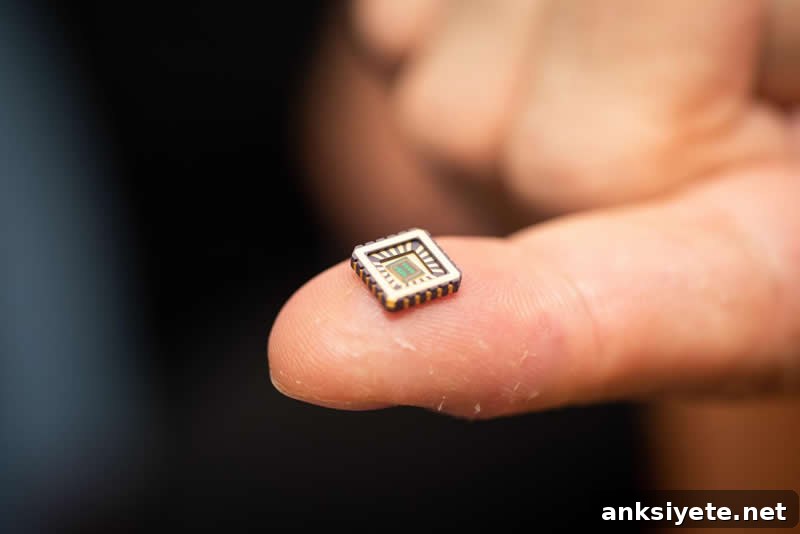
Summary: Scientists have recreated the electrical behaviour of biological neurons on implantable silicon chips. These low‑power artificial neurons could enable a new generation of bioelectronic medical devices to treat chronic conditions such as heart failure, Alzheimer’s disease, and other disorders involving neuronal degeneration.
Source: University of Bath
Artificial neurons implemented on silicon chips that mimic the behaviour of living neurons have been developed by an international research team. This first‑of‑its‑kind achievement promises powerful new bioelectronic therapies for chronic diseases and disorders of the nervous system.
The artificial neurons replicate the electrical dynamics of biological neurons while consuming extremely little energy—on the order of 140 nanowatts—about a billionth of the power required by a conventional microprocessor. This ultra‑low power requirement makes the devices especially suitable for long‑term implantable medical devices and other neuromorphic bioelectronic systems.
The work was led by researchers at the University of Bath in collaboration with teams from the Universities of Bristol, Zurich and Auckland. The study describing the devices was published in the journal Nature Communications.
Reproducing neuronal behaviour in hardware has long been a goal in medicine and bioengineering because it offers a pathway to repair or replace dysfunctional neural circuits. When neurons malfunction, are severed by injury, or are lost through degeneration, bodily systems that depend on precise neuronal signaling can fail. Artificial neurons that respond to biological inputs and adapt to feedback could restore function in those circuits, potentially reversing disease symptoms or compensating for lost neural elements.
For example, in some forms of heart failure, neurons in the brainstem fail to respond appropriately to physiological feedback. As a result, the descending signals that regulate cardiac output are impaired and the heart does not pump with sufficient force. Bioelectronic implants that reproduce healthy neuronal signalling could restore normal regulation and improve cardiac function.
Developing such artificial neurons has been technically demanding because neuronal responses are highly nonlinear and difficult to predict. A doubled input signal does not necessarily produce a doubled output; neuronal responses can scale in complex ways depending on ion channel dynamics and membrane properties.
The research team addressed this by deriving mathematical models that capture intracellular currents and membrane voltages and by estimating the parameters of highly nonlinear conductance models from large datasets of electrophysiological recordings. They then translated those models into analog solid‑state hardware, designing silicon circuits that emulate the behavior of biological ion channels.
Validated experiments showed that the silicon neurons closely matched the dynamics of real neurons. The team successfully replicated the full range of responses observed in rat hippocampal neurons and respiratory neurons across diverse stimulation protocols. Under many different current injection patterns, the solid‑state neurons responded nearly identically to their biological counterparts, demonstrating faithful transfer of neuronal dynamics to silicon.
Professor Alain Nogaret of the University of Bath’s Department of Physics, who led the project, said the work opens the “black box” of neuronal behaviour and provides a robust method to reproduce electrical properties of neurons in fine detail. He emphasized the significance of the low power consumption, noting that the tiny energy requirement is one of the key enablers for implantable bioelectronic medicine.
“Our approach combines three main advances,” Professor Nogaret explained. “First, we can accurately estimate the parameters that govern individual neuron behaviour with high certainty. Second, we have created physical analog models in hardware that successfully mimic living neurons. Third, the method is versatile, allowing the inclusion of different neuronal types and functions across complex mammalian circuits.”
Professor Giacomo Indiveri, a co‑author from the University of Zurich, highlighted implications for neuromorphic chip design, pointing out that the methodology provides a novel way to identify critical analog circuit parameters. Professor Julian Paton, a physiologist affiliated with the Universities of Auckland and Bristol, noted the clinical potential of miniaturized, implantable bioelectronic systems that replicate respiratory neuron behaviour and other vital neuronal functions, enabling more personalised therapeutic devices.
Funding: The research received support from the European Union Horizon 2020 Future Emerging Technologies programme and a doctoral studentship funded by the Engineering and Physical Sciences Research Council (EPSRC).
Source:
University of Bath
Media Contacts:
Chris Melvin – University of Bath
Image Source:
Image credited to University of Bath.
Original Research: Open access. “Optimal solid state neurons.” Kamal Abu‑Hassan, Joseph D. Taylor, Paul G. Morris, Elisa Donati, Zuner A. Bortolotto, Giacomo Indiveri, Julian F. R. Paton & Alain Nogaret. Nature Communications. DOI: 10.1038/s41467-019-13177-3.
Abstract
Optimal solid state neurons
Bioelectronic medicine requires neuromorphic microcircuits that can integrate raw nervous stimuli and respond identically to biological neurons. Designing such circuits remains challenging. This study estimates parameters for highly nonlinear conductance models and derives first‑principles equations for intracellular currents and membrane voltages, embodied in analog solid‑state electronics. By configuring individual ion‑channel models with parameters assimilated from large‑scale electrophysiological recordings, the researchers successfully reproduced the complete dynamics of hippocampal and respiratory neurons in silico and in silicon. The solid‑state neurons respond nearly identically to biological neurons under a wide range of stimulation protocols. Optimizing nonlinear models proves a powerful method for programming analog electronic circuits, offering a route to repair diseased biocircuits and emulate their function with biomedical implants that can adapt to biological feedback.