
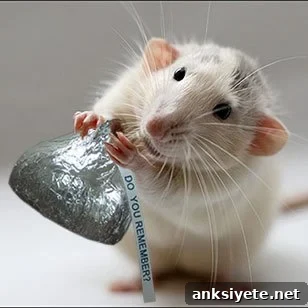
Indiana University researchers have found that rats can remember not just facts, but the source of those facts — how they acquired a sought-after piece of chocolate. The new study, published in Current Biology, presents the first experimental evidence of source memory in a nonhuman animal.
The discovery has broad implications, said principal investigator Jonathon Crystal. It advances our understanding of memory evolution and opens practical avenues for studying the biological basis of memory. That, in turn, could accelerate development of animal models for disorders characterized by memory impairment, including Alzheimer’s disease, Parkinson’s disease and Huntington’s disease, as well as psychiatric conditions where memory processes are disrupted, such as schizophrenia, PTSD and depression.

“Researchers can now study in animals what was once considered an exclusively human capacity,” Crystal said. “If scientists can reproduce types of source memory failure in transgenic animal models, they can create preclinical systems to test treatments for human memory disorders.”
Source memory is the ability to recall where or how a piece of information was learned. In people, a common everyday example is quoting a story and forgetting who originally told it. The content of the memory may remain intact while the memory of its origin decays. Humans use source information to assemble memories of distinct events and to distinguish one episode from another.
Until now, many researchers assumed that nonhuman animals primarily form memories through conditioning and repetition — habits rather than episodic memories that include source details. By demonstrating that rats remember how they obtained a reward, this study challenges that assumption and suggests that certain memory processes thought to be uniquely human are present in other species.
The experiments made clever use of rats’ strong preference for chocolate. “There’s no amount of chocolate you can give to a rat which will stop it from eating more chocolate,” Crystal joked, underscoring why chocolate served as an effective and motivating reward.
Researchers used an eight-arm radial maze across five converging experiments. In the first two experiments, rats had to recall the source of the chocolate to obtain it — specifically, whether the researcher placed the rat close to the chocolate trough or the rat had to run to it independently. By testing the task in different maze configurations, the team reduced the likelihood that routine maze cues explained the results.
A third experiment examined the temporal properties of the rats’ memories. The rats retained source information for up to a week, whereas simpler memory forms tested in the same setup typically lasted only a day. The longer persistence of source memory matched a key characteristic of source-based episodic memory in humans and provided converging support that the rats were relying on source memory rather than short-term or procedural strategies.
In the fourth experiment, rats learned the rule that chocolate would be available when a researcher placed them at the trough; they remembered this contingency and acted accordingly. In a final, critical manipulation, the investigators temporarily inactivated the hippocampus, a brain region strongly implicated in episodic and source memory. This inactivation impaired the rats’ ability to remember source information, supporting the conclusion that the hippocampus contributes to source memory in rats as it does in humans.
“Our goal is to develop behavioral paradigms in rodents that tap into memory systems most relevant to human disease,” Crystal said. “This study provides proof of concept that source memory exists in animals. The next steps are to map the specific hippocampal subregions and neural pathways involved, and to distinguish mechanisms underlying short-term and long-term episodic memory.”
Notes about this neuroscience and memory research
The study is part of the Comparative Cognition Laboratory’s broader effort to create animal models for memory types disrupted in human illnesses. Previous work from the lab has revealed additional memory and cognitive abilities in rats that were once believed to be uniquely human.
Coauthors on the study include Wesley T. Alford (Visiting Scholar), graduate student Wenyi Zhou, and Andrea G. Hohmann, Linda and Jack Gill Chair of Neuroscience and Professor in the Department of Psychological and Brain Sciences at Indiana University.
The study, titled “Source Memory in the Rat,” was published in Current Biology.
Contact: Liz Rosdeitcher – Indiana University
Source: Indiana University press release
Image source: Image adapted from an Indiana University press release and credited to Ellen van Deelen.
Original research: Abstract for “Source Memory in the Rat” by Jonathon D. Crystal, Wesley T. Alford, Wenyi Zhou and Andrea G. Hohmann in Current Biology. Published online; DOI 10.1016/j.cub.2013.01.023