
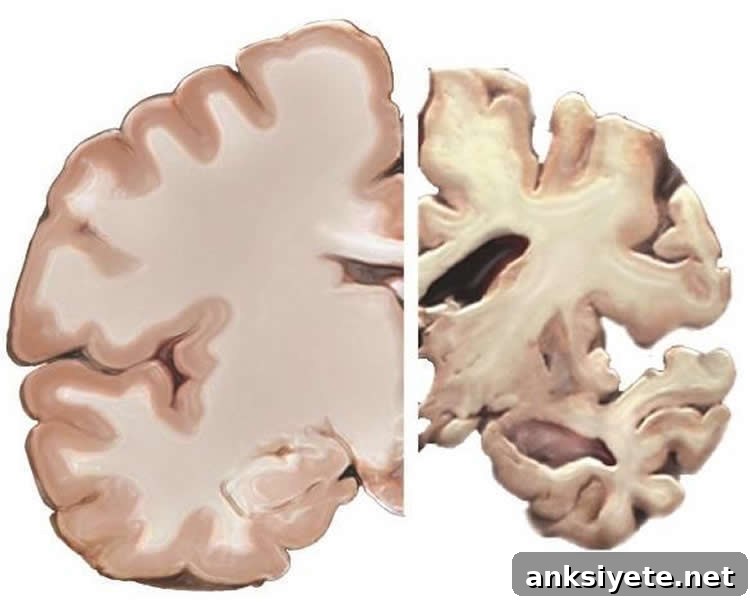
Summary: Researchers have developed a machine-learning algorithm that can accurately forecast cognitive decline that may lead to Alzheimer’s disease. The model uses MRI, genetic, and clinical data to identify people at higher risk, potentially guiding earlier prevention and treatment strategies.
Source: McGill University.
New AI model predicts trajectories of cognitive decline linked to Alzheimer’s
Researchers led by Dr. M. Mallar Chakravarty, a computational neuroscientist at the Douglas Mental Health University Institute and McGill University, have developed a machine-learning algorithm capable of predicting an individual’s likelihood of cognitive decline toward Alzheimer’s disease over a five-year period. The collaborative team also included scientists from the University of Toronto and the Centre for Addiction and Mental Health.
The algorithm learns characteristic signatures of neurodegeneration from multimodal data—structural magnetic resonance imaging (MRI), genetic markers, and clinical assessments. By integrating information across these data types, the model can identify patterns that distinguish stable cognitive aging from progressive decline.
“Currently, treatments for Alzheimer’s are limited, and prevention remains the most effective strategy,” says Dr. Chakravarty. “Our AI framework is intended to support clinicians by identifying individuals who may benefit from early intervention. That could include targeted lifestyle changes, closer monitoring, or timely entry into clinical trials, all of which may delay or reduce the impact of dementia.”
The study’s results were published in PLOS Computational Biology and are based on data from the Alzheimer’s Disease Neuroimaging Initiative (ADNI). The team trained and evaluated their models on data from more than 800 participants covering a spectrum from cognitively normal older adults to those with mild cognitive impairment and diagnosed Alzheimer’s disease. To verify generalizability, they replicated key findings on an independent cohort drawn from the Australian Imaging, Biomarkers and Lifestyle (AIBL) study of ageing.
How the model works and its performance
The research introduces a two-part computational approach. First, the authors modeled typical clinical symptom trajectories using longitudinal cognitive assessments—specifically, the Mini-Mental State Examination (MMSE) and the Alzheimer’s Disease Assessment Scale-Cognitive Subscale (ADAS-13)—collected across nine timepoints over six years. Hierarchical clustering of these trajectories revealed distinct classes such as stable cognition, slow decline, and fast decline.
Second, the team developed a predictive architecture called a longitudinal Siamese neural network (LSN). This model incorporates data from two timepoints (baseline and follow-up) and combines imaging, genetic, and clinical inputs using specialized modules designed for multimodal fusion. In ADNI datasets the LSN achieved strong predictive accuracy: for a binary MMSE task (stable versus decline) it reported an accuracy of 0.900 and an area under the ROC curve (AUC) of 0.968. For a three-way ADAS-13 task (stable, slow decline, fast decline) the model reached 0.760 accuracy. On the independent AIBL replication sample, the binary MMSE task produced 0.724 accuracy and 0.883 AUC, demonstrating robust generalizability.
Future directions and the value of more data
Dr. Chakravarty notes the team is actively testing the model with additional incoming datasets to refine prediction horizons and improve long-term forecasting. Expanding the dataset will help identify individuals at greatest risk across diverse populations and may allow earlier or more precise intervention planning.
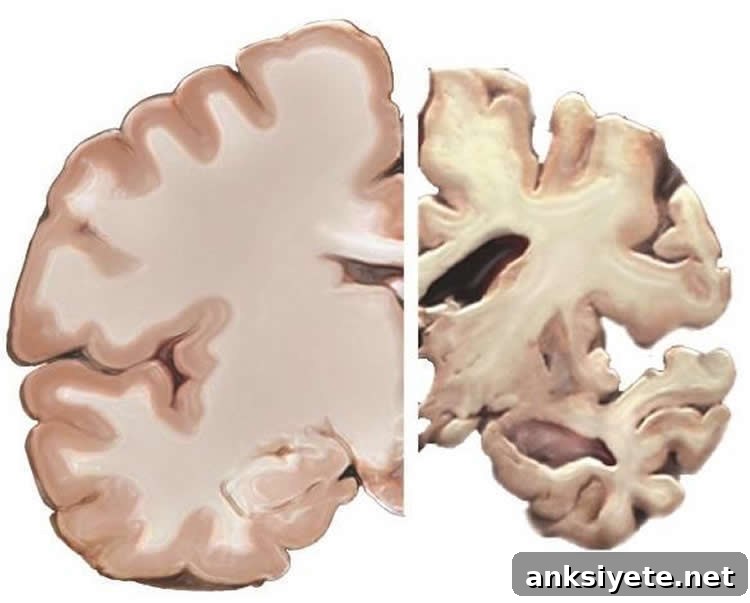
The global burden of dementia is substantial and growing. In Canada, the Alzheimer Society estimated approximately 564,000 people were living with Alzheimer’s disease or another dementia in 2016, projected to rise significantly in the coming decades. Globally, the World Health Organization has estimated tens of millions of people living with dementia, with projections rising substantially through mid-century. Alzheimer’s disease accounts for the majority of dementia cases, and effective preventive strategies and early detection are critical because curative treatments remain elusive.
Funding: This work received support from the Canadian Institutes of Health Research, the Natural Sciences and Engineering Research Council of Canada, the Fonds de recherche du Québec–Santé, the Weston Brain Institute, the Michael J. Fox Foundation for Parkinson’s Research, Alzheimer’s Society, Brain Canada, and the McGill University Healthy Brains for Healthy Lives initiative.
Source: Cynthia Lee, McGill University.
Publisher: Organized by NeuroscienceNews.com.
Image source: NeuroscienceNews.com image in the public domain.
Original research: “Modeling and prediction of clinical symptom trajectories in Alzheimer’s disease using longitudinal data” by Nikhil Bhagwat, Joseph D. Viviano, Aristotle N. Voineskos, M. Mallar Chakravarty, Alzheimer’s Disease Neuroimaging Initiative, published in PLOS Computational Biology on September 14, 2018. DOI: 10.1371/journal.pcbi.1006376.
Modeling and prediction of clinical symptom trajectories in Alzheimer’s disease using longitudinal data
Computational models that forecast symptomatic progression for individuals can support earlier intervention and personalized treatment planning for Alzheimer’s disease. Challenges include defining prediction objectives and integrating diverse, longitudinal measurements. This study presents a framework that models symptom trajectories and predicts future trajectories using multimodal longitudinal data. Analyses were performed on three ADNI cohorts with an independent replication in the AIBL cohort. Symptom trajectory classes were derived from MMSE and ADAS-13 clinical scores across nine timepoints over six years. The authors introduce a longitudinal Siamese neural network (LSN) architecture to predict trajectory membership from MRI, genetic, and clinical variables measured at two timepoints. Trajectory modeling identified two classes for MMSE (stable and decline) and three classes for ADAS-13 (stable, slow-decline, fast-decline). The LSN achieved high predictive performance on ADNI and replicated successfully on AIBL.