
Summary: Researchers at USC combine deep learning with pulse recordings to noninvasively assess arterial stiffness and cardiovascular risk using a smartphone.
Source: USC.
Heart disease remains the leading cause of death for both men and women in the United States, accounting for roughly one in every four deaths. This group of conditions ranges from abnormal heart rhythms and congenital defects to diseases of the blood vessels, commonly referred to as cardiovascular disease.
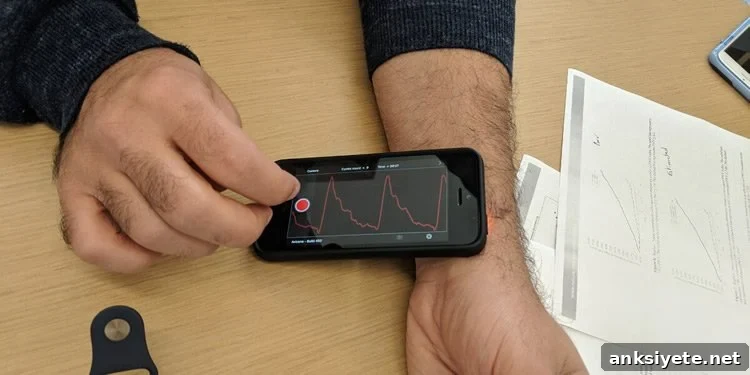
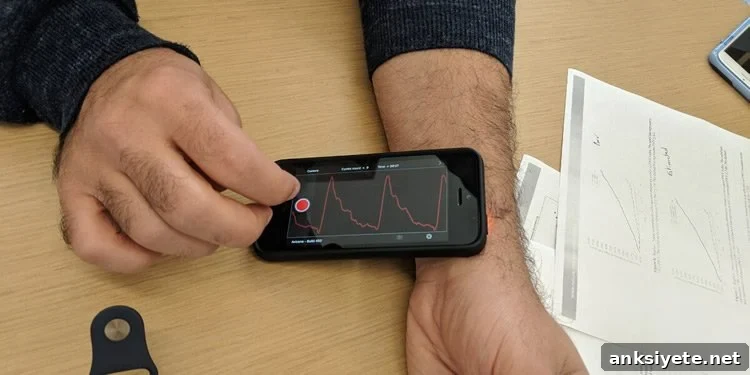
Diagnosing and tracking cardiovascular disease is often costly, requiring advanced imaging or intrusive procedures. A team at the USC Viterbi School of Engineering has developed a more accessible approach that combines a mathematical model with machine learning to estimate a key cardiovascular risk marker from a simple pulse recording captured by a smartphone camera.
Arterial stiffness — when arteries lose elasticity and become more rigid — raises blood and pulse pressures and is linked not only to cardiovascular disease but also to conditions such as diabetes and kidney failure. Detecting stiffness early can guide interventions to reduce long-term organ damage.
“If the aorta is stiff, when pulse energy travels into smaller peripheral vessels it can damage organs at the end of those vessels. That’s why the kidneys or the brain can suffer,” said Niema Pahlevan, assistant professor of aerospace and mechanical engineering and medicine at USC.
Checking for a pulse
Clinicians measure arterial stiffness by calculating pulse wave velocity (PWV), the speed at which the pulse travels through the circulatory system. Traditional methods include MRI, which is expensive and not always practical, or tonometry, which requires multiple calibrated pressure measurements and an electrocardiogram to synchronize pressure waves.
The USC team — led by Pahlevan with collaborators Marianne Razavi and Peyman Tavallali — developed a method that estimates PWV from a single uncalibrated carotid pressure waveform captured with a smartphone camera. Their earlier work used the same camera-based pulse waveform technique to identify signs of heart failure. Here, the researchers extract the pulse shape and apply a mathematical model called intrinsic frequency to compute physiologically meaningful features of cardiac cycles.
“Using a single uncalibrated waveform removes several steps and equipment requirements,” Pahlevan explained. “It’s how you move from an expensive tonometer and intrusive setup to a mobile phone-based solution.”
Razavi, director of biostatistics at Avicena LLC, the startup commercializing the approach, noted the method’s ease of use: “It’s very easy to operate — I even taught my child how to record their pulse.”
Instead of relying on detailed, calibrated waveforms, the algorithm needs only the pulse’s shape. Intrinsic frequency analysis separates the heartbeat into meaningful components that reflect systolic (contraction) and diastolic (relaxation) dynamics. Those variables feed a machine learning model that predicts PWV and therefore indicates arterial stiffness.
Validation
To validate the approach, the team reanalyzed tonometry data from the Framingham Heart Study, a long-term epidemiological cohort. Using data from 5,012 participants, they estimated PWV from single carotid waveforms and compared their results to the reference tonometry measurements, reporting an 85 percent correlation between the two methods.
Crucially, the researchers tested whether their PWV estimates predict cardiovascular outcomes. In a prospective analysis of 4,798 patients followed for ten years, their PWV estimates were significantly associated with the subsequent onset of cardiovascular disease. The work was published in Scientific Reports in January.
“Clinicians need tools that improve outcomes, not just models that correlate well on average,” Pahlevan said. “We demonstrated our method is as predictive of future cardiovascular events as conventional tonometry.”
Bringing AI to medicine
Many attempts to apply machine learning to medical devices rely solely on data-driven models and fail to capture clinically important outliers. In medicine, those outliers — the patients with unusual or severe findings — are often the ones that matter most. The USC team’s hybrid approach combines physics-based intrinsic frequency analysis with machine learning, preserving mechanistic, physiologically relevant features while leveraging data-driven prediction.
The intrinsic frequency algorithm, developed during Pahlevan’s postdoctoral research, computes variables that describe the heart’s contraction phase and the vascular system’s behavior during relaxation. These variables make the machine learning model sensitive to clinically meaningful abnormalities rather than just average trends.
The research team plans to expand the intrinsic frequency framework for additional clinical applications, including the detection of silent or unrecognized heart attacks and other cardiovascular conditions that are difficult to monitor with current tools.
Source: USC.
Publisher: Organized by NeuroscienceNews.com.
Image credit: Ashleen Knutsen.
Original research: “Artificial Intelligence Estimation of Carotid-Femoral Pulse Wave Velocity using Carotid Waveform” by Peyman Tavallali, Marianne Razavi & Niema M. Pahlevan, published in Scientific Reports, January 2018.
Abstract
Artificial Intelligence Estimation of Carotid-Femoral Pulse Wave Velocity using Carotid Waveform
This study presents an artificial intelligence method to estimate carotid-femoral pulse wave velocity (PWV) noninvasively from a single uncalibrated carotid waveform combined with routine clinical variables. Because the signal processing inputs are sensor-agnostic, the method can be applied to any device that provides carotid pressure waveforms. For an unseen test population aged 20 to 69, the model estimated PWV with a root-mean-square error of 1.12 m/sec compared to the reference method, indicating the model is a reliable surrogate. The study also found that estimated PWV was significantly associated with increased cardiovascular risk.