
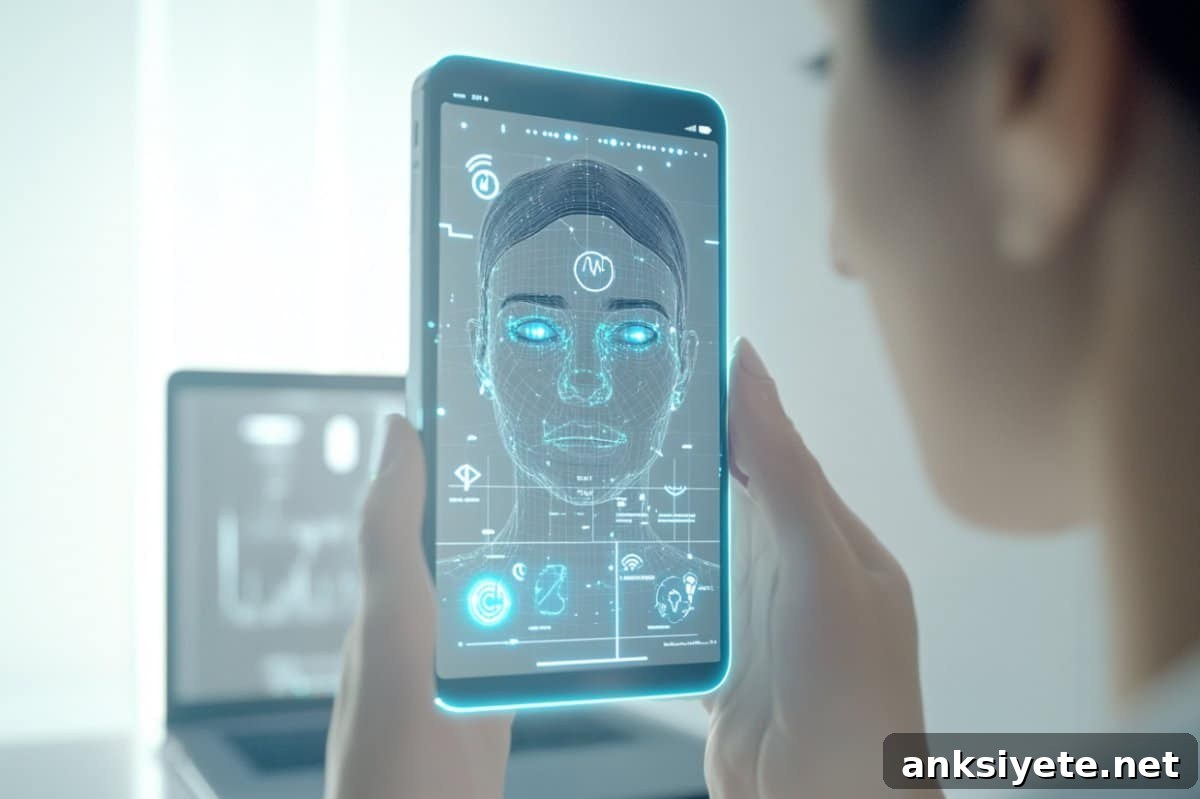
Summary: Researchers have created an AI-powered diagnostic system that uses smartphone video and cloud processing to detect nystagmus — a telltale sign of vestibular and neurological disorders. Unlike conventional methods such as videonystagmography (VNG), which are costly and cumbersome, this deep learning platform offers an affordable, patient-friendly option suitable for remote assessment and telemedicine.
The system tracks 468 facial landmarks in real time, calculates slow-phase velocity, and produces clinician-ready reports and visualizations. Early pilot testing indicates agreement with gold-standard instrumentation, suggesting strong potential to broaden access to vestibular care through remote diagnostics.
Key Facts:
- Smartphone-based screening: Patients can record eye-movement videos at home and upload them for automated AI analysis.
- Clinically comparable: Pilot data showed close agreement with results from established diagnostic devices.
- Telehealth-ready: Designed to integrate with remote consultations, lowering costs and improving access in underserved regions.
Source: FAU
Artificial intelligence is increasingly important in clinical care, especially for interpreting visual data to help clinicians diagnose conditions, assess severity, plan treatment and monitor progress.
Most current AI systems rely on static datasets, which limits their ability to provide real-time diagnostic support. To overcome this limitation, investigators at Florida Atlantic University and partner institutions developed a proof-of-concept deep learning framework that analyzes live video to detect nystagmus — involuntary, rhythmic eye movements commonly associated with vestibular dysfunction and certain neurological conditions.
Traditional diagnostic tools such as videonystagmography and electronystagmography reliably detect nystagmus but come with drawbacks: equipment can be prohibitively expensive, setups are bulky, and testing can be inconvenient for patients. FAU’s AI-driven approach aims to overcome these barriers by enabling quick, affordable screenings that patients can perform at home or in routine clinical settings.
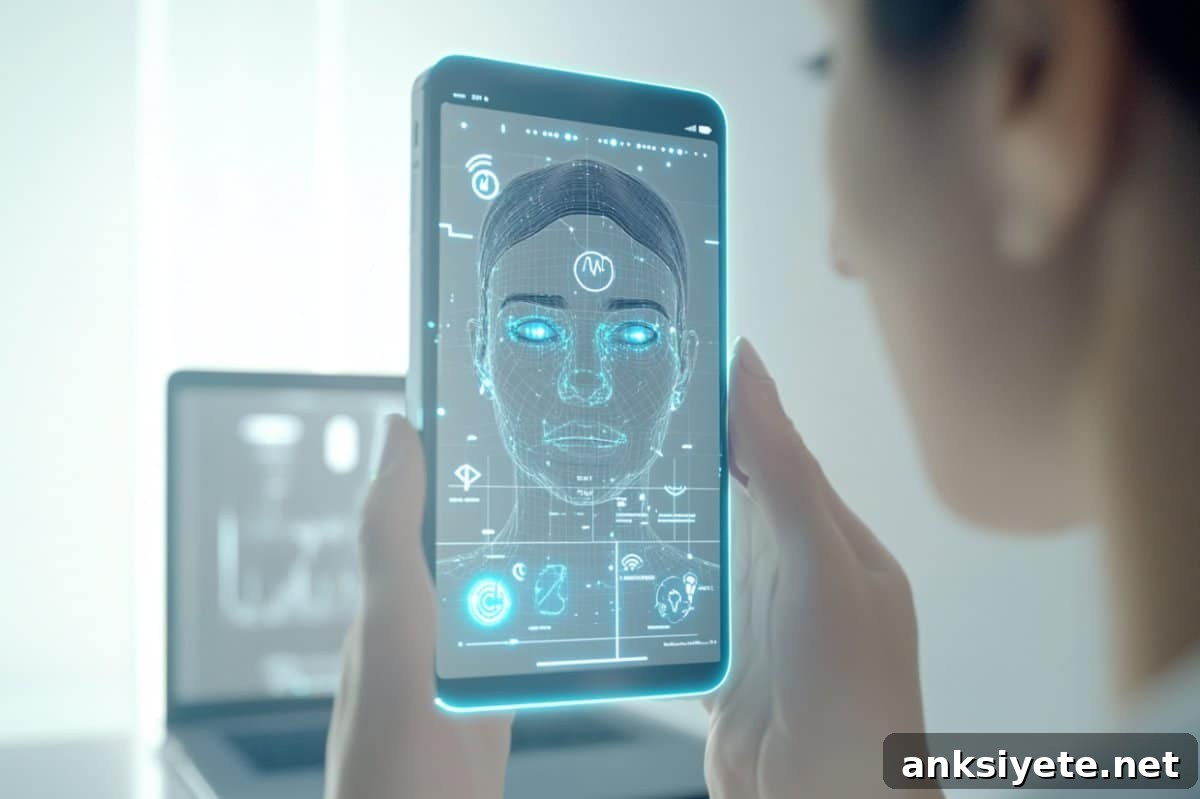
The platform allows users to record eye movements on a smartphone and securely upload the video to a cloud service where the deep learning model performs analysis. The system maps 468 facial landmarks, filters out artifacts such as blinks, measures slow-phase velocity (SPV) — a key indicator of nystagmus intensity, direction and duration — and generates clear graphs and reports that audiologists and physicians can review during telehealth visits.
In a pilot study published in Cureus, the team evaluated the AI system on a small cohort and found that its measurements closely matched those from VNG equipment. The early results indicate the model can produce clinically meaningful assessments even at this preliminary stage, supporting further validation and deployment efforts.
“Our AI model offers a promising tool that can partially supplement — or in some cases replace — conventional diagnostic methods, particularly in telehealth settings where specialty resources are scarce,” said Ali Danesh, Ph.D., principal investigator and senior author. Danesh is a professor in FAU’s Department of Communication Sciences and Disorders and the Charles E. Schmidt College of Medicine. “By combining deep learning, cloud computing and telemedicine, we aim to make diagnosis more flexible, affordable and accessible, especially for rural and low-income communities.”
The research team trained the algorithm on more than 15,000 labeled video frames, using a standard 70:20:10 split for training, testing and validation to improve robustness across different subjects and conditions. The model also uses intelligent filtering to reduce noise from blinks and other artifacts, improving measurement consistency.
Beyond detection, the system is designed to streamline clinical workflows. Clinicians can retrieve AI-generated reports through telehealth platforms, compare findings with a patient’s electronic health record, and use the results to guide referrals or tailor treatment plans. For patients, this approach reduces travel, lowers costs, and simplifies follow-up: clinicians can monitor changes over time by reviewing new home-recorded videos.
In addition to the smartphone-cloud framework, FAU researchers are testing a wearable headset that incorporates on-device deep learning to detect nystagmus in real time. Early controlled-environment tests are promising, though work remains to mitigate sensor noise and adapt the system to individual variability.
“Although still in early development, this technology has the potential to change how vestibular and neurological disorders are discovered and managed,” said Harshal Sanghvi, Ph.D., first author and postdoctoral fellow. “With real-time, noninvasive analysis, the platform could be used in clinics, emergency departments, audiology centers and patients’ homes.”
The interdisciplinary team includes investigators from FAU’s colleges of Education, Medicine, Business, Engineering and Computer Science, and Science, together with clinical partners at Advanced Research, Marcus Neuroscience Institute at Boca Raton Regional Hospital, Loma Linda University Medical Center, and Broward Health North. Their next steps focus on improving accuracy, expanding testing to more diverse populations, and pursuing regulatory clearance to support wider clinical use.
“As telemedicine plays an ever-larger role in healthcare delivery, AI-enabled diagnostic tools like this one can improve early detection, simplify referrals to specialists, and reduce clinician workload,” Danesh added. “Ultimately, these advances aim to improve patient outcomes regardless of geographic location.”
Study collaborators include Abhijit S. Pandya, Ph.D.; B. Sue Graves, Ed.D.; Jilene Moxam; Sandeep K. Reddy, Ph.D.; Gurnoor S. Gill; Sajeel A. Chowdhary, M.D.; Kakarla Chalam, M.D., Ph.D.; and Shailesh Gupta, M.D.
About this AI and eye movement research news
Author: Gisele Galoustian
Source: FAU
Contact: Gisele Galoustian – FAU
Image: The image is credited to Neuroscience News
Original Research: Open access. “Artificial Intelligence-Driven Telehealth Framework for Detecting Nystagmus” by Ali Danesh et al. Cureus
Abstract
Artificial Intelligence-Driven Telehealth Framework for Detecting Nystagmus
Purpose: This work presents a proof-of-concept AI-driven clinical decision support system that analyzes real-time video to detect nystagmus and support diagnosis via telemedicine. The goal is to improve convenience for patients, reduce travel and costs, and enable flexible use in both virtual and in-person care.
Methods: The study included bedside clinical assessments and referrals for videonystagmography. In one described case, a Dix-Hallpike maneuver produced rotatory nystagmus with vertigo while central ocular findings on VNG remained normal. Caloric testing showed symmetric responses. The cloud-based deep learning framework tracks eye movements and identifies 468 facial landmarks in real time. Ten subjects were evaluated in the pilot phase.
Results: The AI-measured slow-phase velocity (SPV) was compared against VNG machine outputs and clinician assessments. Statistical analysis reported significance (p < 0.05), a mean squared error of 0.00459, and an average correction error of ±4.8%, indicating strong agreement between the AI framework and standard testing in this pilot sample.
Conclusion: These initial findings suggest the deep learning model can provide diagnostic support to patients in remote locations and may partially supplement traditional methods like VNG. As a pilot proof-of-concept, further research with larger, more diverse cohorts is needed to validate performance and inform clinical adoption. Continued advances in machine learning will enhance diagnostic accuracy, support timely specialist referrals, and assist clinicians with follow-up care.