
Summary: A new computational model helps clinicians and caregivers understand how abusive head trauma (AHT) — including shaken baby syndrome — affects an infant’s brain and why repeated shaking can quickly overwhelm the brain’s natural protections.
Source: New York Institute of Technology
Abusive head trauma (AHT) — commonly associated with shaken baby syndrome — is the leading cause of fatal brain injuries in children under two. While survivors can suffer permanent neurological damage, developmental delays, and lifelong disabilities, predicting long-term outcomes has been challenging. Researchers at the New York Institute of Technology have developed advanced computational simulations that offer clearer insight into the mechanics of pediatric AHT and help clinicians make better prognoses.
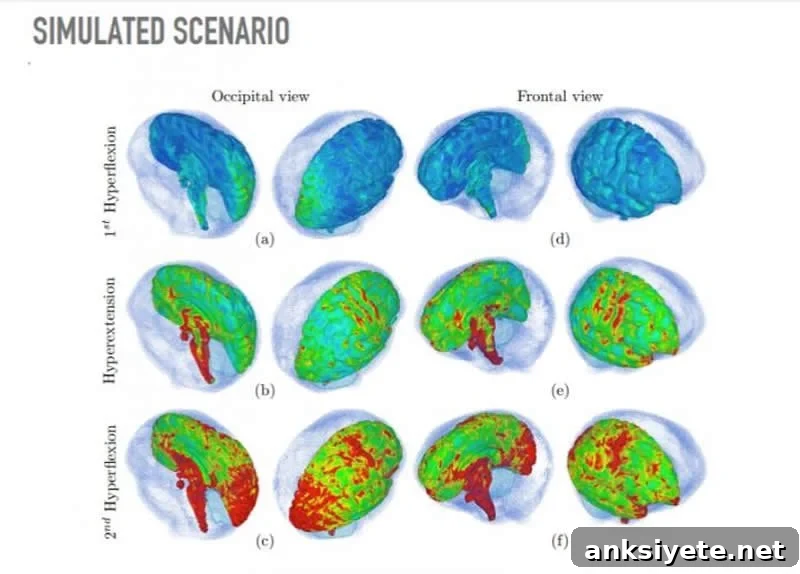
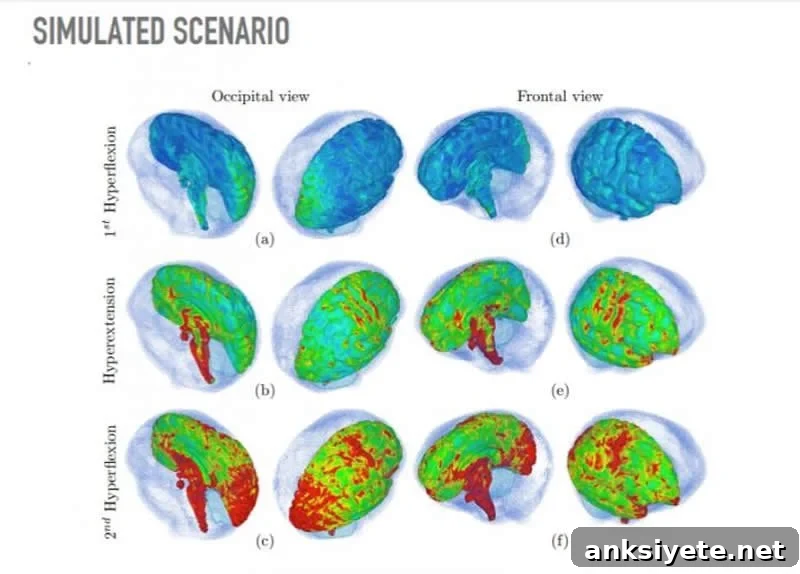
When an infant is shaken, the rapid acceleration and deceleration of the head produces repeated cycles of hyperextension and hyperflexion — the head snapping backward and then rebounding forward, similar to whiplash. Cerebrospinal fluid (CSF), which surrounds and cushions the brain, normally helps absorb impact and prevent the brain from directly striking the skull. Despite this protection, studies show that about one in four infants who experience AHT will die, and up to 80 percent of survivors have permanent brain injury.
Computational simulation is a powerful tool for visualizing the dynamics of pediatric brain injury and the interaction between brain tissue and cerebrospinal fluid. However, previous models frequently treated CSF as an elastic solid and lacked detailed brain anatomy or realistic fluid–structure interaction, limiting their accuracy. The new work from New York Tech, reported in the Journal of Pediatric Neurology, uses higher-fidelity methods to model CSF as a fluid and to include major anatomical features of the infant brain. These improvements reveal that the CSF’s cushioning effect may protect the brain for only the first shake in a sequence.
Lead author Milan Toma, Ph.D., assistant professor of mechanical engineering, explains the clinical relevance: “One instance of abusive head trauma could include as many as 80 shakes. Our findings demonstrate that the cerebrospinal fluid is only ‘designed’ to protect the brain for the first shake. By using simulations like these, clinicians can better predict the short- and long-term effects of abusive head trauma and more accurately assess the victim’s health.”
In their simulations the team tracked how CSF moves during multiple shaking cycles. On the initial shake, CSF flows to the regions subjected to hyperextension and hyperflexion and provides the expected cushioning. But on a subsequent shake, especially during the second hyperflexion, the fluid does not have time to redistribute to the same regions. As a result, the brain is more likely to collide with the skull on repeated impacts, indicating the CSF provides little or no protection at repeated shaking frequencies.
“Even when a baby is shaken at the lowest frequency, one shake is already too many,” said Alfonso Dehesa Baeza, an undergraduate mechanical engineering student and co-investigator. “We hope these findings raise awareness among clinicians and caregivers and help prevent future incidents of abusive head trauma.”
Rosalyn Chan-Akeley, M.D., M.P.H., OB/GYN research program manager at New York–Presbyterian Queens Lang Research Center and a co-author of the study, added context on incidence and diagnosis: “The known incidence of AHT in children less than a year old is approximately 35 cases per 100,000. Unfortunately, AHT is often misdiagnosed or under-diagnosed. This simulation offers a window into the mechanism by which AHT occurs. Improved knowledge of the brain’s response to trauma can help tailor treatment and may reduce long-term damage.”
The research team used a high-order finite element method combined with an up-to-date head and brain model and next-generation smoothed particle hydrodynamics to capture fluid–structure interactions realistically. By representing CSF with fluid material properties and including major anatomical features, their framework delivers a more precise picture of mechanical loads and brain deformation during shaking.
Future work will refine these pediatric models with more clinical data and incorporate brain vasculature to better predict injury patterns. The researchers also plan to apply their simulation platform to a wider range of head injuries: testing helmet performance, modeling high-risk impacts from automobile accidents, and studying concussions and traumatic brain injuries in contact sports such as football, lacrosse, baseball, and ice hockey. The team has also received funding to examine helmet effectiveness for jockeys.
About this neuroscience research article
Source: New York Institute of Technology
Media contacts: Kim Tucker Campo – New York Institute of Technology
Image credit: Milan Toma
Original research: “Cerebrospinal Fluid Interaction with Cerebral Cortex during Pediatric Abusive Head Trauma,” Milan Toma et al., Journal of Pediatric Neurology. DOI: 10.1055/s-0040-1708495 (closed access).
Abstract (summary): Abusive head trauma is the leading cause of fatal brain injuries in children under two and can produce severe, preventable neurological damage. This study presents a fluid–structure interaction model that uses fluid material properties for CSF and includes the major anatomical features of the brain. Using advanced numerical methods, the model demonstrates how CSF interacts with the cortex during multiple shaking cycles and shows that fluid cushioning may fail after the first shake. Such detailed models can improve prevention, treatment, and prognosis for pediatric abusive head trauma victims.
Feel free to share this neurology news.