
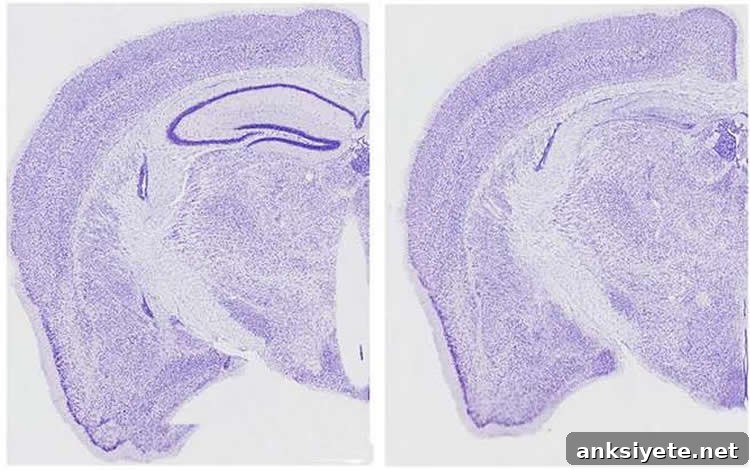
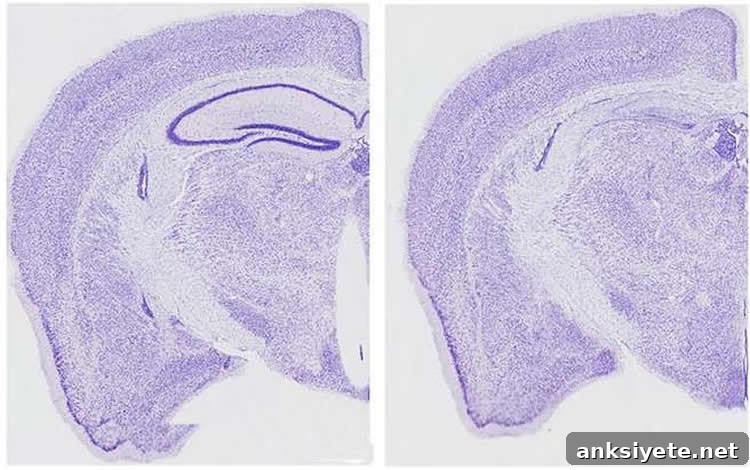
Summary: A new NIH-funded study pinpoints a potential therapeutic target for memory loss in several neurodegenerative disorders, including Alzheimer’s disease.
Source: NIH/NINDS.
NIH-funded mouse study identifies a potential therapeutic target for tau-related disorders
Tauopathies are a class of neurodegenerative diseases, such as Alzheimer’s disease, marked by abnormal accumulation of the tau protein inside neurons. New research shows that cutting of tau by the enzyme caspase-2 produces a specific tau fragment that appears to disrupt neural circuit function and memory. Notably, the fragment identified resists forming the large tau tangles long associated with these disorders, yet still impairs memory in animal models prior to any detectable neuron loss.
In genetically engineered mice that model aspects of human tauopathies, researchers were able to restore some learning and memory abilities by blocking caspase-2 activity. These findings, supported by funding from the National Institute of Neurological Disorders and Stroke (NINDS), suggest that certain cognitive deficits in tauopathies may be at least partially reversible by targeting caspase-2. The study was published in Nature Medicine.
“Our results indicate that cognitive impairments in tauopathies may be reversible by inhibiting caspase-2,” said Roderick A. Corriveau, Ph.D., program director at NINDS. “This supports further exploration of caspase-2 as a novel therapeutic target for dementia.”
Using a mouse model that expresses a mutated form of human tau, the research team matched memory problems to the presence of a specific tau fragment produced when caspase-2 cleaves the full-length protein. The same truncated tau species was found at elevated levels in postmortem brain tissue from Alzheimer’s patients compared with age-matched controls, indicating potential relevance to human disease.
Historically, large fibrillar tangles of tau in brain tissue have been considered a defining feature of tauopathies. Recent evidence, however, has raised doubt about whether these tangles themselves are the primary cause of cognitive decline.
“Past work emphasized the accumulation of tangles as the main driver of memory loss,” said Karen H. Ashe, M.D., Ph.D., professor of neurology at the University of Minnesota and senior author of the study. “But the more data we collect, the less likely it seems that tangles alone explain the symptoms. The pathological fragment we identified does not readily form fibrils; instead it remains mobile within cells. That led us to investigate alternative mechanisms that could impair synaptic function.”
To investigate how cleaved tau alters cell function, the team used fluorescent labels to follow normal and mutated tau in cultured rat hippocampal neurons, the brain region most closely tied to learning and memory. Unlike normal tau, both the mutated tau and the short fragment produced by caspase-2 concentrated in dendritic spines—the tiny structures where neurons receive input from other cells. Excess mutated tau, including the caspase-2–derived fragment, produced synaptic dysfunction in these spines without causing overt changes in neuronal structure or survival.
“It appears that abnormally processed tau interferes with a neuron’s ability to respond appropriately to incoming signals, creating memory deficits that are independent of tangle formation,” said Dr. Ashe. “Because these effects occur without cell death or widespread synapse loss, there is a greater opportunity to intervene and potentially reverse symptoms.”
The investigators report that expression of tau variants engineered to resist caspase-2 cleavage prevented tau from invading dendritic spines, stopped displacement of glutamate receptors, and averted synaptic impairment in cultured neurons. In mice, these cleavage-resistant tau mutants prevented both memory deficits and the progressive neurodegeneration seen in the model. Importantly, reducing caspase-2 levels in mice with existing memory deficits restored long-term memory, demonstrating reversibility of the impairment.
Dr. Ashe and colleagues plan follow-up experiments to clarify the molecular steps by which aberrantly processed tau moves into spines and disrupts synaptic signaling, with the aim of identifying specific intervention points for therapeutic development.
Funding: This work was supported by the NIH (grants NS63214 and NS79374) with additional funding from the T. and P. Grossman Family Foundation, B. Grossman, and K. Moe.
Source: Carl Wonders – NIH/NINDS. Image credit: Ashe lab / NeuroscienceNews.com.
Original research: Zhao X., Kotilinek L. A., Smith B., Hlynialuk C., Zahs K., Ramsden M., Cleary J., and Ashe K. H., “Caspase-2 cleavage of tau reversibly impairs memory,” Nature Medicine. Published online October 10, 2016. doi:10.1038/nm.4199
NIH/NINDS. “Untangling a Cause of Memory Loss in Neurodegenerative Diseases.” NeuroscienceNews, October 13, 2016.
Abstract
Caspase-2 cleavage of tau reversibly impairs memory
In Alzheimer’s disease and other tauopathies, tau protein can assemble into fibrils long thought to be neurotoxic. However, fibrillar tau has been dissociated from direct neuron death and network dysfunction, suggesting that nonfibrillar tau species also play a role. This study describes a pathological process in which caspase-2 cleavage of tau at Asp314 generates a truncated product (Δtau314) that promotes missorting of tau into dendritic spines, impairing synaptic and cognitive function in cellular and animal models. Δtau314 resists fibril formation and is elevated in brains from cognitively impaired mice and humans with Alzheimer’s disease. Tau mutants engineered to resist caspase-2 cleavage prevented spine infiltration, preserved glutamate receptor localization, and maintained synaptic function in cultured neurons, and they prevented memory deficits and neurodegeneration in mice. Reducing caspase-2 levels restored long-term memory in mice with existing deficits. These results support a therapeutic strategy aimed at preventing tau accumulation in dendritic spines to re-establish synaptic function and restore memory in Alzheimer’s disease.
“Caspase-2 cleavage of tau reversibly impairs memory” by Xiaohui Zhao et al., Nature Medicine. Published online October 10, 2016. doi:10.1038/nm.4199