Summary:
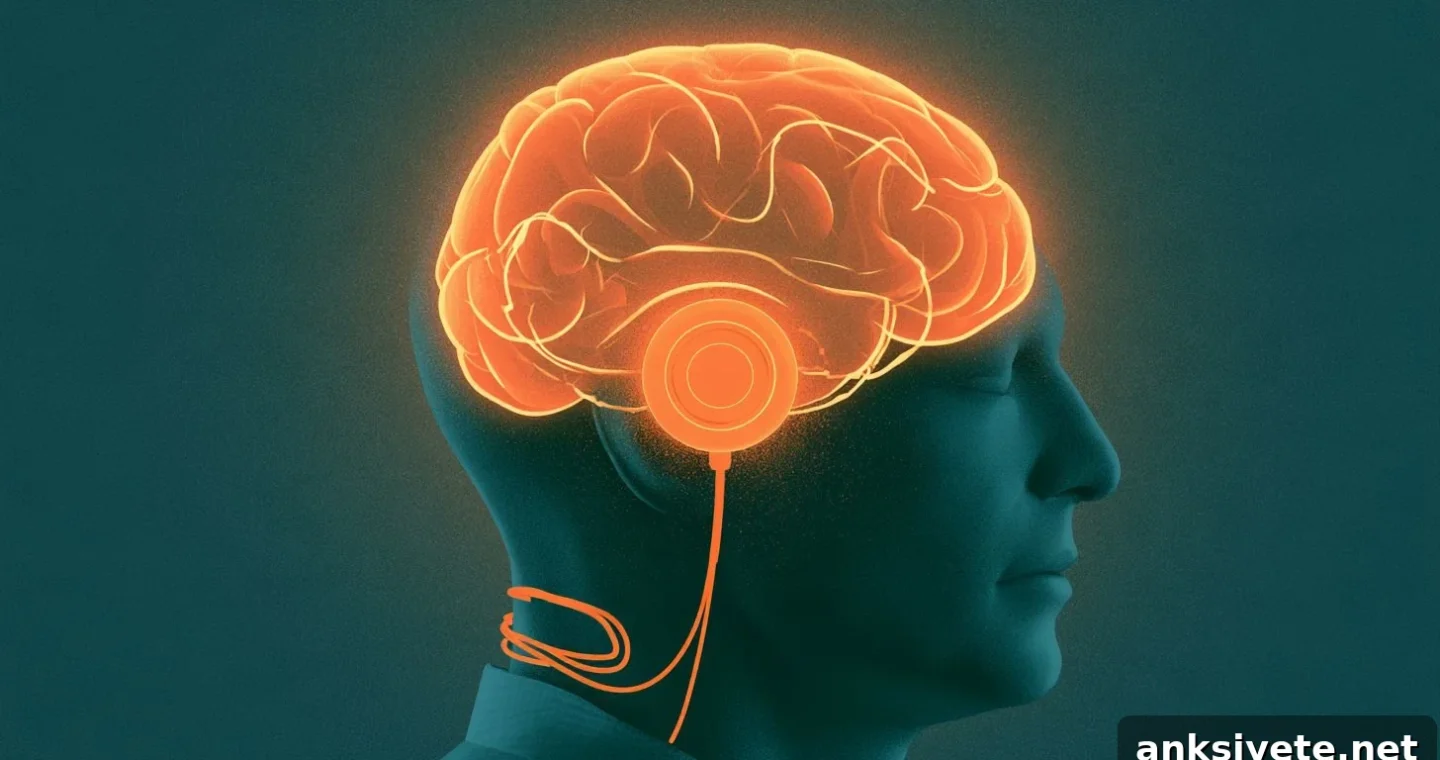
A comprehensive review in Med-X describes how advances in wearable bioelectronics are transforming vagus nerve stimulation (VNS) from a surgically implanted therapy into a practical, home-based treatment for depression. Non-invasive wearable VNS (wnVNS) stimulates peripheral vagal fibers at the ear or neck to promote neuroplasticity, increase monoamine neurotransmitters, and reduce systemic inflammation. When combined with multimodal biometric sensing and artificial intelligence, wearable closed-loop systems could soon provide personalized, real-time neuromodulation for people with treatment-resistant depression.
Key Facts:
- Surgical Independence: Wearable non-invasive vagus nerve stimulation (wnVNS) removes the need for implanted hardware by delivering electrical pulses through transcutaneous auricular (taVNS) ear attachments or transcutaneous cervical (tcVNS) neck patches.
- Triple Antidepressant Mechanism: Vagus stimulation supports antidepressant effects across three biological pathways: enhancing serotonin and norepinephrine release, boosting BDNF-driven synaptic plasticity, and reducing neuroinflammation via the cholinergic anti-inflammatory pathway.
- AI and Closed-Loop Potential: Clinical progress depends on integrating wearable bioelectronics with continuous biometric monitoring (for example, heart rate variability) and machine learning models that dynamically adjust stimulation to match a patient’s physiological state.
Source: Neuroscience News / Med-X
Major depressive disorder affects more than 280 million people worldwide and remains a leading cause of disability and emotional suffering. While many patients respond to antidepressant medication and psychotherapy, about one-third experience treatment-resistant depression and do not reach remission after multiple treatment attempts.
To address these unmet needs, researchers have turned to neuromodulation and identified vagus nerve stimulation (VNS) as an effective option for some patients. Historically, VNS required surgical implantation of a pulse generator below the clavicle with leads wrapped around the left cervical vagus nerve. Although effective for certain patients, implantable VNS carries surgical risks, possible vocal cord side effects, and high costs that limit access.
The review in Med-X systematically examines how innovations in flexible materials, wearable bioelectronics, and artificial intelligence are enabling non-invasive, home-based VNS that could expand access to neuromodulation for depression.
Biological Mechanisms: Linking Brain, Body, and Immunity
The vagus nerve (cranial nerve X) is the main parasympathetic pathway connecting internal organs with the brainstem’s nucleus tractus solitarius (NTS). From the NTS, vagal signals influence brain areas such as the locus coeruleus, dorsal raphe nucleus, amygdala, and prefrontal cortex—regions critically involved in mood regulation.
The review highlights three interrelated physiological mechanisms by which wnVNS may alleviate depressive symptoms:
- Monoaminergic and Neurotrophic Modulation: Vagal stimulation can activate the locus coeruleus and dorsal raphe, increasing norepinephrine and serotonin release. It also raises brain-derived neurotrophic factor (BDNF), supporting dendritic remodeling and synaptic plasticity in the hippocampus and prefrontal cortex.
- Cholinergic Anti-Inflammatory Pathway: Efferent vagal signals promote acetylcholine release, which interacts with alpha7 nicotinic receptors on immune cells to lower pro-inflammatory cytokines such as TNF-alpha, IL-1beta, and IL-6—markers often elevated in depression.
- Network Reconfiguration: Functional imaging studies show that non-invasive vagus stimulation can reduce hyperconnectivity of the default mode network (DMN) and strengthen frontoparietal cognitive control networks, which helps break patterns of rumination and impaired cognitive control.
Engineering the Next Generation of Wearables
Translating these biological effects into consumer and clinical devices focuses on two anatomical targets:
- Transcutaneous Auricular VNS (taVNS): Targets the auricular branch of the vagus nerve (Arnold’s nerve) that supplies the external ear. Device formats include conductive earclips, custom-molded earbuds, and concha-mounted earpieces.
- Transcutaneous Cervical VNS (tcVNS): Targets the cervical vagus bundle through the anterolateral neck using handheld stimulators or ultra-thin adhesive bioelectronic patches.
Therapeutic effect depends heavily on engineering choices: pulse width, frequency, current amplitude, duty cycle, and electrode–skin impedance determine whether stimulation recruits deep Aβ vagal afferents without causing pain or skin irritation. Proper bioelectronic design and materials are essential for reliable, comfortable treatment delivery.
Clinical Evidence, Standardization Needs, and Challenges
Clinical trials of taVNS and tcVNS in depressive cohorts report reductions in Hamilton Depression Rating Scale (HAM-D) scores, alongside improvements in autonomic measures such as heart rate variability and normalization of cortical oscillations. Despite these promising findings, the literature is fragmented by small sample sizes, varied stimulation protocols, and inconsistent outcome measures.
Key priorities for the field include defining standardized stimulation parameters, establishing dose–response relationships, conducting larger randomized controlled trials, and tracking long-term maintenance outcomes to determine who benefits most from wearable VNS.
The AI-Powered Closed-Loop Horizon
The review emphasizes a future shift from static, one-size-fits-all stimulation toward adaptive, closed-loop systems. Embedding multimodal biosensors—continuous electrocardiography, galvanic skin response, peripheral temperature, and movement sensors—into wearable vagal devices can provide continuous measures of autonomic state and stress-related biomarkers.
Machine learning models can decode these signals in real time to detect autonomic dysregulation or worsening depressive states and automatically trigger or adjust stimulation parameters. This personalized, responsive neuromodulation approach aims to increase efficacy, reduce side effects, and improve long-term adherence by delivering the right dose at the right time.
By integrating biological circuit knowledge, flexible bioelectronics, and AI-driven control, wearable vagus nerve stimulation is poised to reduce barriers associated with surgical neuromodulation and offer a more scalable, home-based treatment option for depression.
Editorial Notes:
- This article was edited by a Neuroscience News editor.
- The journal paper was reviewed in full.
- Additional context was provided by staff.
About this neurotech and depression Research:
- Media Contact: Bowen Li
- Source: Shanghai Jiao Tong University Journal Center
- Image Credit: Image credited to Neuroscience News
- Original Research is Open Access: Med X (Oct 1, 2026). “Wearable vagus nerve stimulation for depression: mechanisms, devices, and the road toward personalized neuromodulation.” Authors: Vivian Wei, Xiaofeng Chen, Jiayi Li, Zhiyi Wang, Xigan Wang, Zidong Yin, Luyao Wang & Caizhi Liao.
- DOI: 10.1007/s44258-026-00092-8
Abstract
Wearable vagus nerve stimulation for depression: mechanisms, devices, and the road toward personalized neuromodulation
Major depressive disorder remains a leading global cause of disability, with many patients showing limited response to standard pharmacological and psychotherapeutic treatments. Vagus nerve stimulation has demonstrated efficacy for treatment-resistant depression, but implantable systems are constrained by surgical risk, cost, and limited scalability.
Recent developments in non-invasive, wearable VNS—especially transcutaneous auricular and cervical approaches—provide a promising path to more accessible, home-based neuromodulation. This review synthesizes anatomical and physiological rationales for wearable non-invasive VNS and evaluates evidence across monoaminergic modulation, neuroplasticity, neuroimmune regulation, autonomic control, and large-scale brain network reorganization.
The authors summarize clinical results from implantable and non-invasive trials and outline engineering considerations such as electrode–skin interfaces, stimulation parameters, wearability, and safety. They conclude by identifying challenges and future directions, particularly the integration of flexible bioelectronics, multimodal sensing, and AI-driven closed-loop control to enable personalized, scalable neuromodulation for depression.