Summary:
Proteins typically associated with neurodegenerative diseases, such as amyloid fibrils, have an unexpected and important role in human reproduction. Researchers at Columbia University’s Mortimer B. Zuckerman Mind Brain Behavior Institute report that positively charged amyloid fibrils in seminal fluid bind negatively charged RNA, protect it from enzymatic degradation, and deliver it directly into sperm. Published in Molecular Cell, these findings identify a biological vehicle for paternal epigenetic inheritance and highlight a human-derived delivery scaffold with potential to improve CRISPR and RNA-based gene-editing methods.
Key Facts:
- Functional reproductive amyloids: Naturally occurring, positively charged amyloid fibrils in semen bind fragile, negatively charged RNA molecules, stabilizing them and transporting them into sperm cells.
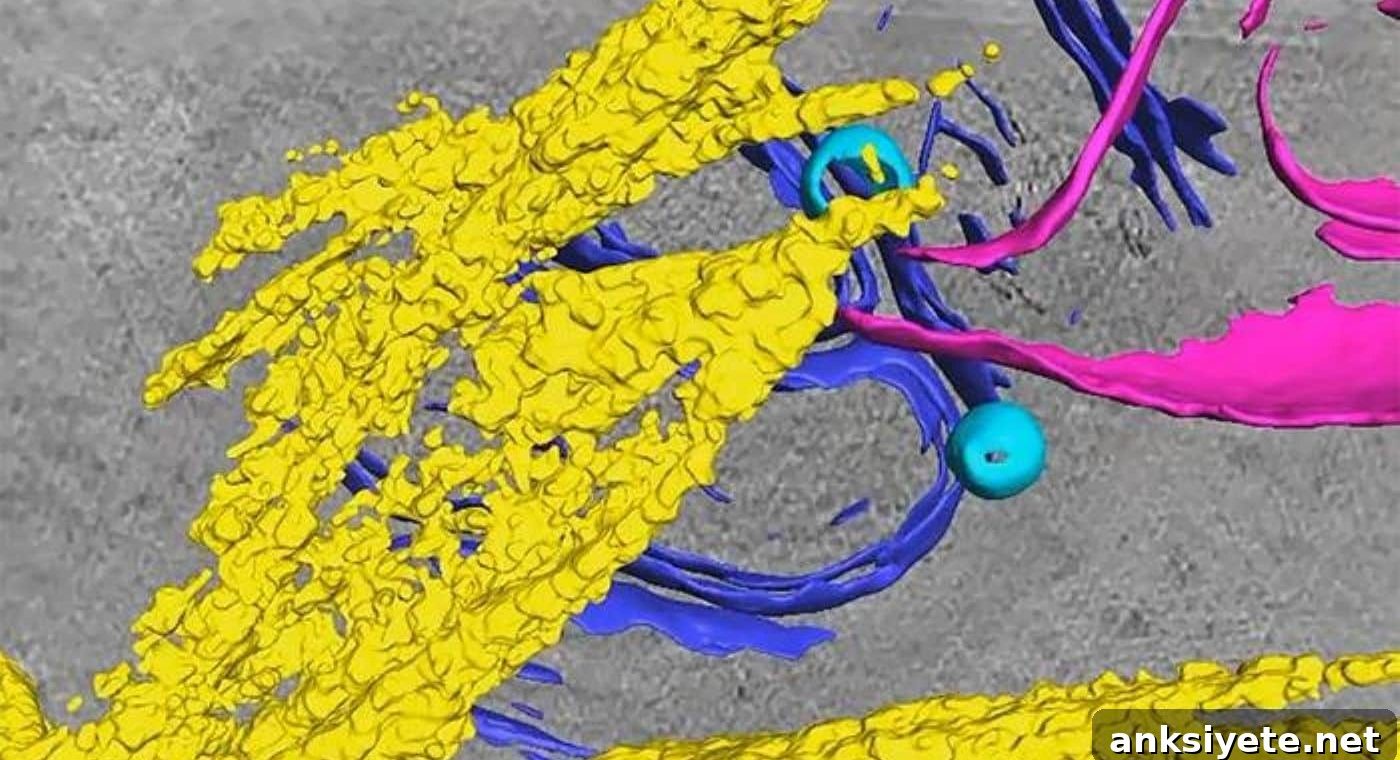
- Direct cryo-ET visualization: Near-atomic-resolution cryo-electron tomography with gold-labeled markers showed amyloid fibrils penetrating the sperm membrane and entering the cytoplasm rather than just adhering to the cell surface.
- Non-viral CRISPR and RNA delivery platform: Amyloid fibrils can carry large mRNA transcripts—demonstrated using green fluorescent protein (GFP) mRNA—into sperm, producing embryos that express substantially more target protein compared with naked RNA controls, suggesting a biocompatible alternative to viral vectors and lipid nanoparticles.
Source: Columbia University Zuckerman Institute
Amyloid proteins are widely known in neurobiology for their association with degenerative conditions like Alzheimer’s and Parkinson’s, where they form pathological plaques and tangles. However, functional amyloids exist throughout the body and serve diverse, non-pathological purposes that researchers are still uncovering.
In this study, structural biologists and neuroscientists at Columbia’s Zuckerman Institute demonstrate that seminal amyloid fibrils perform a critical reproductive function: they escort extracellular RNA into sperm and, following fertilization, into the zygote. This provides a direct mechanism explaining how paternal environmental and physiological signals—encoded as regulatory RNAs—can be transmitted to offspring.
From infection research to epigenetic inheritance
The investigation grew out of interdisciplinary insights. Earlier infectious disease studies showed that amyloid fibrils in human semen can bind viral particles and assist their entry into host cells, for example in facilitating HIV infection. Building on that knowledge, the research team asked whether the reproductive tract might exploit these stable, positively charged fibrils for physiological cargo instead of pathogens.
Seminal fluid is rich in small non-coding RNAs that influence embryonic development and carry signals tied to paternal diet, stress, and other life experiences. Until now, the physical means by which these extracellular RNAs cross the sperm membrane and reach the interior of mature sperm remained unclear. Because amyloid fibrils present a strong positive electrostatic surface, they are well suited to bind the negatively charged RNA phosphate backbone and protect it from nucleases.
Using fluorescent labeling, the team showed that amyloid fibrils capture and stabilize RNA in compact complexes that resist degradation. Lead author William S. Mallen, PhD, reports that these complexes form a protective scaffold that preserves RNA integrity until it reaches the sperm interior.
Visualizing amyloid entry with cryo-electron tomography
To determine whether amyloid-RNA complexes truly enter sperm, the researchers employed cryo-electron tomography (cryo-ET), an advanced imaging technique that reconstructs three-dimensional macromolecular structures in vitrified samples at near-atomic resolution. By tagging amyloid fibrils with gold nanoparticles, cryo-ET provided clear, direct evidence that intact fibrils penetrate the sperm membrane and lodge within the sperm cytoplasm.
Functional assays further showed that once the amyloid-RNA payload is inside the sperm, molecular chaperones abundant in reproductive tissues—such as clusterin—can act to dissociate RNA from the amyloid scaffold, freeing the RNA to participate in downstream cellular and developmental processes.
Implications for gene delivery and CRISPR
These findings clarify a biologically plausible pathway for paternal epigenetic inheritance: amyloid fibrils can package and transport regulatory RNAs into sperm, linking paternal exposures and physiology to changes in embryonic gene expression. The work also highlights translational possibilities for non-viral delivery of RNA and gene-editing tools.
Standard delivery methods for CRISPR components often rely on viral vectors or synthetic lipid nanoparticles, each with limitations including immunogenicity and cytotoxicity. By contrast, seminal amyloid fibrils are human-derived protein structures that are intrinsically biocompatible and show low immunogenic potential. In laboratory experiments, amyloid-bound mRNA encoding GFP delivered to sperm produced embryos with at least an order of magnitude higher GFP expression than embryos exposed to naked RNA, demonstrating efficient cargo delivery in a reproductive context.
The authors suggest that amyloid-based delivery scaffolds could be developed as a novel, human-compatible platform for transporting therapeutic RNAs and gene-editing reagents into cells and embryos, though additional research will be required to assess safety, specificity, and translation to clinical applications.
Funding: This research was supported by the Hevolution Foundation, the ERC-CFAR Center for AIDS Research, the Einstein–Mount Sinai Diabetes Center, the NIH Office of the Director (S10OD030286), the Vagelos Precision Medicine Fund, and the NYU Langone Health Microscopy Laboratory (partly funded by NYU Cancer Center Support Grant NCI P30CA016087).
The authors report no conflicts of interest.
Editorial Notes:
- This article was edited by a Neuroscience News editor.
- The journal paper was reviewed in full by editorial staff.
- Additional context was provided by the editorial team.
About this neurotech and schizophrenia Research:
- Media Contact: Media Relations
- Source: Zuckerman Institute
- Image Credit: William Mallen / Fitzpatrick lab / Columbia’s Zuckerman Institute
- Original Research (Open Access): Molecular Cell (Oct 1, 2026). Title: “Amyloid-mediated RNA uptake by sperm for embryonic delivery.” Authors: William S. Mallen et al.
- DOI: 10.1016/j.molcel.2026.10.004
Abstract
Amyloid-mediated RNA uptake by sperm for embryonic delivery
Seminal fluid RNA contributes critically to embryonic development, yet the mechanism that transfers extracellular RNA from seminal fluid to sperm has been uncertain. This study identifies functional amyloid fibrils in seminal fluid that bind and traffic RNA to mammalian sperm and, following fertilization, to the zygote. Highly cationic peptides in seminal fluid phase separate with RNA to form amyloid fibrils. Cryo-electron tomography, volume electron microscopy, and live-cell fluorescence imaging reveal that these fibrils are internalized by mammalian sperm. Biophysical and in vitro fertilization experiments demonstrate that amyloid-bound RNA reaches the zygote, where molecular chaperones can mediate RNA dissociation from the fibrils. These results establish amyloid fibrils as a mechanism for RNA trafficking from seminal fluid to the zygote and as potential tools for RNA delivery during fertilization.