
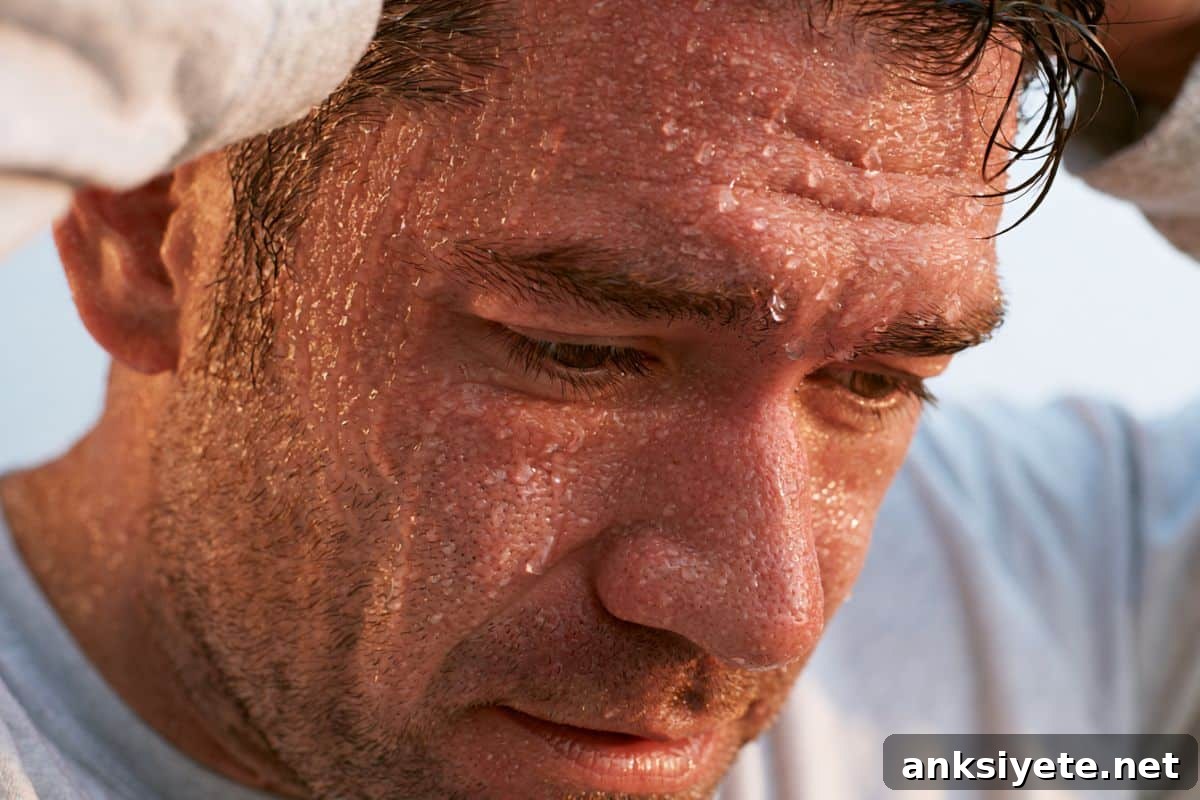
Summary: An international research team has identified a major genetic cause of primary hyperhidrosis. By sequencing and analysing the DNA of more than 180 patients, researchers traced a consistent cause to mutations in the Nav1.8 (SCN10A) voltage-gated sodium channel. In affected individuals this ion channel is pathologically open, producing a continuous electrical leak that chronically overstimulates the autonomic nerves controlling sweat glands.
This malfunction acts like a stuck-open gate, leaving sympathetic nerve pathways in a constant state of hyperexcitation and explaining the intense, often sudden sweating episodes patients experience in response to everyday emotional or stress-related triggers.
Key Facts
- Nav1.8 ion channel defect: Genetic screens revealed recurrent coding changes in the Nav1.8 (SCN10A) sodium channel. These variants produce a gain-of-function effect that leaves the channel excessively open, creating a persistent inward current that raises excitability in sympathetic neurons.
- Explains emotional trigger sensitivity: The nerve-level electrical hyperexcitability clarifies why minor stress or anxiety provokes explosive sweating. The triggers are normal autonomic signals, but the already unstable nerve state amplifies them dramatically.
- Reversible in preclinical models: Mice engineered with a clinical Nav1.8 substitution showed localized sweating resembling human hyperhidrosis. Pharmacological blockade of sodium channels, including Nav1.8-preferential compounds, produced rapid and reversible suppression of excessive sweating in the model.
- Genetic heterogeneity and alternative pathways: The team also identified a patient with an inhibitory nerve mutation who nonetheless sweated excessively because of an additional mutation in a water channel intrinsic to the sweat gland. This highlights that multiple biological routes—nerve-driven or gland-intrinsic—can converge on the same clinical outcome.
- Potential to replace invasive surgery: Current last-resort treatments, such as endoscopic thoracic sympathectomy, cut sympathetic nerve chains and can cause severe compensatory sweating. Identifying Nav1.8 enables development of targeted topical agents or systemic drugs designed to restore normal channel function without irreversible surgery.
- Drug repurposing opportunities: The mechanistic insight explains why certain existing medicines that reduce neural excitability or interfere with cholinergic signalling can reduce sweating in preclinical tests. It also provides a scientific rationale for investigating specific cannabinoids or other agents that modulate peripheral sodium channels under controlled clinical trial conditions.
- Broader autonomic implications: Because sweating is a visible and measurable autonomic output, this discovery offers a model for other dysautonomia disorders and motivates investigation of whether similar ion channel mutations contribute to post-infectious or chronic autonomic syndromes.
Source: VIRJE
Overview of the study
An international team led by Prof. Frank Bosmans (Vrije Universiteit Brussel), in collaboration with researchers at Johns Hopkins University and other centres, systematically analysed the genomes of families and individuals with primary idiopathic hyperhidrosis. Their work, published in Science Advances, demonstrates that a genetically determined subtype of hyperhidrosis arises from an overexcited sympathetic drive caused by Nav1.8 channelopathy. The finding reframes the condition from a dismissed cosmetic or purely psychological problem to a biologically grounded, treatable disorder.
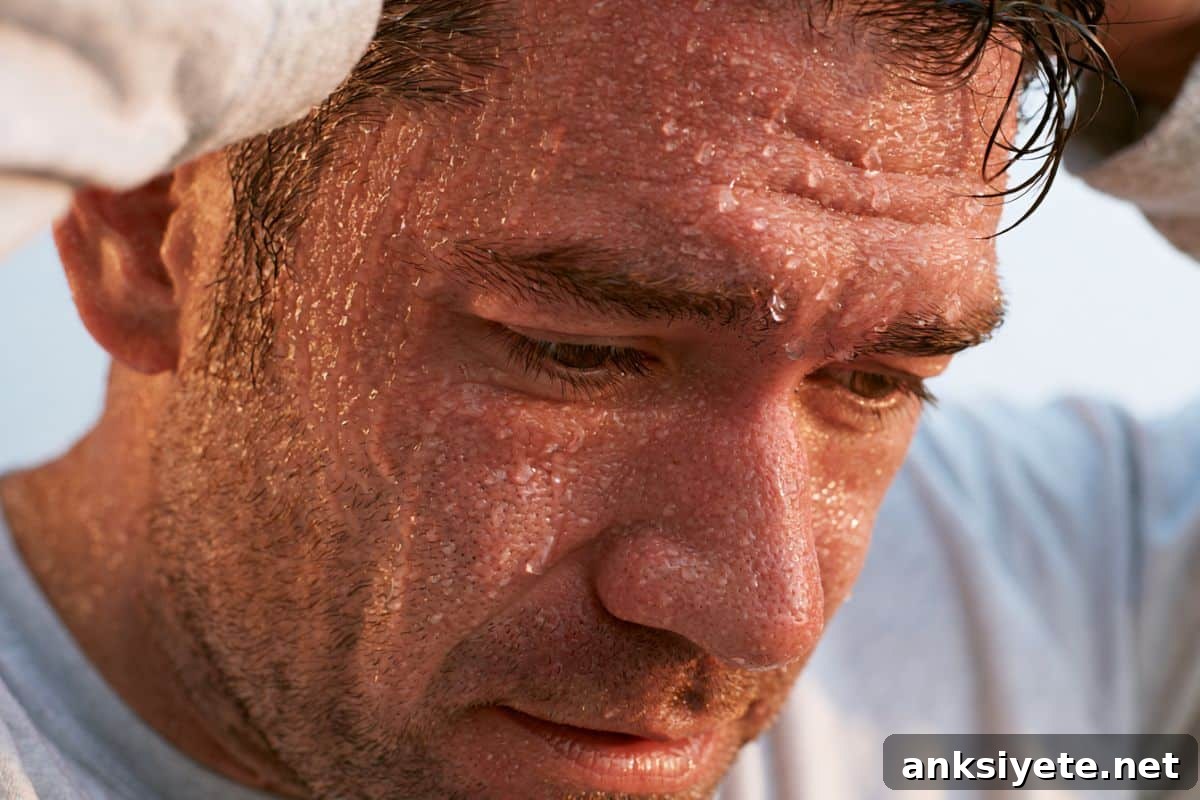
Primary hyperhidrosis affects an estimated 2–5% of the population. For many patients symptoms go beyond mild inconvenience: profuse sweating can force multiple clothing changes a day, interfere with work and social interaction, and contribute to profound social anxiety and depression. Misunderstanding of the disorder often leads to under-treatment and stigma. This research provides a clear, testable biological explanation and a path toward more precise therapies.
Key experimental findings
The team used whole-exome sequencing across hereditary hyperhidrosis families and found enrichment of rare coding variants in voltage-gated sodium channels, with SCN10A (Nav1.8) most strongly implicated. A knock-in mouse carrying a clinically observed Nav1.8 substitution (p.R14L) recapitulated excessive sweating. Nav1.8 expression was detected in a subset of postganglionic thoracic sympathetic neurons in humans and mice; the mutation produced a gain-of-function profile that heightened cholinergic responsiveness. Importantly, excessive sweating in mutant mice was reversible with NaV channel inhibitors, supporting the plausibility of targeted pharmacological therapy.
The discovery of a patient whose excessive sweating derived from a gland-intrinsic water-channel mutation illustrates the disorder’s heterogeneity and the need for stratified clinical approaches guided by genetic testing.
Clinical and therapeutic implications
This work opens several clinical avenues: developing topical or systemic agents that selectively reduce Nav1.8 activity; repurposing existing medications that dampen neural excitability or cholinergic signalling; and using rapid genetic diagnostics to match patients to the most appropriate intervention—nerve-targeted therapy, gland-directed treatment, or systemic medication. The goal is to offer effective, reversible treatments that avoid the irreversible harms associated with invasive sympathectomy procedures.
Key Questions Answered
A: In healthy people, routine emotional stress sends a modest sympathetic signal to sweat glands. In patients with a Nav1.8 gain-of-function mutation, sympathetic neurons already sit at elevated excitability. A normal stress pulse therefore triggers a disproportionate electrical response, producing massive sweating despite the trigger being physiologically typical.
Q: How might this discovery reduce the need for invasive chest surgeries?
A: Endoscopic thoracic sympathectomy severs sympathetic chains and can have permanent, adverse consequences. Knowing that Nav1.8 channel dysfunction underlies many cases enables drug development aimed at plugging the overactive channel locally or systemically, restoring balance without cutting nerve pathways.
Q: What does the alternate “water channel” mutation mean for treatment?
A: It demonstrates that excessive sweating can arise from distinct mechanisms—either nerve hyperexcitability or gland-level defects. Future care will likely use genetic testing to identify the causal pathway and select targeted therapies that match each patient’s biological profile.
Editorial Notes:
- This article was edited by a Neuroscience News editor.
- The journal paper was reviewed in full by editorial staff.
- Additional context was added by the reporting team.
About this genetics and neurology research news
Author: Koen Stein
Source: Vrije Universiteit Brussel
Contact: Koen Stein – Vrije Universiteit Brussel
Image credit: Neuroscience News
Original Research: Open access. “A Neurocutaneous NaV1.8 Channelopathy Underlies a Genetic Subtype of Primary Idiopathic Hyperhidrosis” by Andreas S. Barth et al., Science Advances. DOI: 10.1126/sciadv.aed3221
Abstract
A Neurocutaneous NaV1.8 Channelopathy Underlies a Genetic Subtype of Primary Idiopathic Hyperhidrosis
Primary idiopathic hyperhidrosis (PIH) is a poorly understood disorder characterized by excessive sweating. The study identifies a genetically defined subset of PIH associated with rare coding changes in voltage-gated Na+ (NaV) channels. Whole-exome sequencing of hereditary PIH families revealed gene-level enrichment within the NaV channel family, with SCN10A (NaV1.8) most strongly implicated. A knock-in mouse carrying the clinically observed NaV1.8 p.R14L substitution recapitulated excessive sweating. NaV1.8 was detected in a subset of postganglionic neurons in thoracic sympathetic ganglia in humans and mice, where p.R14L produced a gain-of-function profile that enhanced cholinergic responsiveness. Excessive sweating in mutant mice was reversible with NaV channel inhibition, including clinically used agents and a NaV1.8-preferential compound. Together, these findings define a targetable neurocutaneous channelopathy underlying a subset of PIH and support a model in which excessive sweating arises from either gland-intrinsic dysfunction or altered sympathetic drive, motivating stratified therapeutic approaches.