
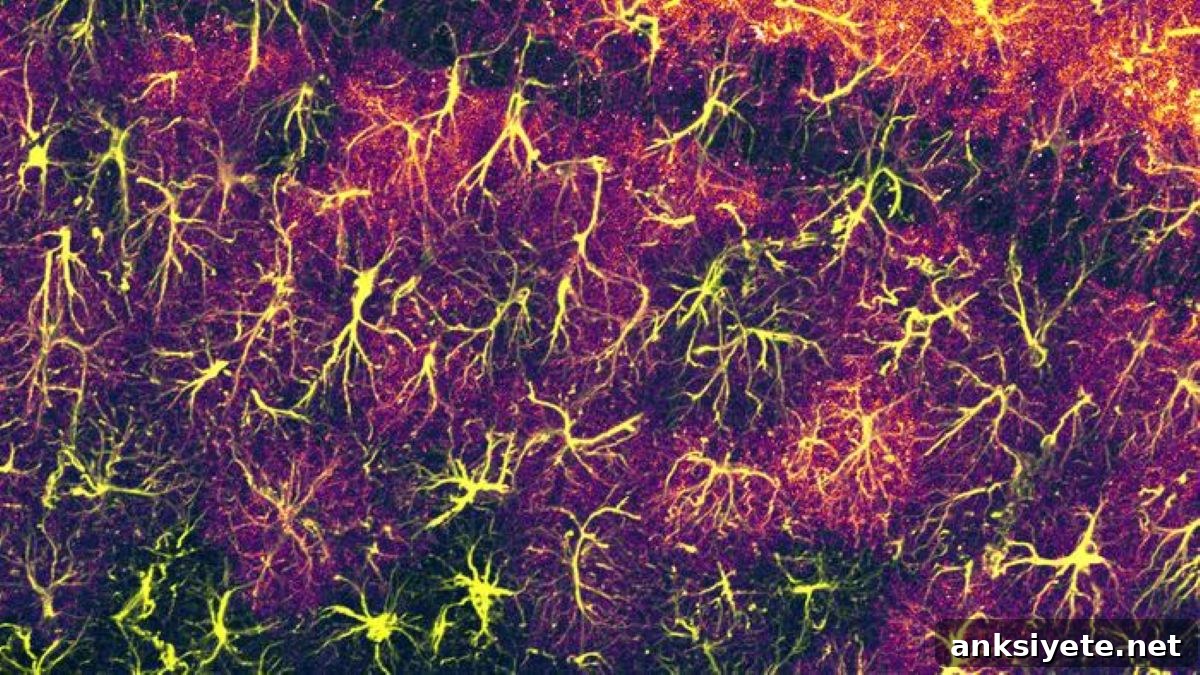
Summary: Astrocytes—star-shaped, non-neuronal brain cells—act as active gatekeepers of long-term memory stability. Researchers identified a scaffolding protein, ankyrin-2 (Ank2), and traced a molecular pathway showing how astrocytes physically embrace and stabilize specialized memory-storing “engram” neurons. When this astrocytic mechanism is disrupted, initial memory formation remains intact, but the long-term stabilization process fails and memories fade within weeks.
Key Facts
- Ank2 as a Molecular Switch: Ankyrin-2 (Ank2) is a structural protein highly expressed in astrocytes and serves as a central regulator of how long memories persist.
- Memory Formation vs. Memory Maintenance: Mice engineered to lack Ank2 specifically in astrocytes showed normal behavior and recent memory immediately after learning, but they displayed severe impairments in remote memory when tested two weeks later. This demonstrates that forming a memory and preserving it over time involve distinct biological systems.
- Reduced Astrocyte-Engram Contacts: Without Ank2, astrocytes develop simpler, underbranched morphologies and form far fewer physical contacts with nearby engram neurons—the groups of neurons that encode and store specific memories.
- Selective Loss of LTP Maintenance: The absence of astrocytic Ank2 impaired the maintenance of long-term potentiation (LTP), the cellular process linked to long-term memory, while leaving baseline synaptic transmission mostly unaffected.
- Disrupted BDNF and Calcium Signaling: Ank2 is required for brain-derived neurotrophic factor (BDNF) signaling through the astrocytic TrkB.T1 receptor and for IP3R2-mediated intracellular calcium dynamics. Deleting Ank2 weakens calcium signaling and prevents astrocytes from remodeling structurally around memory circuits.
- Optogenetic Rescue with Opto-T1: The team built an optogenetic tool called Opto-T1 to activate TrkB.T1 signaling in astrocytes using light. Brief light stimulation triggered astrocyte remodeling, restored sustained LTP, and significantly strengthened long-term memory persistence without changing short-term recall.
- Clinical Implications: Because Ank2 mutations are implicated in autism spectrum disorder, intellectual disability, and epilepsy, these results suggest astrocytic dysfunction may contribute to cognitive decline and memory disorders, offering a new perspective for research and potential therapies.
Source: Institute of Basic Science
Some memories last a lifetime while others disappear within days. Although research has long focused on how memories are encoded by neurons, far less is known about the cellular and molecular processes that preserve memories over long periods. A team led by Dr. Wuhyun Koh at the Center for Memory and Glioscience, Institute for Basic Science (IBS), together with colleagues at the Korea Brain Research Institute (KBRI), has uncovered a mechanism centered on astrocytes that is essential for memory persistence.
Astrocytes have traditionally been viewed as support cells for neurons, but this study shows they actively determine whether a memory endures. The researchers discovered that Ank2 in astrocytes is crucial for maintaining long-term memory. By selectively deleting Ank2 in astrocytes of adult mice, the team found that these animals performed normally immediately after learning—showing intact locomotion, social behavior, and recent memory—yet they exhibited greatly reduced remote memory retention two weeks later. These results separate the biology of memory formation from that of memory maintenance and highlight an active, astrocyte-driven component of long-term memory stability.
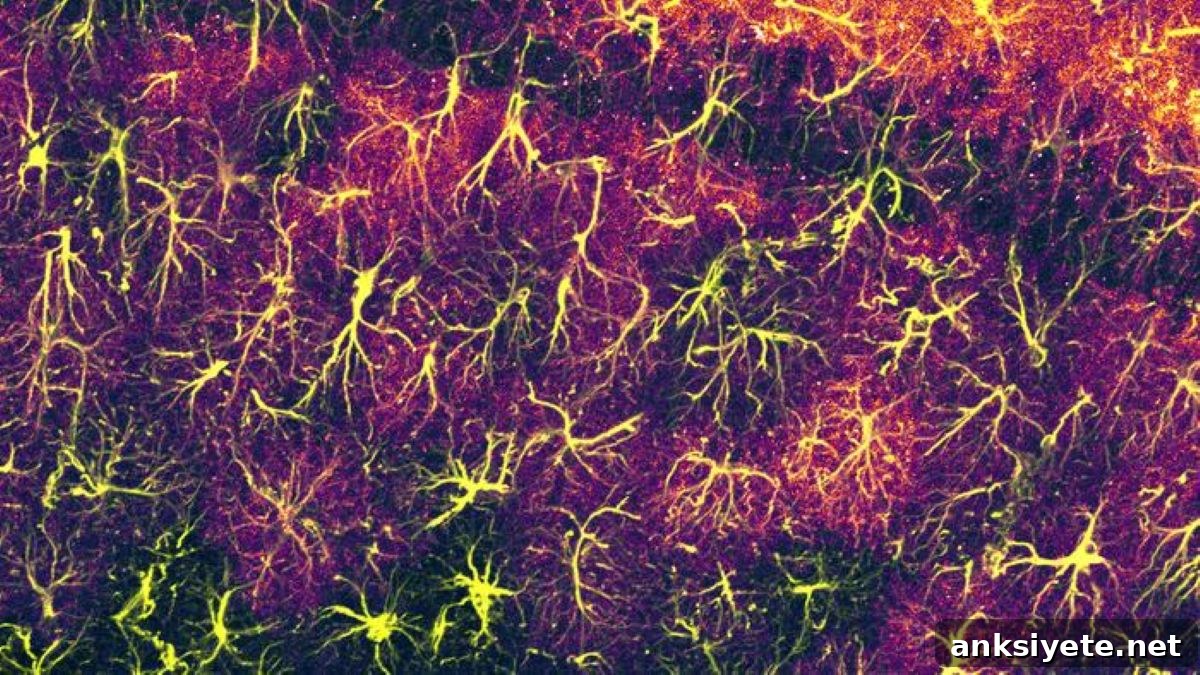
At the cellular level, the absence of Ank2 left astrocytes with simpler, underdeveloped branches and reduced contact with engram neurons. Those contacts appear to stabilize the neural circuits that store memories. Functionally, this loss of contact selectively disrupted the maintenance phase of long-term potentiation (LTP), while leaving normal synaptic transmission intact—further supporting the idea that astrocytes contribute specifically to long-term memory persistence rather than short-term signal processing.
Molecular analysis revealed that Ank2 supports astrocyte morphogenesis through BDNF signaling via the truncated TrkB.T1 receptor and IP3R2-dependent calcium signaling. When Ank2 is missing, astrocytic calcium responses weaken and the cells fail to remodel around memory-encoding neurons. Infusing BDNF into the hippocampus normally enhances memory persistence, but this effect depended on astrocytic Ank2, highlighting Ank2’s role in BDNF-dependent stabilization.
To test sufficiency, the researchers developed Opto-T1, an optogenetic actuator that selectively stimulates TrkB.T1 signaling in astrocytes with light. Activation of Opto-T1 caused rapid astrocyte structural changes, preserved LTP, and increased remote memory retention. These results demonstrate that targeted activation of astrocytic signaling is sufficient to strengthen long-term memory persistence.
“Astrocytes are not passive bystanders but active regulators that determine how long memories last,” said Dr. Wuhyun Koh. Identifying Ank2 as a central regulator of astrocyte remodeling and BDNF signaling reveals a new mechanism for stabilizing long-term memories and points to astrocytes as potential therapeutic targets for memory disorders.
Because Ank2 is associated with several neurodevelopmental and neurological conditions, including autism spectrum disorder and epilepsy, this research reframes how scientists approach cognitive decline and memory impairment—suggesting that hidden astrocytic defects, rather than primary neuronal loss, may underlie some forms of memory dysfunction.
Key Questions Answered
Q: What role do astrocytes play in memory?
A: Astrocytes actively shape and stabilize memory circuits. After learning, they expand branch-like processes to form physical contacts with engram neurons, insulating and supporting the synaptic changes that make memories last.
Q: How did the study separate memory formation from maintenance?
A: By deleting Ank2 specifically in astrocytes, researchers showed mice could form memories normally but failed to retain them over weeks. This demonstrates that the cellular machinery for creating a memory is distinct from the machinery needed to preserve it.
Q: What is Opto-T1 and why is it important?
A: Opto-T1 is an optogenetic tool that activates astrocytic TrkB.T1 signaling with light. It proved that stimulating astrocytes alone can remodel their structure, sustain LTP, and enhance long-term memory persistence, offering a potential strategy for future therapeutic approaches.
Editorial Notes
- This article was edited by a Neuroscience News editor.
- The journal paper was reviewed in full by the editorial team.
- Additional context was added by staff to clarify implications and significance.
About this neuroscience and memory research news
Author: William Suh
Source: Institute for Basic Science
Contact: William Suh – Institute for Basic Science
Image: Credit to Institute for Basic Science
Original Research: Open access. “Astrocytic Ankyrin-2 Enables Memory Persistence in the Mouse Hippocampus” by Hayoung Kim, Jiwoon Lim, Jooyoung Kim, Erva Özkan, Gyu Hyun Kim, HyoJin Park, Mingu Gordon Park, Bitna Joo, Sangkyu Lee, Kea Joo Lee, Bong-Kiun Kaang, C. Justin Lee & Wuhyun Koh. Published in Nature Communications. DOI: 10.1038/s41467-026-75009-5
Abstract
Astrocytic Ankyrin-2 Enables Memory Persistence in the Mouse Hippocampus
Memory persistence—the capacity to retain information over time—is a core feature of long-term memory. Although astrocytes influence synaptic plasticity, the molecular pathways by which they support sustained memory storage were unclear. This study shows that astrocytic Ank2 is necessary for memory persistence in adult mice. Astrocyte-specific Ank2 deletion impaired remote memory and disrupted the maintenance of long-term potentiation while leaving recent memory intact. Loss of Ank2 reduced astrocyte contact with engram neurons and impaired BDNF-driven astrocyte morphogenesis via TrkB.T1 and IP3R2-dependent calcium signaling. Consistently, the memory-enhancing effect of hippocampal BDNF infusion required astrocytic Ank2. Selective optogenetic activation of astrocytic TrkB.T1 signaling increased remote memory, demonstrating that astrocytic BDNF signaling is sufficient to promote memory persistence. These findings identify astrocytic Ank2 as a central regulator of long-term memory stability.