Summary: Kinesthesia—the sense that tells us where our limbs are and how they are moving—is the essential feedback loop for natural, intuitive motor control. After a limb is amputated, that feedback loop is interrupted, and most prosthetic users must rely heavily on sight to guide movement. While mechanical vibration can activate residual muscle fibers and recreate phantom movement sensations, vibrations that reach the skin often deliver conflicting tactile cues that confuse the brain’s sensory mapping.
A multinational collaboration has now mapped the neurological architecture of artificial movement sensation by combining data from the only two brain-machine interfaces built specifically to restore upper-limb kinesthesia. The teams found that the brain does not interpret muscle feedback as separate, isolated lines of data. Instead, it groups incoming signals into coordinated, subconscious movement patterns called cortical synergies—pre-packaged motor trajectories such as a grasp or a pinch.
Key Facts
- Cross-platform validation: Researchers merged clinical data from two fundamentally different neural interfaces—Sant’Anna’s deep-muscle magnetic implant system and Cleveland Clinic’s targeted reinnervation nerve-surgical platform—yielding rare cross-laboratory confirmation.
- Sensory synergies discovered: Despite divergent surgical and robotic methods, both interfaces produced matching perceptual maps: the brain reorganizes deep-muscle vibrations into coordinated multi-finger grasp trajectories rather than isolated finger sensations.
- Subconscious processing: Much of the kinesthetic feedback delivered by both systems was processed below conscious awareness, closely resembling natural proprioception.
- Myokinetic Magnet Interface (MKkI): Sant’Anna’s MKkI places tiny micro-magnets inside residual forearm muscles. Controlled vibration of these magnets stimulates deep muscle spindles from within, avoiding surface skin stimulation and its conflicting tactile signals.
- Six-week patient trial: A 34-year-old Italian participant trialed a temporary MKkI implant for six weeks and reported fluent, high-fidelity sensations of opening and closing the hand that aligned closely with natural movement experiences.
- Path to permanent bidirectional implants: Having demonstrated acute clinical utility and the role of sensory synergies, the team is developing a permanent implant that will both read magnetic positions for prosthetic control and write micro-vibrations to restore lifelike sensory feedback.
Source: Sant’Anna School of Advanced Studies, Pisa
Overview: A research team led by the Sant’Anna School of Advanced Studies in Pisa, in collaboration with Cleveland Clinic, has revealed new insight into how the brain senses movement. Published in Science Advances, their work could improve sensory feedback and control for prosthetic limbs.
Kinesthesia is critical for smooth, coordinated movement. Amputation severs the link between motor commands and sensation, making prostheses feel unnatural. Although vibrating muscle tissue can evoke movement impressions, traditional approaches often stimulate the skin and muscle together, creating mixed sensory signals that impede clear perception.
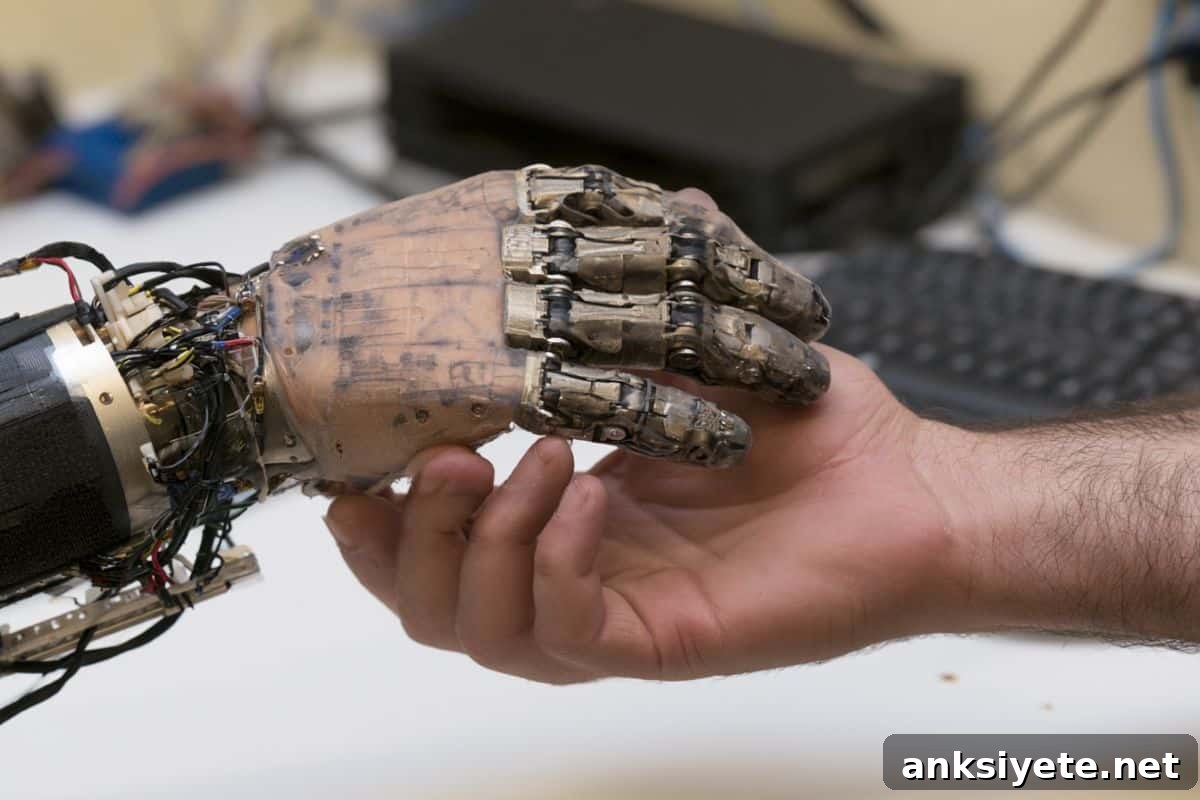
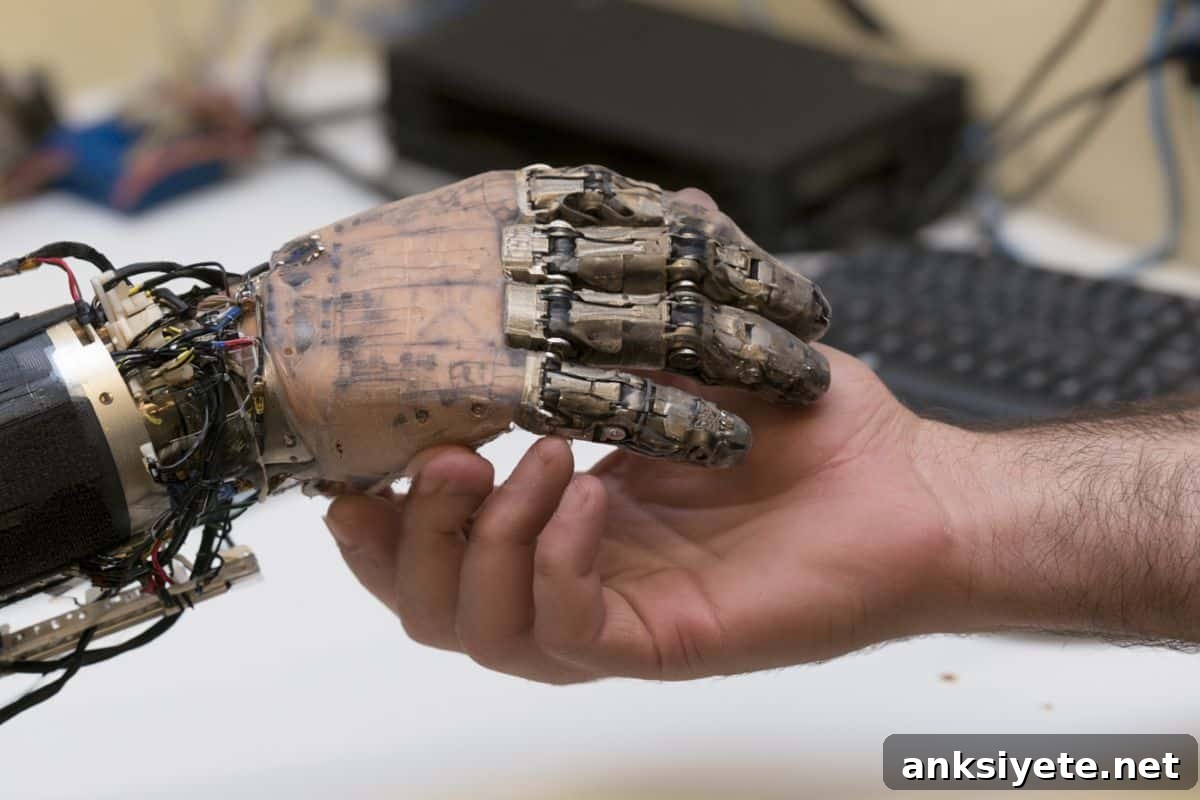
To overcome this, Sant’Anna developed the myokinetic kinesthetic interface (MKkI). MKkI is a bidirectional interface for hand prostheses that uses small sterile magnets implanted inside the remaining forearm muscles. External magnetic fields cause these magnets to vibrate, selectively engaging deep muscle spindles while leaving the skin untouched. This approach restores sensations of movement more like natural kinesthesia. The MKkI was tested alongside the Mia Hand robotic prosthesis developed by Prensilia, a Sant’Anna spin-off.
During a six-week trial, a 34-year-old Italian participant reported coherent perceptions of hand opening and closing that matched physiological movement patterns. These coordinated sensations closely resembled outcomes observed with a different system developed at the Cleveland Clinic, which relied on surgical nerve redirection and robotic feedback rather than implanted magnets.
Although the two systems use very different engineering and surgical strategies, both target deep muscle tissue and produced the same perceptual outcome: patients experienced unified, multi-finger movement sensations rather than separate, finger-by-finger signals. Both teams also observed that some of the transmitted sensations were processed subconsciously by the brain—an essential feature of natural proprioception.
Taken together, these findings imply that the brain encodes kinesthetic input in terms of functional synergies rather than isolated inputs. This insight changes how engineers might design prosthetic control systems: instead of trying to deliver highly detailed, independent signals for each finger, devices can communicate broader, coordinated movement packages that the brain already understands. The result should be more intuitive control and improved functional outcomes for users.
Beyond prosthetics, this discovery may also influence therapies for stroke rehabilitation, chronic pain, and other neurological conditions where restoring natural movement sensations could improve recovery and quality of life.
“The ability to compare independently generated data from two very different interfaces makes these findings especially compelling,” said Professor Paul Marasco, Ph.D., coordinator of the Cleveland Clinic team. “This cross-validation provides a stronger foundation for designing therapies and devices that interact with the nervous system more naturally, ultimately improving patient outcomes.”
Next steps: toward a permanent implant
The research teams plan to combine readout and write-in capabilities: prior work has shown how to track implanted magnet positions to control prostheses; the next step is superimposing controlled vibrations to write sensory feedback back into muscles. The ultimate objective is a permanent implant that supports long-term studies and broader clinical use.
These projects and earlier collaborative studies create a foundation for integrating natural grasp sensation with intuitive motor control in people with hand loss, advancing a new generation of prosthetic devices that behave and feel more human.
“Our initial demonstrator was intentionally temporary—designed to last six weeks to validate the interface’s effectiveness,” said Professor Christian Cipriani, the interface creator and study coordinator. “The promising results motivate the development of a permanent implant to study long-term effects and reach more participants.”
Funding and collaborators: The study was coordinated by The BioRobotics Institute of the Sant’Anna School of Advanced Studies in Pisa, in collaboration with Pisa University Hospital and Cleveland Clinic. Funding came from European, Italian, and U.S. sources, including ERC projects MYKI and MYTI, Italian ministry initiatives, and U.S. awards from NIH and DARPA. The lead author is supported by a Marie Skłodowska-Curie Action fellowship at the Technical University of Munich.
Frequently Asked Questions
A: A cortical synergy is the brain’s way of grouping individual muscle signals into coordinated movement patterns—like closing the hand or pinching—rather than controlling each finger independently. Recognizing these synergies lets engineers design prosthetics that send holistic, coordinated feedback the brain already expects, simplifying control and improving naturalness.
A: Small sterile magnets implanted in residual muscle fibers move when muscles contract. External sensors detect those magnetic changes to control prosthetic motion. To deliver sensation back, the prosthesis generates specific magnetic frequencies that make the implanted magnets vibrate inside the muscle, activating deep muscle spindles and producing movement sensations without surface skin stimulation.
A: Independent replication across different methods reduces the chance that results are artifacts of a single approach. Both teams—one using sub-dermal magnets, the other using nerve redirection—elicited identical coordinated sensations, indicating a fundamental principle of human neurobiology and supporting broader clinical translation.
About this research
Author: Michele Nardini
Source: Sant’Anna School of Advanced Studies, Pisa
Contact: Michele Nardini – Sant’Anna School of Advanced Studies, Pisa
Image credit: Neuroscience News
Original research: Open access. “Coordinated hand movement sensation revealed through an implanted magnetic prosthetic kinesthetic interface” by Federico Masiero et al., published in Science Advances. DOI: 10.1126/sciadv.adx5046
Abstract
Coordinated hand movement sensation revealed through an implanted magnetic prosthetic kinesthetic interface
Muscle contractions used to control prosthetic hands often feel unlike natural movement because amputation disconnects kinesthesia from motor execution. The MKkI leverages remote vibration of magnets implanted in forearm muscles to restore kinesthesia. Participants reported coordinated finger movements—hand opening and closing—within physiological bounds and with characteristic dynamics. Psychophysical testing identified specific vibration frequencies that effectively trigger kinesthetic perception. The finding that single-muscle stimulation can evoke complex, coordinated grip sensations suggests kinesthetic representations are rooted in synergistic movement patterns. By exploiting these natural synergies, MKkI aims to better link perception and action and to elevate the intuitiveness of bidirectional human-machine interfaces.