
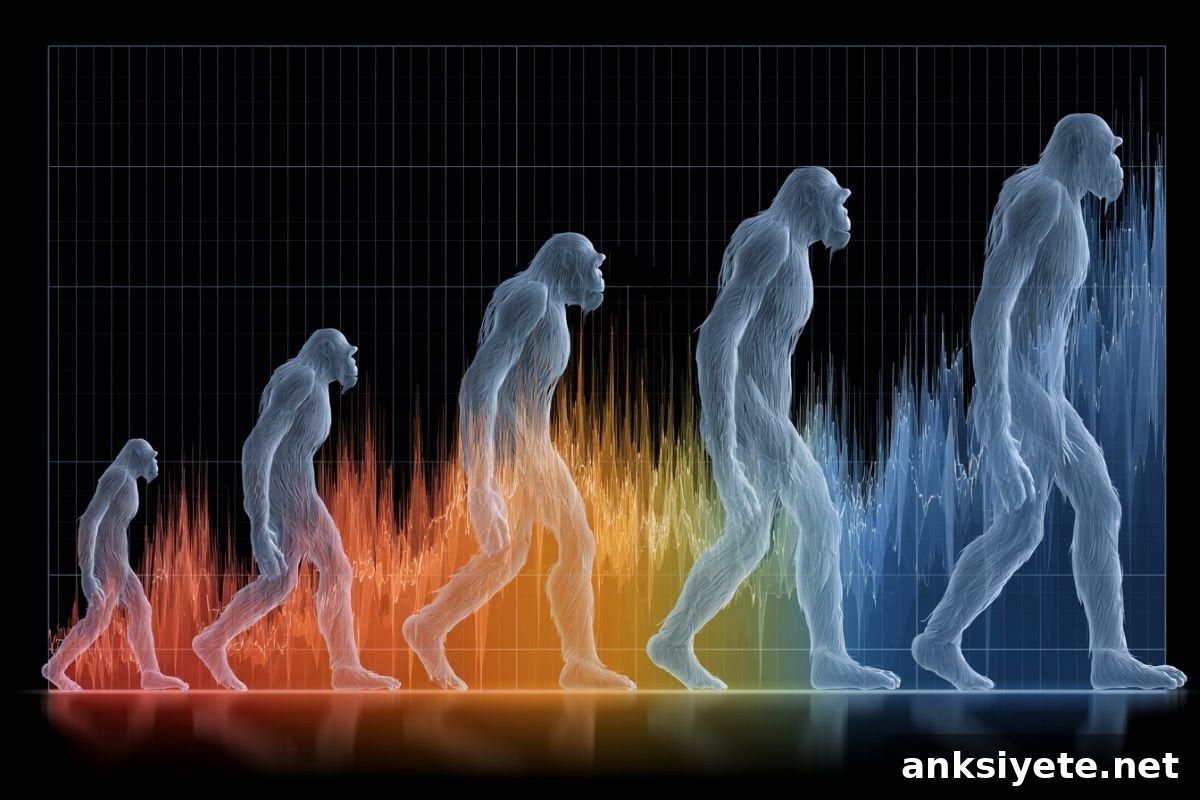
Summary: A new study overturns a long-standing assumption in human evolution: body size did not increase steadily and uniformly across our ancestors. Analysis of 386 fossil specimens representing 21 hominin species supports a dual-mechanism model. Early hominins such as Australopithecus show a modest, gradual increase in mass, while a large, non-linear evolutionary jump occurred between about 2 and 2.5 million years ago. That jump coincides with the appearance of Homo rudolfensis and Homo erectus/ergaster and marks the first time many hominins attained adult body masses around 60 kg.
This research accounts for gaps and uncertainties in the fossil record and for the evolutionary relationships among species, explaining why earlier, more localized studies produced conflicting conclusions.
Key Facts
- The 2-million-year jump: The most significant change in hominin body size occurred abruptly around 2–2.5 million years ago, driven by the emergence of Homo erectus/ergaster and Homo rudolfensis rather than as a slow, continuous trend across all lineages.
- Branches that bucked the trend: The hominin evolutionary tree is highly branched. Some species, notably Homo floresiensis and Homo naledi, remained small with child-sized statures despite the large-size trend in other lineages.
- Australopithecus baseline: Before this later Homo shift, Australopithecus and similar early hominins averaged roughly 40 kg (about 88 lb), resembling the stature of a modern child in many respects.
- Ecological and behavioral drivers: The timing of the jump aligns with other major changes in behavior and ecology—more efficient long-distance bipedalism, greater reliance on meat, and expanded home ranges—consistent with a functional advantage for larger bodies.
- Unified methodology: By modeling 386 fossils across 21 taxa and explicitly incorporating phylogenetic relationships, intraspecific variation, and taxonomic uncertainty, the study integrates competing hypotheses into a coherent explanation of body size evolution.
Source: University of Reading
The largest increase in body size among our ancestors occurred around 2–2.5 million years ago with the appearance of Homo rudolfensis and Homo erectus/ergaster, rather than as a uniform trend across the entire hominin family tree.
Published in PNAS on 22 June 2026, the study shows that while some hominin branches grew substantially in body mass, other lineages remained small. Australopithecus averaged about 40 kg, whereas later species such as Homo erectus/ergaster reached average masses near or above 60 kg—comparable to many modern humans.
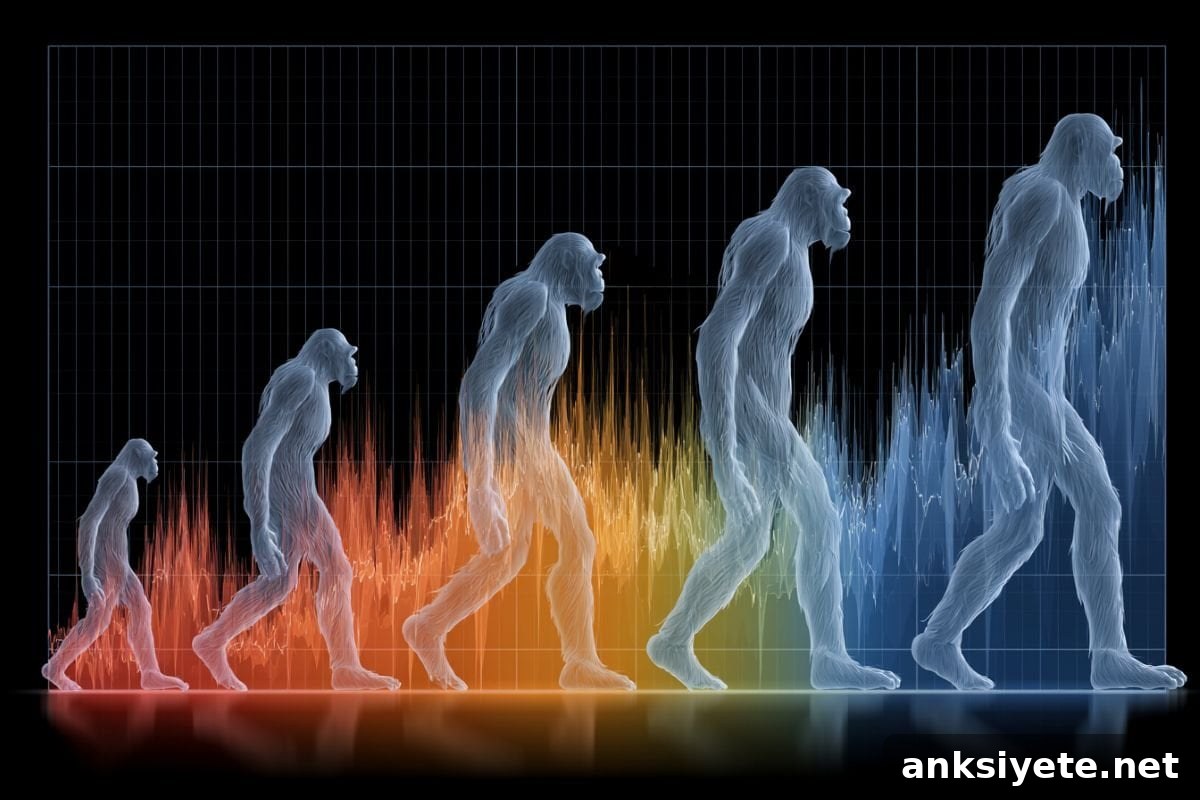
Researchers from the University of Reading and the University of Oxford conclude that previous interpretations conflicted because individual studies sampled different time slices, taxa, or applied different estimation methods. When fossils are analyzed together and models account for species relationships and fossil uncertainty, a clearer, more complex picture emerges: gradual increase early on, followed by a pronounced shift later within Homo.
Dr Jacob Gardner, lead author at the University of Reading, explains that reconciling multiple datasets and hypotheses reveals both patterns simultaneously—steady early increases in some lineages and a later, genus-specific jump in others. Dr Thomas Püschel of Oxford emphasizes that the timing of the jump matches broader behavioral and ecological transitions, reinforcing a close link between body size and how these hominins moved, procured food, and occupied landscapes.
Key Questions Answered:
A: Earlier disagreements stemmed from limited samples and differing focus. Studies centered on early hominins saw a steady rise, while studies focused on later Homo observed sharper changes. By combining 386 fossils across 21 species and using statistical models that incorporate phylogenetic relationships and uncertainty, the new analysis shows both patterns occur: gradual change early and a major jump later.
A: A larger body mass improves biomechanical efficiency for long-distance bipedal travel, reduces relative energy costs per unit distance, and supports behaviors associated with hunting and scavenging, territorial defense, and longer-range foraging. These advantages would help early Homo exploit diverse habitats and food sources more effectively.
A: No. Hominin evolution is a branching process. While many Homo species increased in size, others—such as Homo floresiensis and Homo naledi—remained small, illustrating that different lineages adapted in distinct ways to varying ecological pressures.
Editorial Notes:
- This article was edited by a Neuroscience News editor.
- Journal paper reviewed in full.
- Additional context was added by staff to clarify methods and conclusions.
About this evolutionary neuroscience research news
Author: Ollie Sirrell
Source: University of Reading
Contact: Ollie Sirrell – University of Reading
Image credit: Neuroscience News
Original Research: Open access. “Competing models of hominin body size evolution” by Jacob D. Gardner, Thomas A. Püschel, Suzy White, Manabu Sakamoto, and Chris Venditti. DOI: 10.1073/pnas.2521732123
Abstract
Competing models of hominin body size evolution
The evolutionary path of hominin body size has been debated, with prior work proposing either gradual increase or lineage-specific shifts. This study applies Bayesian phylogenetic generalized linear mixed models to a dataset of 386 specimens across 21 taxa and finds strong evidence for a pronounced body mass increase in later non-habilis Homo, alongside moderate support for a general increase through time. Contrary to some earlier hypotheses, there is less support for a uniform size increase across all Homo. By explicitly accounting for phylogenetic nonindependence, intraspecific variation, and multiple sources of uncertainty, the analysis integrates competing views into a single framework and clarifies major transitions in Homo body size evolution.