
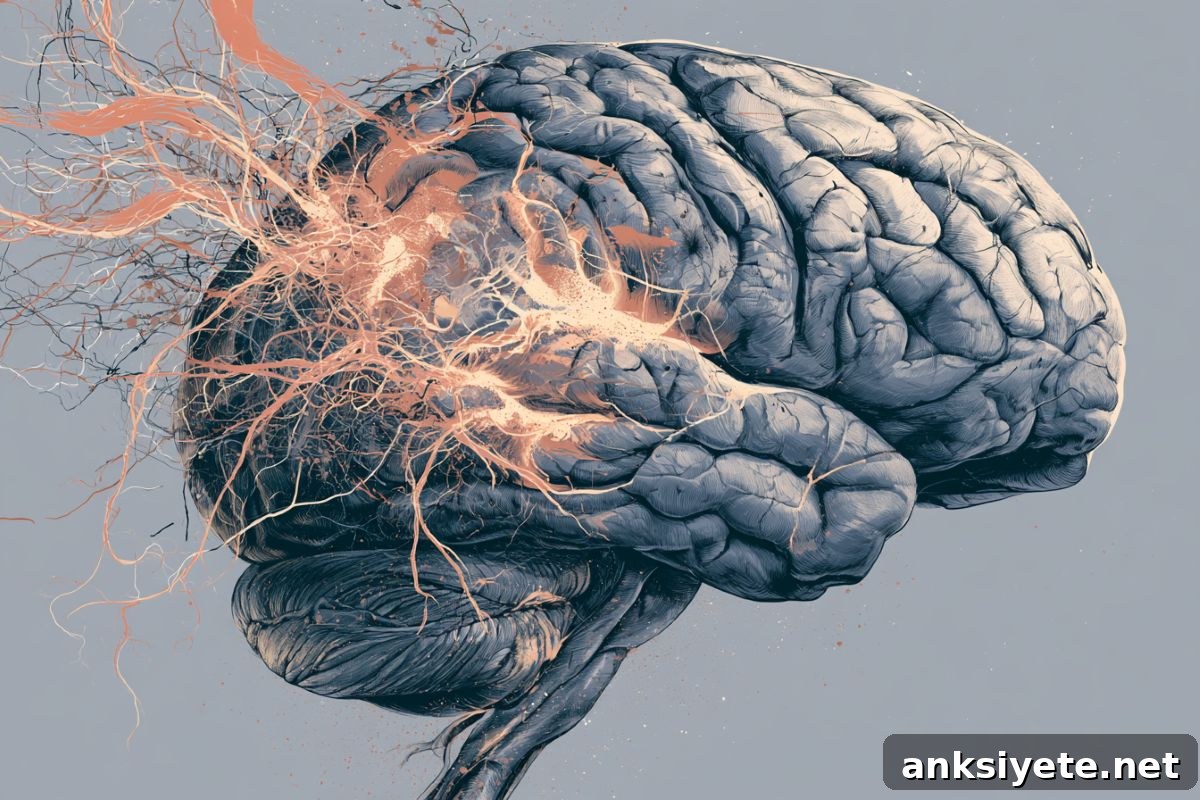
Summary: A global meta-analysis of more than 4,700 people who survived encephalitis has found that psychiatric and behavioral problems — including depression, anxiety, disinhibition, and emotional instability — are common long after the acute illness. The pooled results show that roughly 27% of survivors meet criteria for clinical depression, while about 20–23% experience lasting anxiety, emotional instability, or disinhibited behaviour months or years after recovery.
These psychiatric consequences occur at similar rates to well-known neurological complications such as memory impairment and seizures, yet mental health is often neglected in routine follow-up care. The study authors call for integrated neuropsychiatric screening as a standard part of post-encephalitis rehabilitation and aftercare.
Key Facts
- As common as neurological deficits: Mental health problems after encephalitis are found at similar frequencies to major neurological issues like memory loss and epilepsy.
- Depression and behavioural change: Approximately 27% of survivors experience depression or notable changes in behaviour.
- Persistent emotional problems: About one in five survivors report long-term anxiety, emotional instability, or disinhibition that alters their baseline personality.
- Consistent across causes: Rates of psychiatric problems are high whether encephalitis is caused by infection or by autoimmune processes, though mood symptoms were more common after infection in this analysis.
- Gap in clinical care: Few studies reported consistent, standardized mental health follow-up, underlining a broader lack of routine psychiatric assessment in post-discharge care.
Source: King’s College London
Overview
A major new systematic review and meta-analysis—led by researchers at the Institute of Psychiatry, Psychology & Neuroscience (IoPPN) at King’s College London, with collaborators from the University of Oxford and the University of Liverpool—has produced the most comprehensive synthesis to date of psychiatric and behavioural outcomes after encephalitis. The study, published in Brain Communications and funded by the National Institute for Health and Care Research (NIHR), combines results from 101 studies to describe the scale and pattern of long-term mental health effects in survivors.
Encephalitis, inflammation of the brain caused by infection or autoimmune disease, affects thousands of people and can be life-threatening. Advances in acute care have improved survival rates, but many survivors face long-term complications. Historically, clinical follow-up has prioritized physical and neurological recovery, leaving the true burden of post-encephalitis mental health problems under-recognized.
Study lead Dr Cameron Watson, an MRC Clinical Research Teaching Fellow at the IoPPN, explained: “Recovery from encephalitis often continues long after discharge. Many survivors experience depression, anxiety, and personality change. We synthesized all available evidence to establish how common these psychiatric conditions are among people who have had encephalitis.”
The research team reviewed 101 observational studies that together included 4,703 encephalitis survivors from around the world. Studies covered both infectious causes, such as herpes simplex and Japanese encephalitis, and autoimmune causes, where the immune system attacks brain tissue. The investigators used meta-analytic methods to estimate pooled prevalence rates for depression, anxiety, disinhibition, emotional instability, and other neuropsychiatric domains, and to explore differences by cause, age group, follow-up duration, and demographic factors.
Key quantitative findings included:
- Depression or behavioural problems: pooled prevalence 26.9% (approximately 27%).
- Anxiety: pooled prevalence 22.8% (around 23%).
- Disinhibition: pooled prevalence 20.5% (about 20%).
- Emotional instability: pooled prevalence 22.9% (about 23%).
- Higher frequency of mood symptoms after infectious encephalitis compared with autoimmune causes in this dataset.
The analysis also found substantial heterogeneity across studies, reflecting differences in study design, measurement approaches, patient demographics, and follow-up times. Meta-regression suggested that follow-up duration, average cohort age, and the proportion of female participants influenced reported prevalence for several symptom domains. Importantly, many studies did not provide consistent mental health follow-up or used varied outcome measures, highlighting the need for standardized assessment tools and prospective, comparative cohorts.
Clinical implications are clear: psychiatric sequelae after encephalitis are common, often disabling, and in many cases amenable to existing treatments. Routine mental health assessment and timely neuropsychiatric intervention should be integrated into post-encephalitis care so survivors do not face these problems in isolation.
Dr Thomas Pollak, Senior Clinical Lecturer and Consultant Neuropsychiatrist at the IoPPN, said: “These findings should change how we follow up people recovering from encephalitis. Psychiatric complications are common and can be disabling. For many of these conditions, effective treatments already exist. Mental health assessment must become a routine part of care, not an afterthought.”
Co-lead author Dr Jack Fanshawe of the University of Oxford added: “For the first time we have a clearer picture of long-term mental health impacts after encephalitis. However, the study also highlights unanswered questions: which treatments work best, who is most at risk, and how to design tailored clinical pathways for those whose personality or behaviour has been altered.”
Patient voices echo these findings. Dr Ava Easton, Chief Executive of Encephalitis International and a co-author, noted that survivors frequently report mood and personality changes as deeply distressing consequences of brain inflammation. The study reinforces the need to build services that address the full spectrum of recovery needs—neurological, cognitive, and psychiatric.
The authors recommend prospective long-term research using consistent, validated outcome measures, integration of neuropsychiatric expertise into routine care, and involvement of people with lived experience in research and service design.
Key Questions Answered:
A: Encephalitis frequently affects the frontal and temporal lobes, regions that regulate emotion, impulse control, and core aspects of personality. Even after the acute inflammation resolves, there can be subtle structural damage or disruption of neurotransmitter systems that alter how these brain areas communicate, producing lasting changes in mood, behaviour, and personality.
A: Psychiatric complications are at least as common as many physical neurological problems and can be equally or more disabling for survivors and their families. Invisible changes — sudden anxiety, persistent depression, or altered behaviour — often cause profound disruption to daily life and relationships, yet they may be under-recognized by care teams focused on physical recovery.
A: The research team recommends routine, mandatory mental health and neuropsychiatric screening as part of standard post-encephalitis protocols. Early identification and treatment of psychiatric symptoms can improve outcomes and prevent survivors from navigating distressing personality or mood changes without support.
Editorial Notes:
- This article was edited by a Neuroscience News editor.
- The journal paper was reviewed in full for accuracy.
- Additional contextual information was added by editorial staff.
About this neurology and mental health research news
Author: Franca Davenport
Source: King’s College London
Contact: Franca Davenport – King’s College London
Image: The image is credited to Neuroscience News
Original Research: Open access.
Title: “Psychiatric and behavioural sequelae following encephalitis: a systematic review and meta-analysis” by Cameron Watson et al., published in Brain Communications.
DOI: 10.1093/braincomms/fcag175
Abstract
Psychiatric and behavioural sequelae following encephalitis: a systematic review and meta-analysis
Survivors of encephalitis frequently experience chronic neuropsychiatric problems, but the precise prevalence and patterns of these outcomes have been poorly defined. This systematic review and meta-analysis quantified the prevalence of psychiatric and behavioural symptoms at least three months after encephalitis and explored differences between infectious and autoimmune causes as well as age-related patterns.
Following PRISMA guidelines, the authors searched major medical and psychological databases up to 13 December 2024 and included observational studies reporting psychiatric outcomes at least three months post-encephalitis. Two reviewers independently screened studies and extracted data on symptom prevalence, aetiology, study design, and participant demographics.
Random-effects meta-analyses estimated pooled prevalence for depression, anxiety, disinhibition, emotional instability, and other neuropsychiatric domains. Subgroup analyses compared infectious versus autoimmune causes and paediatric versus adult cohorts. Meta-regression examined the influence of follow-up duration, cohort age, and sex distribution on symptom prevalence.
One hundred and one studies (n = 4,703 patients; weighted mean age 36.5 years) met inclusion criteria. Across all causes, pooled prevalence estimates were: depression 26.9% (95% CI 22.2–32.3%); anxiety 22.8% (95% CI 14.2–32.0%); disinhibition 20.5% (95% CI 15.1–27.3%); emotional instability 22.9% (95% CI 15.6–32.4%). Infectious encephalitis showed higher rates of mood symptoms compared with autoimmune causes in this pooled dataset.
Meta-regression indicated that follow-up duration, mean cohort age, and the proportion of female participants influenced prevalence estimates for several neuropsychiatric symptoms. Considerable heterogeneity across studies highlights the need for prospective comparative cohorts, consistent diagnostic criteria, and a standardized set of mental health outcome measures to improve both research and clinical care for people recovering from encephalitis.