
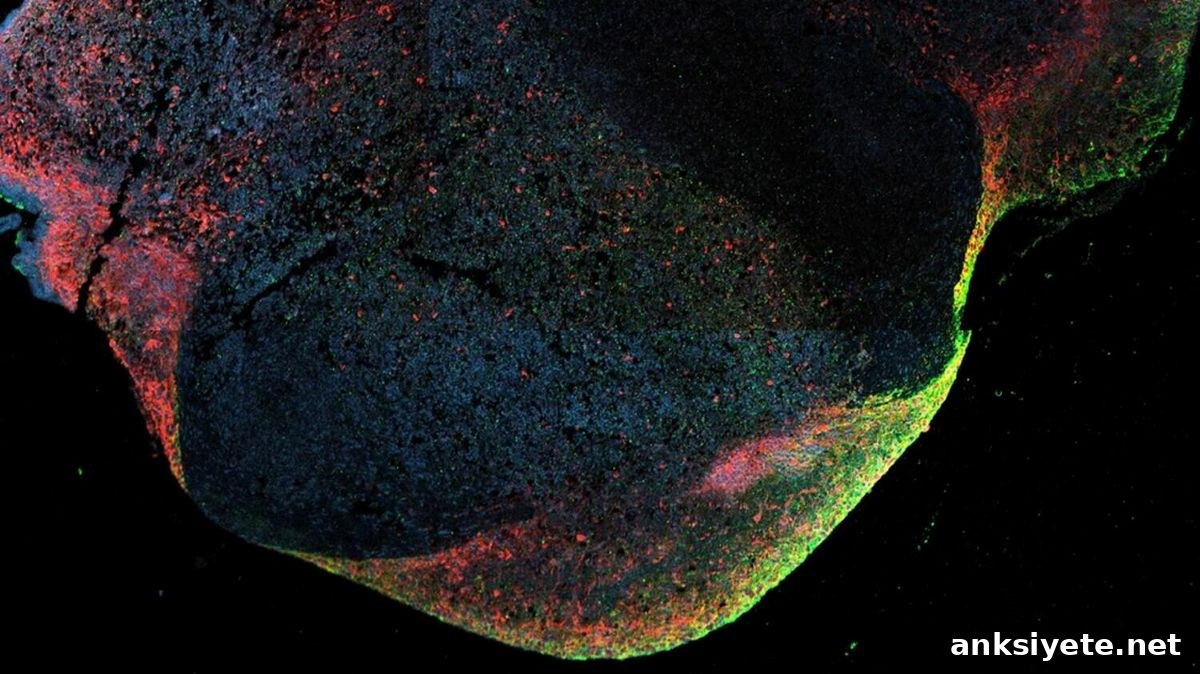
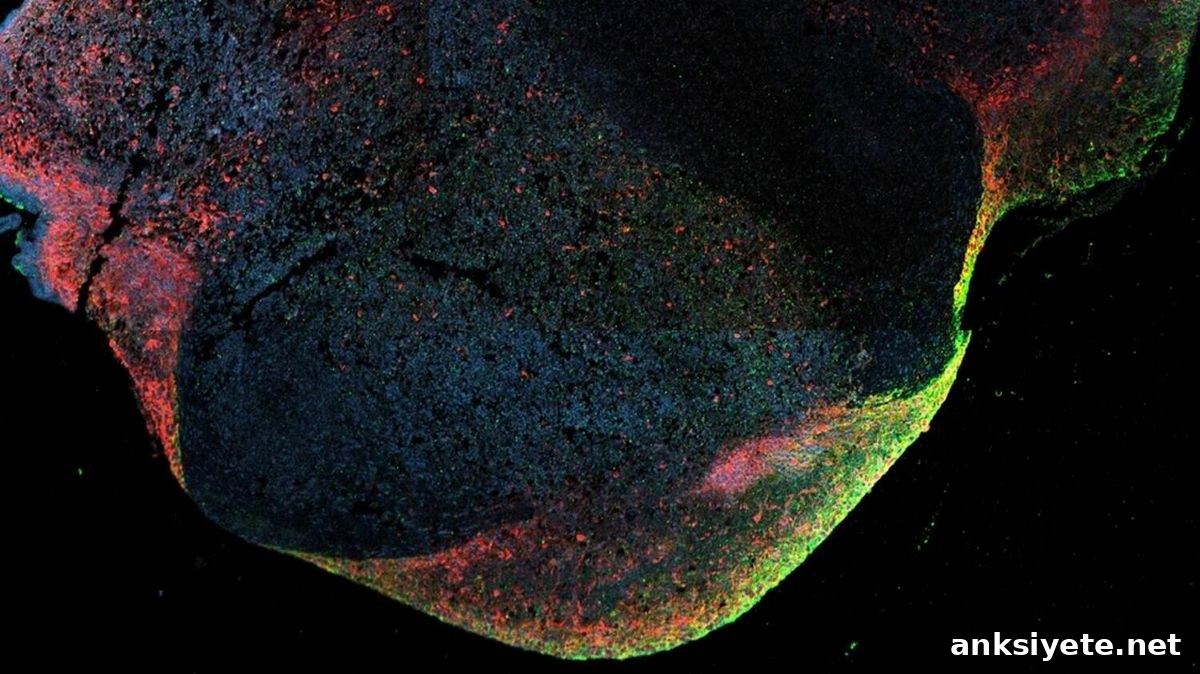
Summary: Researchers uncovered how the Ebola virus can persist undetected in the human central nervous system for months or years. An international team used human induced pluripotent stem cells (iPSCs) to grow three-dimensional cerebral organoids and studied long-term filovirus infection in that human tissue model.
Using these cerebral organoids, the investigators showed that Ebola and related filoviruses (including Sudan, Reston, and Marburg) establish a state the team calls “productive persistence.” Rather than becoming dormant, the viruses continue to replicate within neurons, astrocytes and microglia for extended periods—up to 120 days in the organoid model—producing defective viral genomes and provoking chronic, localized inflammation similar to the meningoencephalitis observed in some human survivors.
Key Facts
- Productive persistence: The study challenges the common idea that long-term viral persistence requires complete viral inactivity. Instead, Ebola maintains active replication in brain tissue, continuously producing infectious particles without immediately destroying the host tissue.
- Two transmission modes: Infected organoids revealed dual spread mechanisms: classical viral budding that releases free particles into the environment, and direct cell-to-cell transmission that allows the virus to move between adjacent cells while minimizing exposure to extracellular defenses.
- Chronic local inflammation: Although the brain is partially immune-privileged to protect delicate tissue, late-stage infected organoids mounted a strong pro-inflammatory cytokine response. This localized inflammation mirrors the eye, meningeal and brain inflammation reported months after acute Ebola infection in survivors.
- Defective viral genomes moderate replication: As infection progressed, the team detected an accumulation of defective genomes and mutations. These altered genomes act to slow viral replication, helping the virus persist without overwhelming and destroying the tissue.
- Laboratory mutations match human cases: Many mutations observed in the organoid infections matched variants previously recovered from infected people, supporting the organoid model’s ability to reproduce clinically relevant viral adaptation.
- Human-based model to reduce animal use: Performing long-term infection studies in tissue derived from human cells creates a platform for antiviral testing that is more directly relevant to human biology and offers an alternative to dependence on animal models.
Source: DZIF
Background: After acute disease, Ebola virus can remain in immune-privileged niches such as the central nervous system, where immune responses are naturally moderated to protect sensitive cells. This sanctuary permits viral persistence that may later cause relapse in survivors or, rarely, contribute to renewed transmission.
The international research collaboration—led by investigators at the Bernhard Nocht Institute for Tropical Medicine (BNITM), the German Center for Infection Research (DZIF), and the Icahn School of Medicine at Mount Sinai (ISMMS), among others—used cerebral organoids to reveal mechanisms behind this persistence. Their results were published in Nature Microbiology.
Ebola virus is a filovirus responsible for Ebola virus disease (EVD), a severe multisystem illness. Even after surviving the acute phase, infectious virus can persist in body sites with limited immune surveillance—for example, infectious virus has been detected in semen for many months after infection. The central nervous system is another such site where the immune response is intentionally restrained, allowing viral reservoirs to form and occasionally cause late inflammatory disease or relapses.
Cerebral organoids as a model to study Ebola persistence
Studying Ebola persistence in the human brain is inherently difficult. To ask whether the virus persists in particular cells, produces infectious particles, or adapts genetically to evade immune detection, the team used cerebral organoids grown from human iPSCs. These spherical, multicellular structures contain neurons, astrocytes and microglia-like cells and recapitulate aspects of human brain tissue, making them suitable for prolonged infection studies.
“Cerebral organoids allow us to examine how Ebola and other filoviruses persist in the human central nervous system and to investigate the mechanisms behind the long-term inflammation seen in some survivors,” says Dr. Lina Widerspick, first author of the study. Part of the work was carried out at a high-containment facility during a research visit to the Integrated Research Facility-Frederick (NIH).
Using a human tissue model rather than animal hosts supports more directly translatable insights into viral behavior in humans and creates a platform for evaluating antivirals and reducing reliance on animal experiments in high-containment settings.
Long-term viral survival and immune response in organoids
The investigators found that Ebola and other filoviruses could replicate in cerebral organoids for up to 120 days. Infection was not limited to a single cell type: neurons and astrocytes were infected, and microglia-like cells were recruited to infection sites and became infected as well.
The viruses spread through both cell-to-cell transmission and classical budding, demonstrating productive persistence: the virus remained infectious rather than entering a latent, inactive state. Although infected organoids produced pro-inflammatory cytokines, their innate responses failed to clear the infection during the persistent phase.
“We observed heightened immune and inflammatory signaling at later stages of organoid culture. This suggests that persistent Ebola infection within immune-privileged tissues can drive local inflammation, consistent with the delayed eye, meningeal and brain inflammation reported in some EVD survivors,” says Prof. César Muñoz-Fontela, co-last author of the study.
Genetic changes and defective genomes support persistence
Defective viral genomes are a known mechanism by which many viruses moderate their replication and extend survival in the host. Because filoviruses lack robust proofreading during genome replication, mutations accumulate with prolonged replication. In late-stage infected organoids, the team detected defective genomes and specific genomic variants.
“Many of the mutations we observed had previously been proposed to reduce or limit viral replication in natural infections. Their presence in this human-derived model supports the organoid’s value for studying clinically relevant filovirus adaptation,” notes Prof. Gustavo Palacios, a co-last author and Ebola virus genomics expert.
The researchers also uncovered novel mutations not yet reported from human survivors; further work is needed to assess whether those changes contribute causally to persistence.
“Our findings emphasize the potential of human cerebral organoids to study persistent infections within immune-privileged tissues and to expand investigations to less-studied filoviruses,” Muñoz-Fontela adds.
Funding: The study involved collaboration across BNITM, ISMMS, IRF-Frederick/NIH, University Medical Center Hamburg-Eppendorf, the Leibniz Institute of Virology, and the Friedrich-Loeffler-Institut. Financial support included the Collaborative Research Center 1648 “Emerging Viruses” (DFG), the German Federal Institute for Risk Assessment (BfR), and DZIF.
Key questions answered
A: By establishing productive persistence in immune-privileged tissue. The brain’s dampened immune environment limits tissue damage but also allows ongoing viral replication. The virus generates defective genomes and mutations that slow its replication, preventing rapid tissue destruction while enabling long-term survival.
A: A cerebral organoid is a lab-grown, three-dimensional mini-brain derived from human stem cells. It contains human neurons, astrocytes and microglia-like cells and reproduces many aspects of brain tissue architecture. Because viruses can behave differently in human tissue than in animals, organoids provide a more relevant system to study human-specific infection dynamics and to test therapeutics.
A: The study helps explain persistent neurological symptoms and late inflammatory disease in some survivors. Ongoing viral presence in the central nervous system can trigger localized inflammation months after recovery, underlining the need for long-term monitoring and targeted clinical care for survivors.
Editorial notes
- This article was edited by a Neuroscience News editor.
- Journal paper reviewed in full.
- Additional context provided by the editorial staff.
About this neurology and Ebola research news
Author: Press Office
Source: DZIF
Contact: Press Office – DZIF
Image: Credit to BNITM/Lina Widerspick
Original research: Open access. “Host–virus determinants of Ebola virus persistence in a human cerebral organoid model” by Lina Widerspick et al., Nature Microbiology. DOI: 10.1038/s41564-026-02388-2
Abstract
Host–virus determinants of Ebola virus persistence in a human cerebral organoid model
Ebola virus (EBOV) causes Ebola virus disease (EVD), a multisystem human illness with high case-fatality. Survivors may experience recrudescent inflammation tied to viral persistence in immune-privileged tissues, including the central nervous system (CNS). In a human cerebral organoid model, EBOV replicated for up to 120 days, sustained by continuous infection of astrocytes and neurons and by recruitment and infection of microglia. Persistent infection was accompanied by defective viral genomes and genomic subvariants, cell-to-cell transmission, activation of cell-specific innate immunity, and late organoid inflammation, indicating that persistent EBOV within immune-privileged niches can drive local inflammatory disease.