
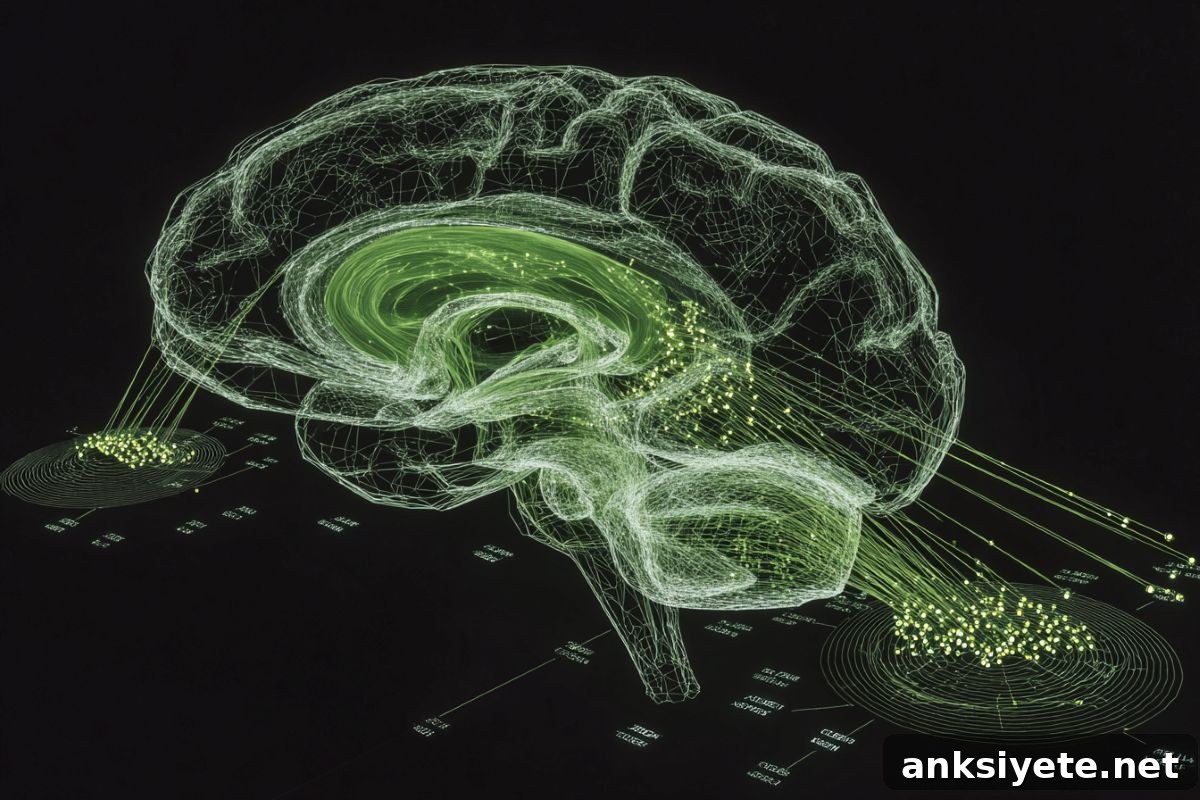
Summary: Researchers have overturned long-standing assumptions about how the brain clears metabolic waste. Using a non-disruptive tracking approach that engineers neurons to secrete a traceable fluorescent protein called ZsGreen, the team traced the actual exit routes used by brain-derived proteins. Their work shows that clearance is regionally organized — proteins follow a “nearest exit” model determined by local anatomy — and that this plumbing system fails in different ways during inflammation and Alzheimer’s disease.
Key Facts
- Limitations of traditional tracers: Injecting dyes into cerebrospinal fluid (CSF) has been the standard method for mapping brain drainage, but this approach perturbs normal fluid dynamics. Flooding the system with external tracer highlights all potential leak points rather than the physiological routes that native brain proteins actually take.
- A new neuronal tracer — ZsGreen: The Gladstone team engineered neurons in mice to produce and secrete a fluorescent protein, ZsGreen, enabling visualization of endogenous protein movement from the brain into adjacent border tissues without altering normal CSF flow.
- A revised drainage map: Contrary to prior dye-based studies that emphasized cervical lymph nodes, ZsGreen primarily exited through local interfaces: the dura, the skull, and the nasal cavity. Very little of the neuron-derived tracer reached the neck lymph nodes under physiological conditions.
- “Nearest exit” anatomical ZIP codes: Where a protein originates in the brain predicts which local exit it uses. Proteins from upper forebrain regions drain through upper routes, while proteins from deep structures like the striatum drain through lower, base-adjacent routes. The authors describe this compartmentalized routing as a biological ZIP code system that may be disrupted by aging or disease.
- Slow drainage supports immune education: Drainage speeds vary by border site. Slower outflow at some interfaces gives border-resident immune cells time to sample neuronal proteins, promoting immune tolerance and reducing the risk of autoimmune attack on the central nervous system.
- Disease-specific breakdowns: Clearance fails in distinct ways depending on pathology. Acute inflammation can cause leakage of brain proteins directly into the bloodstream, while Alzheimer’s-like pathology traps proteins inside brain tissue, blocking normal exit routes.
Source: Gladstone Institute
Think of the brain like a well-insulated house with its own plumbing system. It produces a continuous stream of metabolic waste that must be routed out through carefully organized pathways that interface with the body’s borders. When those pathways break down, toxic proteins accumulate and can drive neurodegenerative disease.
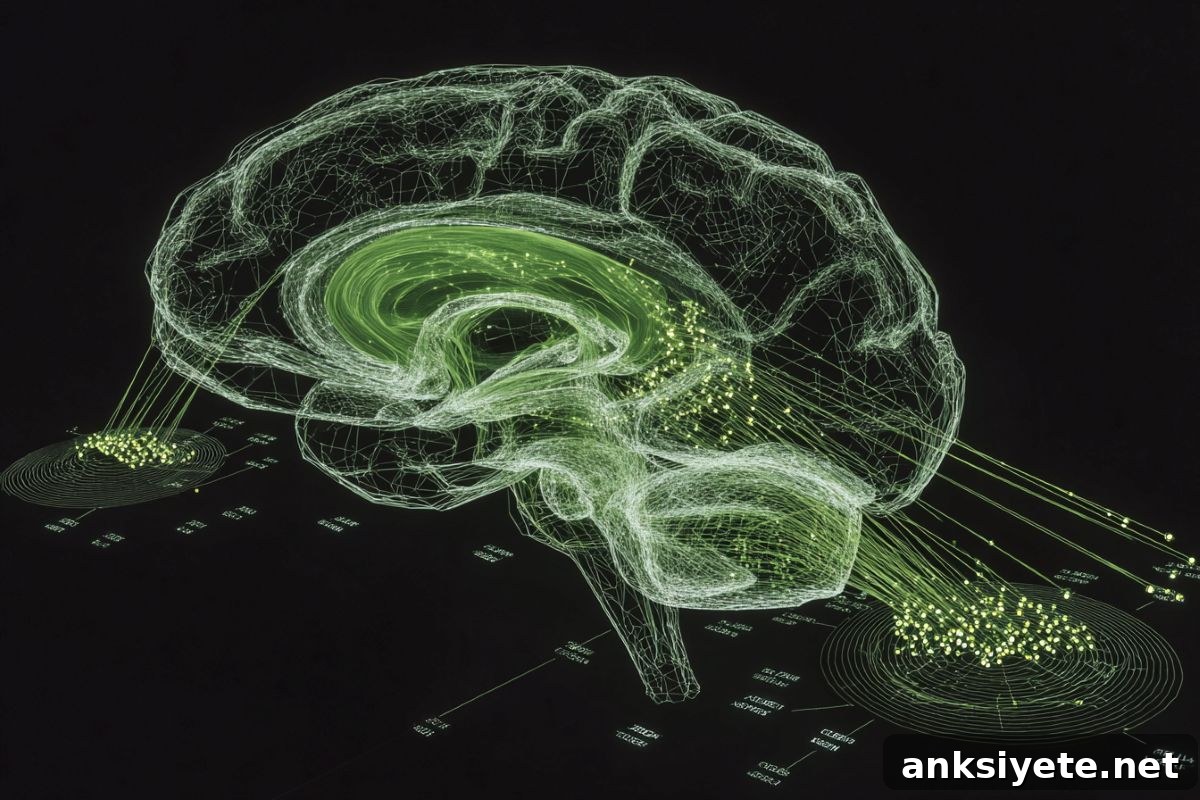
Previous tracer experiments injected dye into CSF to map drainage, but those injections disrupted the system and revealed many potential exit points rather than the physiological exits used by native proteins. The new neuronal-labeling strategy avoids that disruption by following neuron-produced proteins from their point of origin to the border tissues they actually reach.
The Gladstone group, led by Andrew Yang, PhD, developed the genetic system and used it to track ZsGreen as it moved into border compartments — the dura, skull marrow, nasal mucosa, and nearby immune hubs. This method allowed identification of the specific cell types at each exit site that interact with neuron-derived proteins, clarifying how immune sampling at borders works in physiological conditions.
Finding the Nearest Exit
A central discovery is the “nearest exit” principle: anatomical origin determines drainage path. Proteins made in upper cortical areas travel to upper border exits; proteins from deeper nuclei favor lower exits. This compartmentalization suggests that local structural changes with age or disease could misroute waste and create region-specific vulnerability to protein accumulation.
Drainage kinetics also vary: some routes clear quickly, while others allow a slow trickle. That slower clearance appears functionally important because it exposes neuronal proteins to border-resident immune cells over a longer period, supporting immune recognition and tolerance rather than triggering autoimmunity.
Implications for Disease
When the researchers tested disease models, they observed distinct modes of failure. In short-term inflammatory states that mimic severe infection, tracer proteins leaked into the bloodstream instead of following compartmentalized border routes. In an Alzheimer’s model, the opposite occurred: ZsGreen accumulated and became trapped in the parenchyma, unable to reach border exits. These divergent breakdowns suggest that therapies to restore or modulate border clearance will need to be tailored to the underlying mechanism.
The team plans to use this toolkit to study how clearance changes across aging and various diseases, to test whether sleep affects clearance dynamics, and to explore how tumors might exploit or alter border immune interactions to avoid detection.
Funding: Supported by the National Institutes of Health (DP5OD033381), the National Institute of Neurological Disorders and Stroke (1R01NS128909, 1RF1NS139975), the Alzheimer’s Association (ADSF-24-1345199-C), the Burroughs Wellcome Fund, the Ludwig Family Foundation, a Longevity Impetus Grant from Norn Group, the UCSF Sandler Program for Breakthrough Biomedical Research, and the Dolby Family.
Key Questions Answered:
A: Injected tracers disturb native fluid dynamics and intracranial pressure, effectively “flooding” the system and exposing every potential leak. That masks the specific, physiological routes that endogenous neuronal proteins normally use to exit the brain.
A: The “nearest exit” model means the anatomical site where a protein is produced largely determines which local exit it uses. Each brain region routes its waste to the closest appropriate border compartment, like a ZIP code directing mail. Disruption of this mapping with age or disease may misroute waste and increase regional vulnerability to pathology.
A: Slower outflow allows border-resident immune cells time to sample neuronal proteins and build tolerance, teaching the immune system to recognize those proteins as “self” and thereby reducing the risk of autoimmune reactions against the brain.
Editorial Notes:
- This article was edited by a Neuroscience News editor.
- The journal paper was reviewed in full.
- Additional contextual information was added by editorial staff.
About this neuroscience research news
Author: Julie Langelier
Source: Gladstone Institutes
Contact: Julie Langelier – Gladstone Institutes
Image credit: Neuroscience News
Original Research: Closed access. “Physiological brain clearance architecture revealed by neuronal protein tracing” by Yuichi Chayama, Nalini R. Rao, Daniela Perla, Zimo Zhang, Madigan Reid, Sophia Nelson, Xinlan Wen, Bella Ding, Jessica Blumenfeld, Amanda Apolonio, Sahith Doddipalli, Haoyue Zhou, Sena Gül Turhan, Pu-Yun Shih, Matthias Brendel, Ying-Hui Fu, Ali Ertürk, Zeynep Ilgin Kolabas, Yadong Huang, and Andrew C. Yang. DOI:10.1016/j.cell.2026.04.048
Abstract
Physiological brain clearance architecture revealed by neuronal protein tracing
Efficient removal of neuronal protein waste is critical for brain homeostasis, yet physiological drainage pathways have remained poorly defined. Conventional tracer injections into CSF may not reflect endogenous efflux. The authors developed a genetic, non-disruptive system to trace neuron-derived proteins from brain parenchyma into CSF and border tissues, revealing compartmentalized drainage routes and previously unrecognized border hotspots. Kinetic analyses show slower skull outflow versus faster dural and nasal clearance. Transcriptomic profiling identifies border immune cells that sample neuronal antigens, including skull-resident B cells with tolerogenic features. Region-restricted reporter expression demonstrates a “nearest exit” organization in which anatomical origin dictates drainage route. Disease alters this architecture in distinct ways: inflammation promotes vascular leakage into blood, while amyloid pathology causes parenchymal retention and blockade of border exits. These findings define brain clearance as a structured, compartmentalized system whose dysfunction may underlie regional vulnerability in neurological disease.