
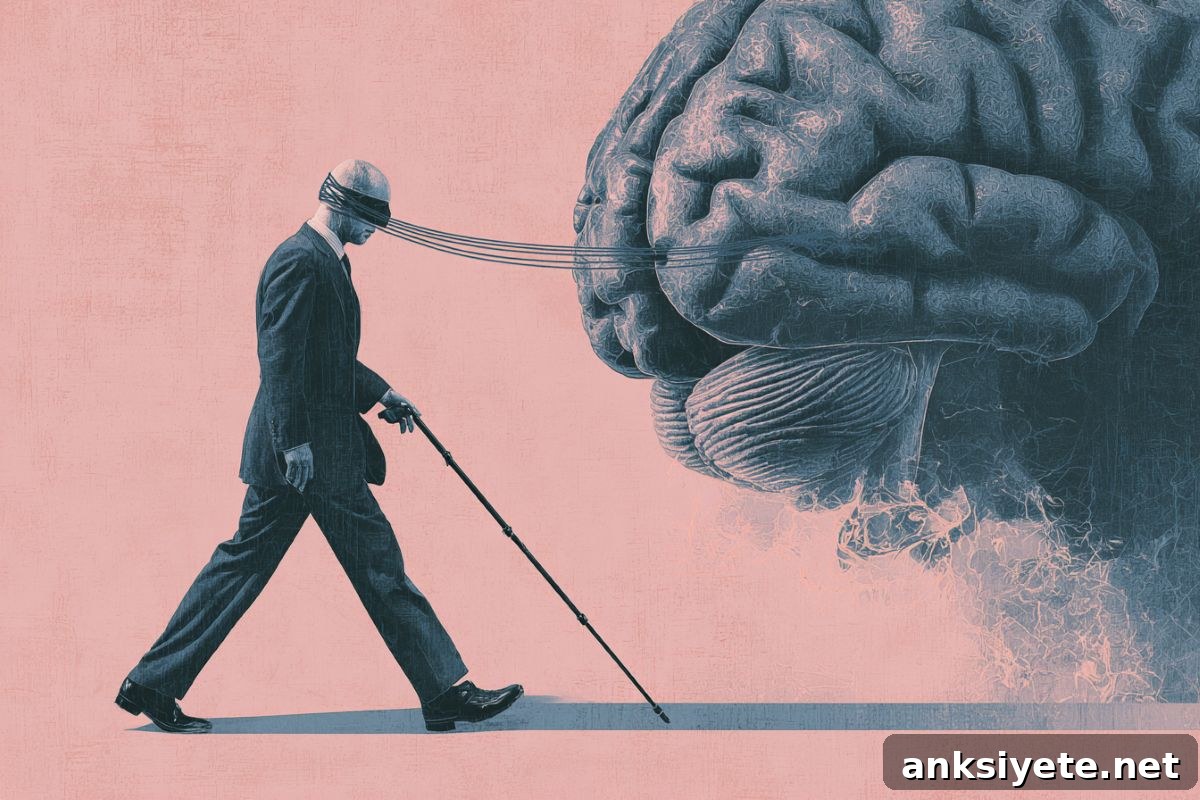
Summary: A new study explains how the human brain rapidly remodels neural circuits to preserve walking stability when visual input is degraded. Using Bangerter™ occlusion foils to simulate low-quality vision in healthy adults, researchers combined pattern-reversal visual evoked potentials (PR-VEPs) with resting-state fMRI (rs-fMRI) to track immediate brain changes following locomotion.
The results show a twofold compensatory strategy: sustained activation of core sensorimotor pathways alongside a targeted increase in functional connectivity between motor execution and higher-order cognitive control areas. These findings outline a neural blueprint that can guide development of personalized, multimodal mobility rehabilitation programs for people with low vision.
Key Facts
- Low-vision simulation: Bangerter™ occlusion foils were used to create stable, reduced-quality visual input. Electrophysiology confirmed decreased signal-processing efficiency along primary visual pathways under occlusion.
- Paracentral lobule rebound: Under normal vision, walking reduced the amplitude of low-frequency fluctuations (ALFF) in the right paracentral lobule relative to rest. With visual occlusion, ALFF in this region showed a modest rebound, indicating a rapid local functional adaptation.
- Widespread sensorimotor activation: Navigating with degraded vision produced broad baseline activation across interconnected sensorimotor regions, including bilateral calcarine and middle temporal gyri, supplementary motor areas (SMA), right cuneus, bilateral precentral gyri, and right cerebellar lobule VI.
- Core compensatory switch: The most prominent plastic change was a pronounced increase in functional connectivity between the right precentral gyrus (motor execution) and the middle frontal gyrus (cognitive control), suggesting this connection acts as a primary workaround for limited visual input.
- Clinical translation: The study supports visual-somatosensory multimodal training that specifically targets these pathways to craft individualized, brain-based rehabilitation strategies for people with low vision.
Source: Chinese Medical Journal
Vision functions as the brain’s navigation radar during walking, supplying continuous environmental information and guiding real-time motor decisions through sensorimotor integration.
When vision is impaired, the brain must reorganize how it processes movement to preserve balance and stability. Understanding these adaptive mechanisms opens new avenues for motor rehabilitation tailored to low-vision populations.
This study simulated visual impairment with Bangerter™ occlusion foils and combined electrophysiological measures (PR-VEPs) with resting-state functional MRI. Researchers compared visual pathway responses and walking-induced brain changes in healthy young adults under normal vision and occluded vision conditions.
The work was published in Volume 139, Issue 06 of the Chinese Medical Journal on March 20, 2026.
Electrophysiological data confirmed that simulated visual impairment reduced visual signal-processing efficiency, validating the low-quality visual input model. Resting-state fMRI analysis showed that walking under normal vision decreased ALFF in the right paracentral lobule compared with rest; under visual occlusion, ALFF in this region rose slightly after walking, reflecting a rapid local adjustment in neural activity.
In parallel, walking engaged multiple visuomotor pathways that underpin basic locomotion. Activated regions included bilateral calcarine and middle temporal gyri, the bilateral supplementary motor areas and right cuneus, bilateral precentral gyri, and right cerebellar lobule VI.
Most notably, visual occlusion further strengthened functional connectivity between the right precentral gyrus and the middle frontal gyrus. This enhanced coupling likely represents a compensatory route allowing executive control regions to assist motor execution when visual guidance is unreliable.
Overall, the brain appears to preserve walking function under degraded vision through a combination of sustained sensorimotor pathway activation and selective enhancement of connectivity between motor and cognitive control regions.
These insights offer practical implications for rehabilitation: targeted visual-somatosensory multimodal training could deliberately engage and reinforce the precentral-to-frontal pathway and related networks. Such approaches could speed brain-level adaptation and help clinicians design personalized mobility programs for people with low vision.
Funding information: This work was supported by the National Natural Science Foundation of China (grant number: 81600760).
Key Questions Answered:
A: The visual system continuously provides spatial and environmental information that the brain integrates with proprioceptive and vestibular cues. This sensorimotor integration enables immediate motor adjustments for stable gait. When visual input is degraded, the brain must reconfigure processing strategies to maintain posture and step control.
A: The precentral gyrus drives motor execution, while the middle frontal gyrus supports higher-level executive control and decision-making. Strengthening the link between these regions provides a route for conscious, cognitive control to support and refine motor actions when visual guidance is limited.
A: Rehabilitation can move beyond purely physical practice by incorporating visual-somatosensory multimodal training. Combining tactile, balance, and residual visual cues in structured exercises may selectively strengthen the motor–frontal pathways identified here, accelerating functional reorganization and improving walking confidence and stability.
Editorial Notes:
- This article was edited by a Neuroscience News editor.
- The underlying journal article was reviewed in full.
- Additional explanatory context was added by editorial staff for clarity.
About this visual neuroscience research news
Author: Tingting Yang
Source: Chinese Medical Journal
Contact: Tingting Yang – Chinese Medical Journal
Image: Image credit: Neuroscience News
Original Research: Open access.
“Resting-state functional magnetic resonance imaging study on the effects of visual status on walking-related brain functions in healthy young adults” by Mingxin Ao, Ruilan Dai, Xiaoming Shi, Yunan Zhou, Mingxuan Gao, and Yingfang Ao. Chinese Medical Journal
DOI: 10.1097/CM9.0000000000004040
Abstract
Resting-state functional magnetic resonance imaging study on the effects of visual status on walking-related brain functions in healthy young adults
Background:
Visual input supports locomotion through sensorimotor integration. The neural mechanisms by which the brain adapts to degraded vision are not fully understood. This study evaluated how visual occlusion affects interactions among regions in the sensorimotor network during walking.
Methods:
Twelve healthy young adults (8 males, 4 females; mean age 24.0 ± 2.1 years) were recruited from the Department of Ophthalmology, Peking University Third Hospital, between December 2024 and September 2025. Pattern-reversal visual evoked potentials were recorded under normal vision and simulated low-vision conditions (Snellen equivalent ~20/60). Resting-state fMRI data were collected to calculate amplitude of low-frequency fluctuations (ALFF) and seed-based functional connectivity (FC) in visuomotor integration regions. A one-way repeated-measures ANOVA compared three within-subject states: seated rest, level walking with normal vision, and level walking with visual occlusion.
Results:
Visual occlusion prolonged binocular P100 latency and reduced N75–P100 amplitudes for large-check (1°) stimulation (all P < 0.05). For small-check (15′) stimulation, occlusion significantly decreased both N75–P100 and P100–N135 amplitudes (all P < 0.001), indicating diminished visual signal processing. Rs-fMRI showed reduced ALFF in the right paracentral lobule after walking under normal vision (peak MNI: 3, –39, 66; P < 0.001, F = 14.009). Walking activated multiple visuomotor pathways (all P < 0.001), including bilateral calcarine and middle temporal gyri, right calcarine and middle frontal gyri, bilateral supplementary motor areas and right cuneus, bilateral precentral gyri, and right cerebellar lobule VI. Visual occlusion specifically strengthened FC between the right precentral and right middle frontal gyri (peak MNI: 27, 57, 27; F = 16.456, P < 0.001).
Conclusions:
Core visuomotor pathways remain consistently engaged to support locomotion. When visual input is reduced, increased functional connectivity between the right precentral and middle frontal gyri appears to function as a compensatory mechanism, linking motor execution with executive control to preserve gait stability.