
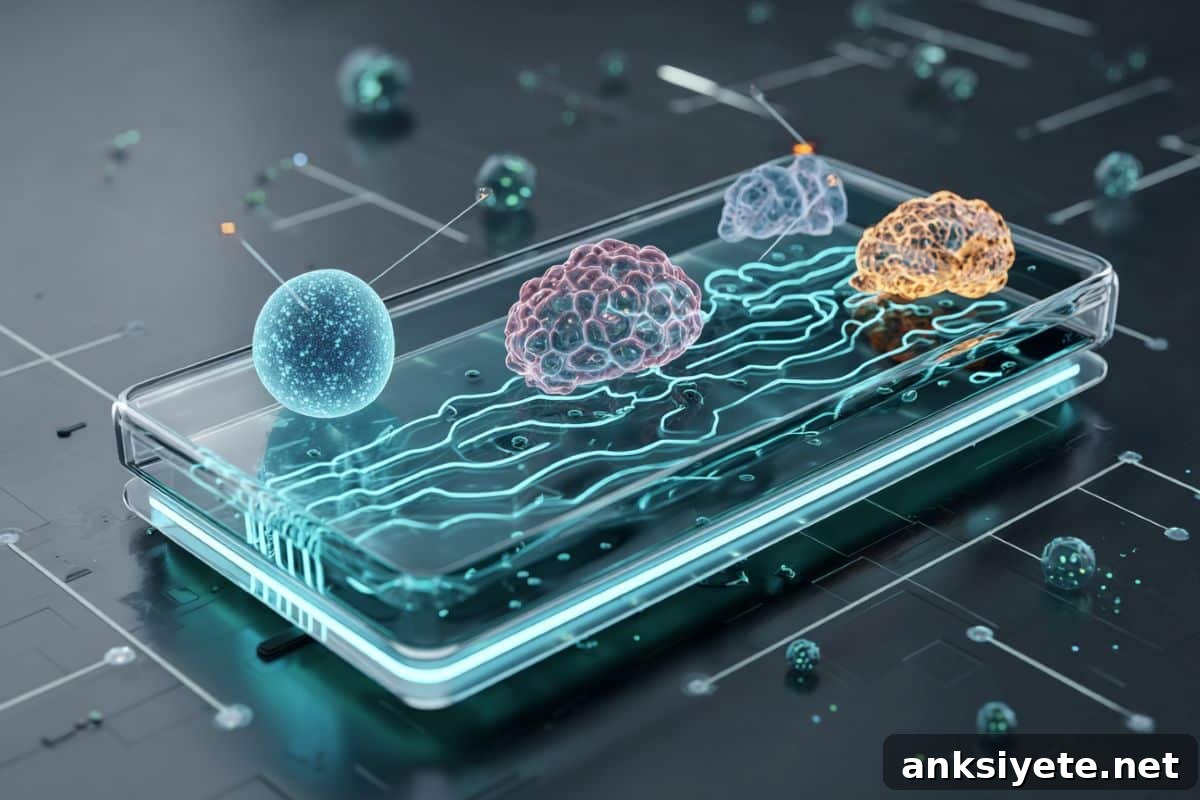
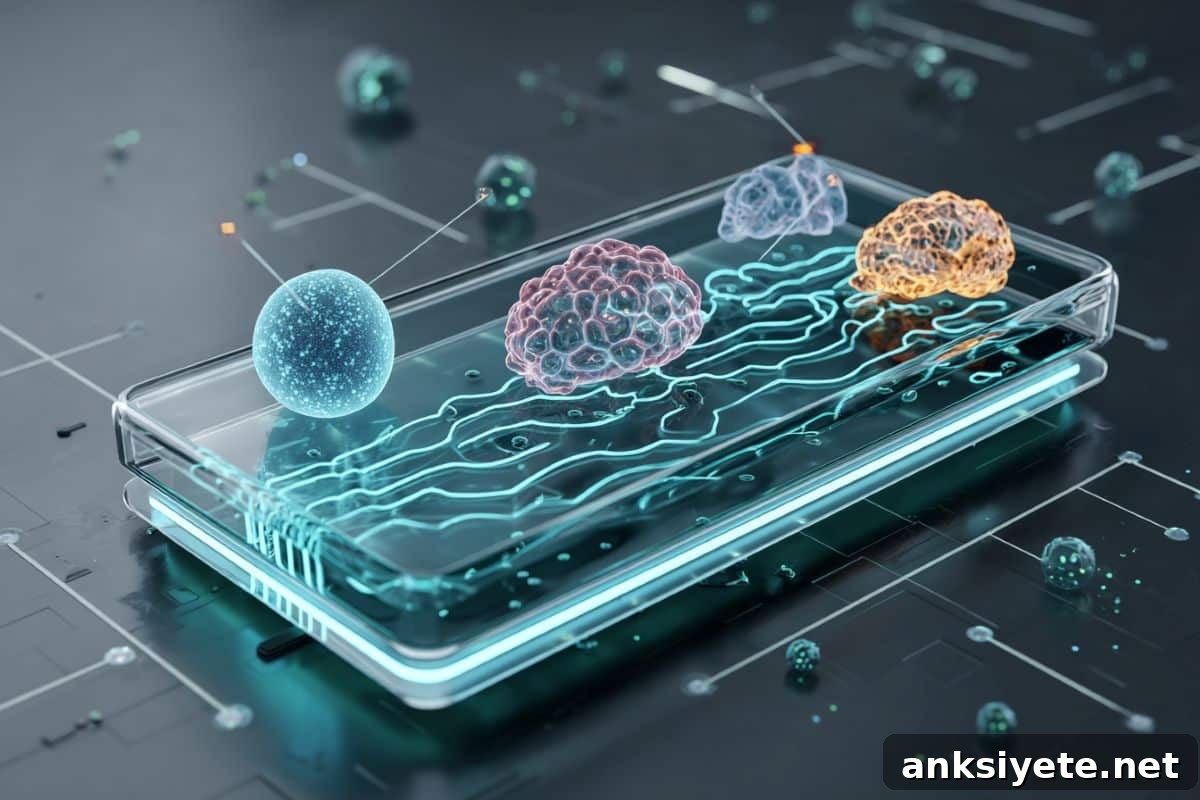
Summary: Researchers have received funding to develop an innovative multi-organ “organ-on-chip” device. The GlucoBrain project is a three-year pilot study that will physically connect living human cellular models of the gut, pancreas, and brain inside a miniature biochip.
By monitoring real-time molecular signaling and cellular responses to varying glucose and hormone levels, the project aims to reveal the biological mechanisms that may explain why diabetes elevates the risk of cognitive decline, learning difficulties, and Alzheimer’s disease.
Key Facts
- The Connected Biochip: GlucoBrain is a pioneering multi-organ platform that recreates three-dimensional cellular connections and the communication networks between the brain, gut, and pancreas.
- Beyond Traditional Cell Culture: Instead of flat, static petri-dish cultures, organ-on-chip technology cultivates human cells in 3D microenvironments with regulated nutrient flows, enabling cells to interact, mature, and respond more naturally.
- Investigating the Diabetes–Dementia Link: Clinical studies link diabetes with cognitive impairment and memory loss, but current models cannot isolate how metabolic changes in the gut and pancreas directly affect brain cells. GlucoBrain will let researchers isolate individual cell types and map inter-organ signaling in real time.
- Phased System Development: Starting in October, the multidisciplinary team will build independent chip modules for the gut, pancreas, and brain, and then integrate them into a unified, fluidically connected multi-organ circuit.
- Implications for Medicine: Validating drug effects on human cells in an interconnected, physiologically relevant system could accelerate drug discovery, reduce dependence on animal testing, and support future personalized medicine using a patient’s own cells.
Source: University of Bath
The University of Bath is leading a project funded with £500,000 to build a first-of-its-kind organ-on-chip system that links models of the brain, gut, and pancreas.
Known as GlucoBrain, the project will enable scientists to trace how biochemical and hormonal signals travel between these organs and to investigate why diabetes is associated with changes in memory, learning, and cognition.
The study is led by experts in lab-on-chip technology at the University of Bath, with collaboration from specialists at the University of Oxford and Johns Hopkins University. Their combined expertise in engineering, metabolic disease, and neurobiology aims to produce models that could inform new treatments for millions affected by diabetes and dementia.
Diabetes and Alzheimer’s disease are major global health challenges, particularly in ageing populations. While diabetes is commonly associated with complications affecting the heart, kidneys, and eyes, mounting evidence links metabolic dysfunction with impaired memory and cognition. The precise cellular pathways that connect metabolic dysregulation to brain decline are not yet clear—this is the gap GlucoBrain seeks to address.
Dr Despina Moschou, the project lead, explains: “Our gut, pancreas, and brain continuously communicate through a network of hormonal and metabolic signals that regulate hunger and blood glucose. We still lack a clear picture of how these signals interact at the cellular level, and why disturbances in glucose control relate to cognitive decline. By creating a linked organ-on-chip system, we can observe in real time how signals move between organs, how diabetes-related changes impair brain cells, and how candidate drugs might restore healthy communication.”
Building a multi-organ model
Existing knowledge about the diabetes–dementia relationship comes largely from animal models, simplified cell cultures, and clinical observations. Those approaches are valuable but cannot fully reproduce the dynamic, multi-organ interactions present in humans. Organ-on-chip platforms use living human cells in engineered microenvironments that better reflect tissue architecture, fluid flow, and nutrient exchange. This enables researchers to isolate organs and cell types and observe molecular signaling with higher fidelity.
Over three years, engineers, clinicians, biologists, and data scientists will design separate chips for the gut, pancreas, and brain, then connect them into a fluidically integrated system. The team will incrementally increase physiological complexity and systematically measure organ responses to glucose fluctuations, hormonal changes, and drug candidates. Oxford partners will contribute clinical expertise in diabetes and metabolism, while Johns Hopkins collaborators provide specialist insight into Alzheimer’s disease and brain organoid models.
Unlocking future potential
GlucoBrain is an early-stage pilot that aims to establish a robust platform for studying how metabolic and neurodegenerative diseases interact at a cellular level. Future iterations could incorporate more organs and cell types and leverage artificial intelligence to analyze complex datasets, revealing new insights into disease emergence and progression.
Dr Moschou added: “These microphysiological systems offer a new way to accelerate drug discovery and testing with human-relevant data, potentially reducing animal use and improving translational success. In the longer term, personalized biochips created from a patient’s own cells could allow clinicians to test multiple therapies in vitro and identify the most effective treatment before patient exposure.”
This project is funded by the Engineering and Physical Sciences Research Council (EPSRC) Health Technologies Connectivity Awards.
Key Questions Answered:
Q: What role do the gut and pancreas play in developing Alzheimer’s disease?
A: The gut, pancreas, and brain maintain continuous chemical communication through hormones and metabolic signals that regulate appetite and blood glucose. When diabetes disrupts this balance, persistent glucose and insulin dysregulation can negatively affect brain regions responsible for memory and learning. GlucoBrain provides a way to observe how those damaging signals travel from digestive organs to brain tissue at a cellular level.
Q: Why might organ-on-chip technology be preferable to animal testing?
A: While animal models are useful for whole-organism studies, they differ from humans in cellular biology and receptor distribution. Organ-on-chip devices use human cells in physiologically relevant microenvironments, reducing interspecies differences and delivering cleaner, more clinically relevant data for drug evaluation.
Q: How could a chip made from my cells transform treatment?
A: In the future, clinicians could grow a personalized multi-organ network from a patient’s stem cells and test multiple diabetes or dementia therapies on that biochip. Observing real-time responses of a patient’s own cells could help identify the most effective treatment regimen before administering drugs to the patient.
Editorial Notes:
- This article was edited by a Neuroscience News editor.
- Journal paper reviewed in full.
- Additional context added by editorial staff.
About this neurotech and dementia research news
Author: Sarah Baker-Gaunt
Source: University of Bath
Contact: Sarah Baker-Gaunt – University of Bath
Image: The image is credited to Neuroscience News