
Summary: Materials scientists have developed a wearable, drug-free contact lens that treats depression by delivering mild, targeted electrical stimulation through the retina. In experiments with mice, this non-invasive approach produced effects comparable to fluoxetine (the active ingredient in Prozac), improving behavior, brain activity, and physiological biomarkers linked to depression.
By using the eye’s direct anatomical connection to the brain, the device stimulates mood-regulating circuits precisely and without surgery. The lenses rely on temporal interference stimulation to activate specific deep brain regions while leaving the eye’s surface unaffected.
Key Research Findings
- Retinal access to the brain: Because the retina is an outgrowth of the central nervous system, researchers used it as a minimally invasive pathway to influence mood-related brain circuits.
- Temporal Interference (TI): The lenses generate two high-frequency electrical signals that interact only at their intersection point, producing a lower-frequency envelope that stimulates deep brain targets without stimulating tissues along the signal paths.
- Restored circuit connectivity: Electrophysiological recordings showed recovered communication between the hippocampus and the prefrontal cortex—connectivity that often weakens in depression.
- Physiological and molecular changes: After three weeks of daily 30-minute sessions, treated mice showed substantial biological improvements, including a 47% increase in serotonin, a 48% decrease in blood corticosterone (a stress hormone), and reduced inflammatory markers in the brain.
- Comparable to SSRI treatment: Machine learning classification grouped mice treated with the contact-lens stimulation with non-depressed controls, indicating efficacy on par with fluoxetine (an SSRI).
Source: Cell Press
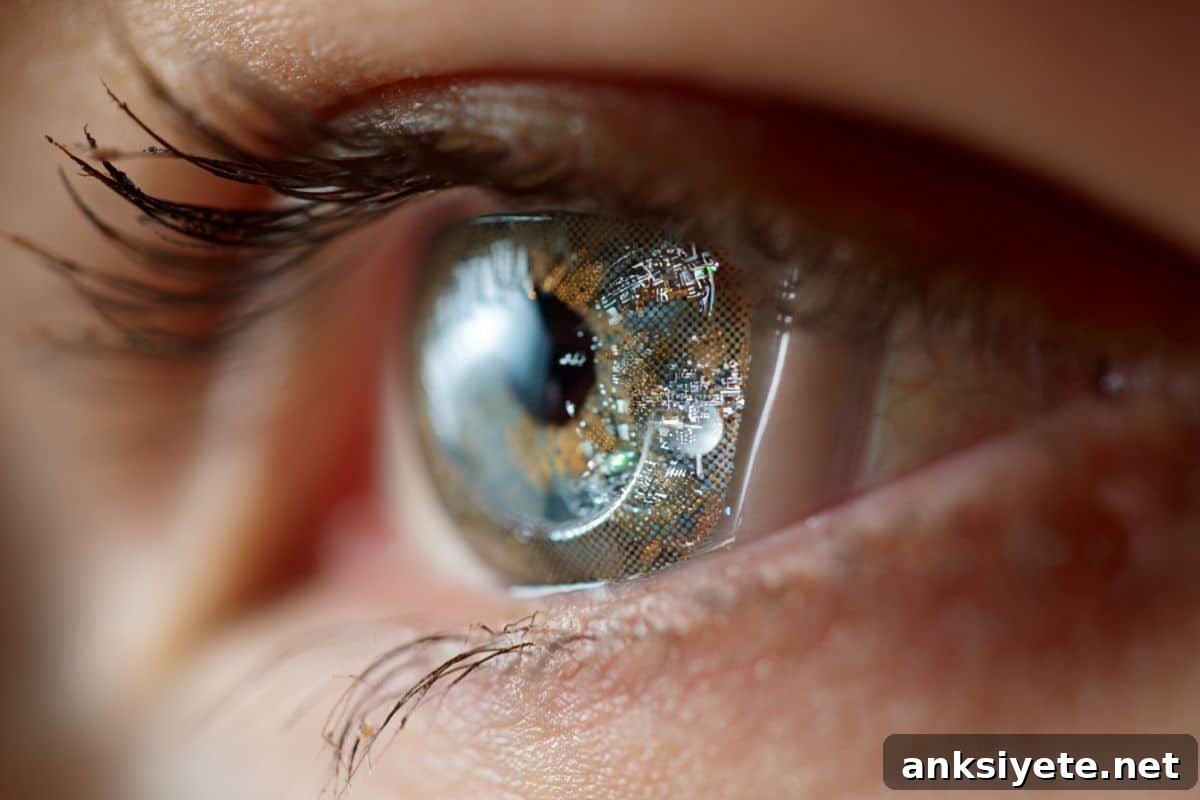
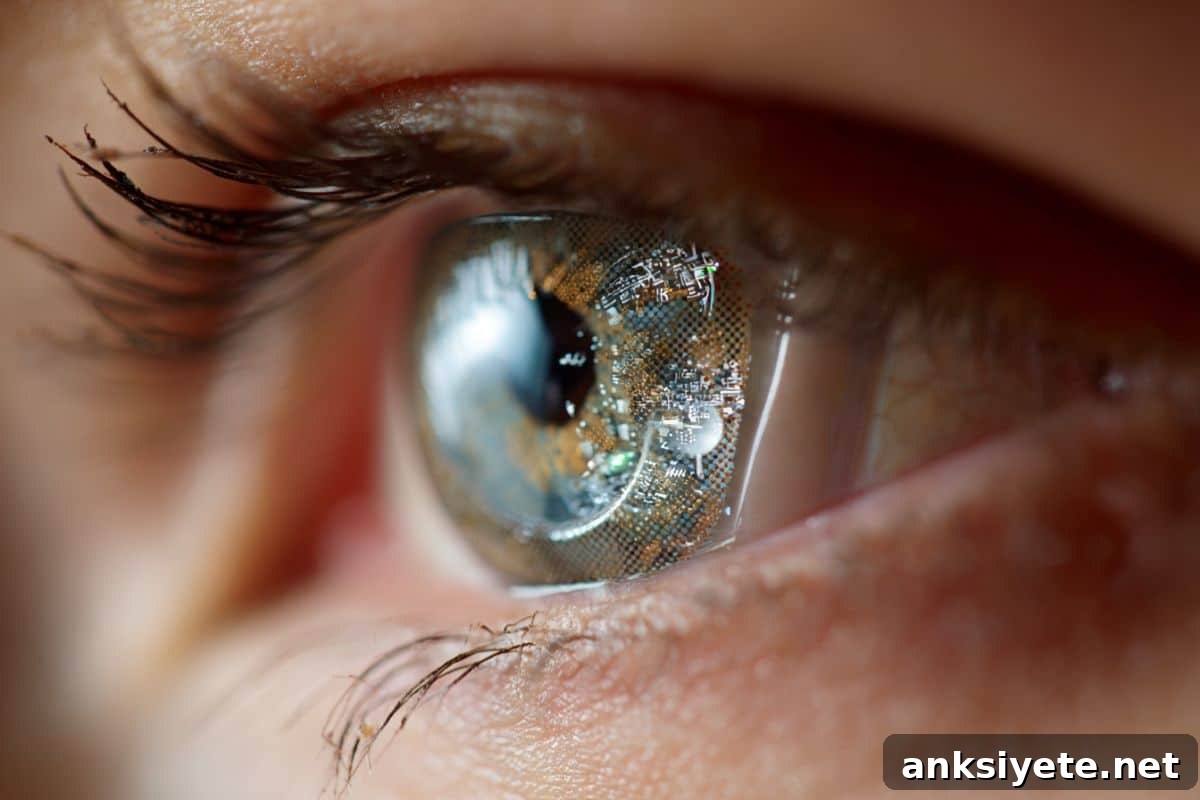
Materials scientists have engineered transparent, soft contact lenses that deliver targeted electrical stimulation to mood-related brain regions through the retina. These lenses, equipped with ultrathin electrodes, can modulate neural circuits implicated in depression without drugs or implants.
Published May 14 in the journal Cell Reports Physical Science, the study reports that mice with induced depressive-like states displayed significant reductions in behavioral, neural, and physiological symptoms after three weeks of retinal temporal interference stimulation delivered by the contact lenses.
“This work opens a new frontier in treating brain disorders through the eye,” says senior author Jang-Ung Park of Yonsei University. The team envisions a wearable, drug-free option for conditions such as depression, anxiety, addiction, and cognitive decline, by tailoring stimulation to specific neural circuits.
Traditional depression therapies—antidepressant drugs, electroconvulsive therapy, and deep brain implants—aim to modulate brain circuits linked to mood. The retina provides a unique, direct route to many of these regions, prompting researchers to explore a contact-lens-based approach to non-invasive brain stimulation.
Previous smart contact lenses focused on monitoring ocular and metabolic signals—like intraocular pressure or glucose. This study demonstrates, for the first time, a therapeutic contact lens designed to actively treat a brain disorder by delivering temporal interference stimulation through the eye.
The temporal interference method works by emitting two harmless high-frequency signals that overlap and create an effective low-frequency stimulus only at their intersection point deep in the retina. “Think of two flashlights: where their beams overlap, a bright spot appears far from each light source,” explains Park. “Our lenses achieve the same focal effect with electrical fields, activating retinal pathways that project to mood-related brain areas while keeping the eye’s surface unaffected.”
Lenses were fabricated from flexible, transparent layers incorporating ultrathin gallium oxide and platinum electrodes. In the animal study, researchers compared four groups: non-depressed controls, untreated depressed mice, depressed mice receiving retinal temporal interference, and depressed mice treated with fluoxetine (Prozac’s active ingredient).
Assessment included behavioral tests, electrophysiological recordings, and measurements of blood and brain biomarkers. After three weeks of daily 30-minute stimulation sessions, contact-lens-treated mice showed behavioral improvements similar to fluoxetine-treated animals, restored hippocampus–prefrontal cortex connectivity, increased serotonin, reduced stress hormone levels, and lower brain inflammation.
“We were surprised and encouraged that behavioral, neural, and biological markers all improved together, and that the effect matched a widely used antidepressant,” Park adds. Machine learning analyses consistently clustered the contact-lens group with healthy controls rather than untreated depressed animals.
Park cautions that clinical application will require extensive safety testing and human trials. Next steps include developing a fully wireless lens, testing long-term safety in larger animals, and optimizing stimulation parameters for individual patients before initiating clinical trials.
Funding:
This research was supported by the National Research Foundation of Korea, the Institute for Basic Science, and the Yonsei University Research Fund.
Key Questions Answered:
A: No. The stimulation is described as gentle. Because temporal interference keeps individual signals weak on the surface, users should not experience a shock; the effective stimulus forms where the signals overlap at the retina.
A: The researchers believe the retinal approach could be adapted to target different brain circuits, potentially benefiting anxiety, addiction, and cognitive disorders, pending further research.
A: Not yet. The technology requires further safety testing in larger animals, device refinements (such as wireless operation), and rigorous clinical trials in humans before it could be approved and marketed.
Editorial Notes:
- This article was edited by an editor at Neuroscience News.
- The journal paper was reviewed in full by the editorial team.
- Additional context was provided by staff to clarify methods and implications.
About this neurotech and depression research news
Author: Julia Grimmett
Source: Cell Press
Contact: Julia Grimmett – Cell Press
Image: The image is credited to Neuroscience News
Original Research: The findings will appear in Cell Reports Physical Science.