
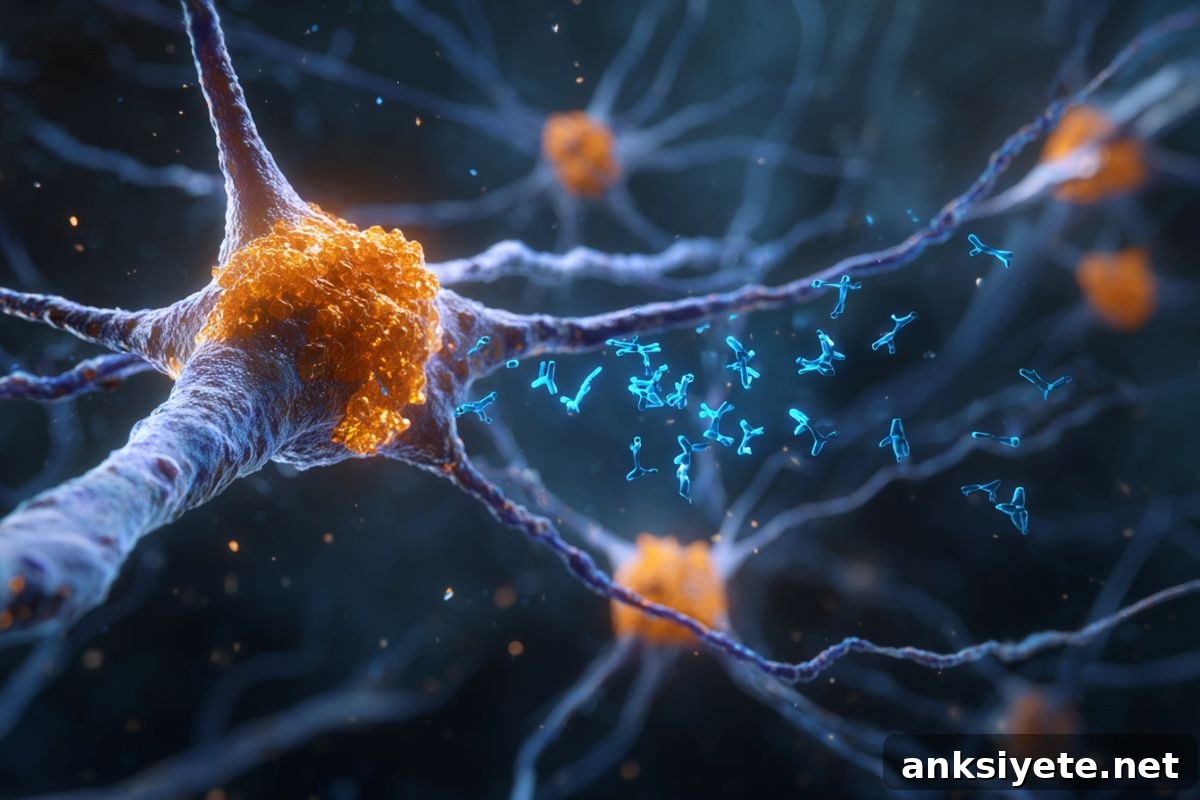
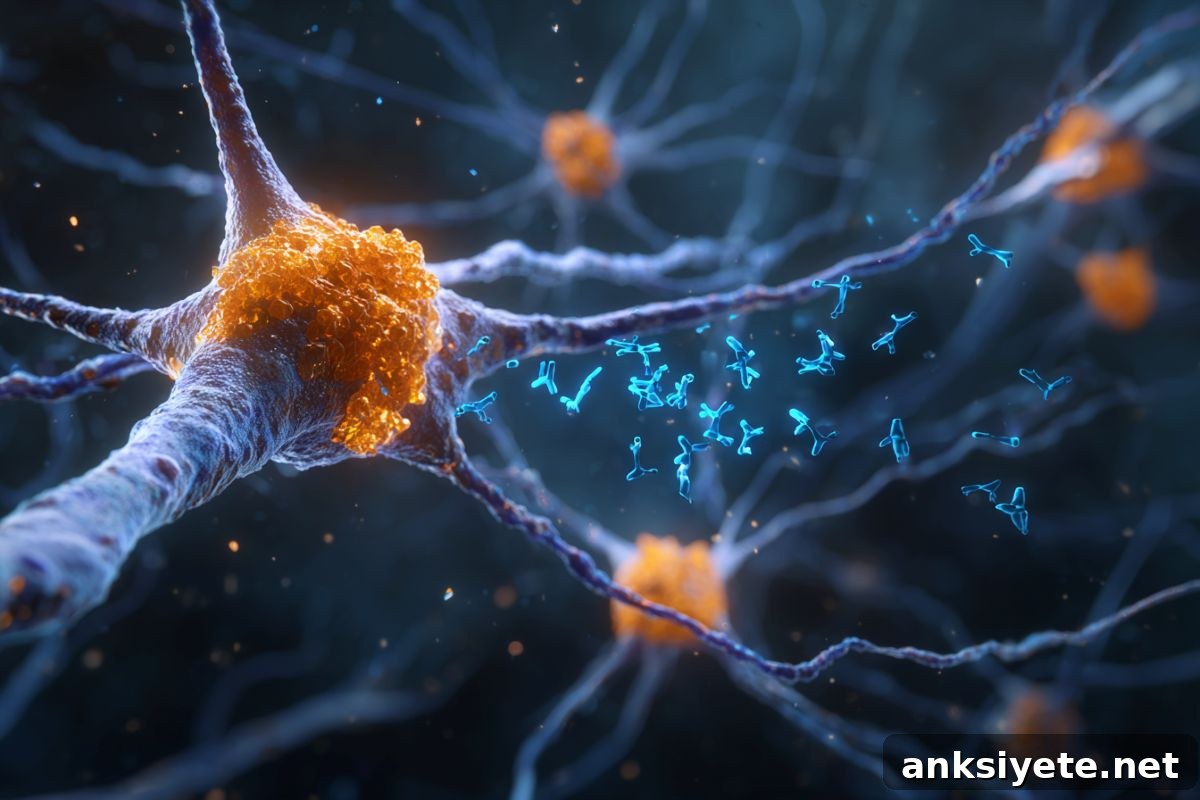
Summary: Researchers have identified a promising target for slowing the progression of Parkinson’s disease (PD). The study shows that the protein GPNMB (glycoprotein nonmetastatic melanoma B) acts as a catalyst for the spread of toxic alpha-synuclein aggregates between neurons. Blocking GPNMB with monoclonal antibodies interrupted this damaging cycle in preclinical models, suggesting a potential route to the first disease-modifying therapy for PD.
Using monoclonal antibodies to block GPNMB, scientists were able to prevent the propagation of alpha-synuclein pathology in laboratory systems and provide supporting evidence from human brain tissue. These results point to a strategy that could slow or halt neurodegeneration at early stages of Parkinson’s disease.
Key Research Findings
- The alpha-synuclein driver: Parkinson’s disease progresses as abnormal clumps of alpha-synuclein move from affected neurons to healthy ones, causing dysfunction and cell death and producing characteristic symptoms such as tremor and gait difficulties.
- Role of microglia and GPNMB: Microglia, the brain’s resident immune cells, are a major source of GPNMB in the diseased brain. When neurons are injured or dying, microglia increase production of GPNMB. Enzymes then cleave the protein from the cell surface, releasing a soluble form that can travel between cells and accelerate pathology.
- A self-reinforcing cycle: The study supports a feedback loop: alpha-synuclein accumulation damages neurons; injured neurons trigger microglial GPNMB secretion; secreted GPNMB promotes further neuronal uptake of alpha-synuclein, expanding pathology.
- Human brain evidence: Analysis of 1,675 postmortem brains from the Penn Brain Bank found that genetic variants linked to higher GPNMB expression correlated with more widespread alpha-synuclein pathology, strengthening the case that GPNMB contributes to disease progression in people.
- Specificity to Parkinson’s: Elevated GPNMB levels were associated with alpha-synuclein pathology and Parkinson’s disease features, and were not linked to markers characteristic of Alzheimer’s disease or other neurodegenerative conditions.
Source: University of Pennsylvania
Monoclonal antibodies block an immune-related protein that drives the spread of brain cell damage in Parkinson’s disease.
GPNMB (glycoprotein nonmetastatic melanoma B) emerges as a compelling therapeutic target for early intervention in PD. In a new study published in Neuron, researchers at the Perelman School of Medicine, University of Pennsylvania, report that antibodies directed against GPNMB prevent neuronal uptake and spread of fibrillar alpha-synuclein in experimental models, supporting the potential for a disease-modifying treatment strategy.
“Many people are diagnosed with Parkinson’s disease while their symptoms are still relatively mild, but there is currently no therapy that slows disease progression,” said lead author Alice Chen‑Plotkin, MD, Parker Family Professor of Neurology. “These findings represent an important step toward developing treatments that could change the course of PD.”
How Parkinson’s disease spreads through the brain
Parkinson’s disease affects more than one million people in the United States, with tens of thousands of new diagnoses each year. Although the precise cause of PD remains unknown, a widely accepted mechanism for progression is the cell-to-cell transmission of misfolded alpha-synuclein. These aggregated proteins accumulate inside vulnerable neurons, impair function, cause cell death, and are then released and taken up by neighboring cells, allowing pathology to advance through brain regions and produce worsening motor and non-motor symptoms.
Existing therapies—including levodopa medication and surgical options such as deep-brain stimulation—improve symptoms but do not slow or stop the underlying neurodegenerative process. Identifying molecular drivers of alpha-synuclein spread is therefore essential to develop disease-modifying interventions.
Microglia and an unexpected therapeutic target
Previous research by Chen‑Plotkin and colleagues identified GPNMB as a molecule that influences neuronal uptake of alpha-synuclein seeds. In the current study, the team showed that microglia are a major source of the GPNMB that fuels this process. In human brain tissue and in induced pluripotent stem cell-derived microglia, GPNMB expression and secretion increase after exposure to apoptotic or injured neurons. The extracellular portion of GPNMB, once shed, acts non-cell-autonomously to enhance neuronal uptake of fibrillar alpha-synuclein.
Importantly, monoclonal antibodies developed to bind GPNMB blocked this effect in cell-based PD models, reducing the development of alpha-synuclein pathology. These results indicate that antibody blockade of GPNMB can interrupt the feedback loop that amplifies neurodegeneration.
Path toward a disease-modifying therapy
To evaluate clinical relevance, researchers examined 1,675 human postmortem brains. Individuals carrying genetic variants that drive higher GPNMB expression had more extensive alpha-synuclein pathology, reinforcing the link between GPNMB and disease progression in people. The data also showed that GPNMB elevation was not associated with biomarkers of Alzheimer’s disease, suggesting specificity to Parkinson’s-related pathology.
“While laboratory models and human tissue analyses are promising, substantial work remains before this approach can be tested in human trials,” Chen‑Plotkin noted. “Nevertheless, these findings provide a strong rationale for further development of anti-GPNMB antibodies as potential disease-modifying agents for PD.”
Funding: Supported by the National Institutes of Health (R37 NS115139, P30 AG010124, U19 AG062418, P01 AG084497), SPARK‑NS, the Parker Family Chair, and the Lipman Family Fund.
Key Questions Answered
Q: How does this differ from current Parkinson’s medications?
A: Current treatments such as levodopa relieve symptoms but do not stop the underlying neurodegenerative spread. Anti-GPNMB antibodies aim to be disease-modifying by blocking a molecular driver of alpha-synuclein propagation.
Q: How do the antibodies block damage?
A: The monoclonal antibodies bind the extracellular form of GPNMB, preventing its interaction with neurons and thereby reducing neuronal uptake of toxic alpha-synuclein aggregates.
Q: Is this therapy available now?
A: No. These results are from laboratory and human tissue studies. Additional preclinical work and safety testing are required before human clinical trials can begin.
Editorial Notes
- This article was edited by a Neuroscience News editor.
- The original journal paper was reviewed in full.
- Additional context was provided by editorial staff.
About this Parkinson’s disease research news
Author: Eric Horvath
Source: University of Pennsylvania
Contact: Eric Horvath – University of Pennsylvania
Image: Image credit: Neuroscience News
Original Research: Open access. “Secreted GPNMB enhances uptake of fibrillar alpha-synuclein in a non-cell-autonomous process that can be blocked by anti-GPNMB antibodies” by Marc Carceles-Cordon et al., Neuron. DOI: 10.1016/j.neuron.2026.04.033
Abstract
Secreted GPNMB enhances uptake of fibrillar alpha-synuclein in a non-cell-autonomous process that can be blocked by anti-GPNMB antibodies
Glycoprotein nonmetastatic melanoma B (GPNMB) is critical to cellular uptake of pathological forms of alpha-synuclein (aSyn), the hallmark disease protein in Parkinson’s disease (PD). The extracellular domain of GPNMB, once shed from cells, can act in a non-cell-autonomous fashion. In the human brain, GPNMB is expressed broadly in neurons and microglia; in induced pluripotent stem cell-derived microglia, GPNMB expression and secretion rise after exposure to apoptotic neurons.
In an alpha-synuclein fibril-seeded model of PD, microglia-derived GPNMB enhanced neuronal uptake of aSyn and the development of aSyn pathology, even in neurons genetically lacking GPNMB. Conversely, anti-GPNMB antibodies prevented neurons from developing aSyn pathology. In 1,675 human postmortem cases, GPNMB genotypes associated with higher expression correlated with more widespread aSyn pathology.
These data support a positive feedback mechanism: neurodegeneration increases microglial GPNMB secretion, which promotes neuronal aSyn pathology and further neurodegeneration. Crucially, this cycle can be interrupted therapeutically by anti-GPNMB antibodies, offering a rationale for pursuing GPNMB-targeted strategies as potential disease-modifying treatments for Parkinson’s disease.