
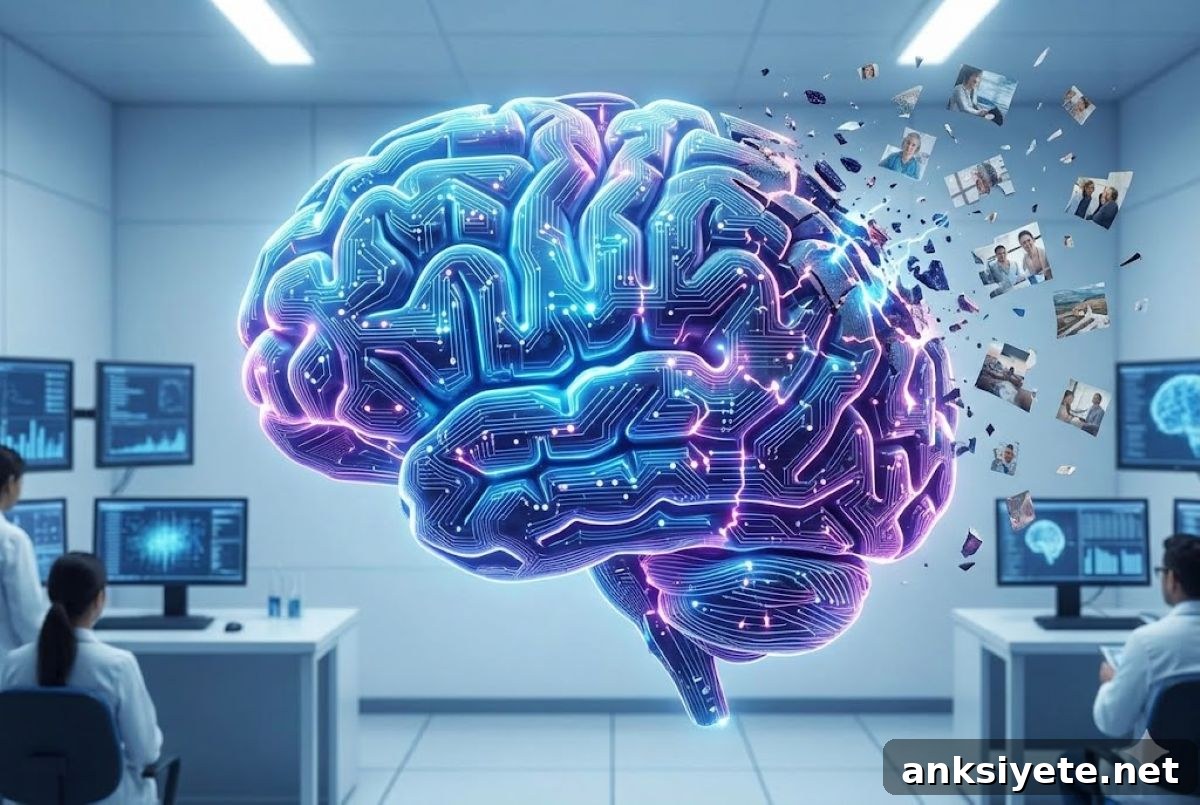
Summary: Researchers have released FINGERS-7B, the first AI foundation model explicitly built to help prevent Alzheimer’s disease by detecting risk in the preclinical stage. Combining large-scale lifestyle, clinical, genomic, and proteomic data into a unified “biological fingerprint,” the model identifies multi-omic biomarkers that reveal disease risk up to a decade before symptoms appear, enabling earlier and more targeted prevention strategies.
FINGERS-7B produces substantially improved early detection and treatment prediction compared with previous approaches. By reading multiple data domains simultaneously, the model supports more accurate preclinical diagnosis, stronger responder stratification for interventions, and personalized prognoses that guide clinical decisions and research studies.
Key Facts
- Multi-omic integration: Rather than analyzing one data domain at a time, FINGERS-7B ingests lifestyle, clinical, genomic, and proteomic signals together. This simultaneous analysis reveals multi-omic biomarkers that single-source tools miss.
- Markedly improved accuracy: On datasets from the global WW-FINGERS network, the model achieves four times more accurate preclinical diagnosis and about 130% better responder stratification than prior methods, improving the ability to predict who will benefit from specific interventions.
- Personalized risk and timelines: For an individual’s data, FINGERS-7B estimates personal risk level, projects likely timelines for cognitive decline, and evaluates which lifestyle or therapeutic interventions are most promising.
- Open-source and accessible: Model weights, training code, and evaluation pipelines are publicly available. The model is deployed in the AD Workbench, a secure cloud environment used by Alzheimer’s researchers worldwide, enabling teams to apply the model to local cohorts without moving sensitive data.
- Rapid, collaborative development: Seeded by MIT’s Aging Brain Initiative ten months after launch, the project already partners with global research networks and industry to ensure the model represents diverse populations.
Source: Picower Institute at MIT
Why early detection matters: Alzheimer’s disease is most effectively addressed when interventions begin long before clinical symptoms appear. Detecting preclinical biological changes—often present more than ten years before memory loss—creates a preventive window where lifestyle changes and early therapeutics have the best chance to alter disease trajectory.
FINGERS-7B was developed by a multidisciplinary team of AI researchers, clinicians, and scientists centered at MIT. The team will present results at ICLR in Rio de Janeiro on April 27. The model was trained on tens of thousands of individuals considered at risk for Alzheimer’s and learns jointly from lifestyle, clinical measurements, biomarkers, genomic data, and proteomic profiles to discover useful multi-omic biomarkers for preclinical disease.
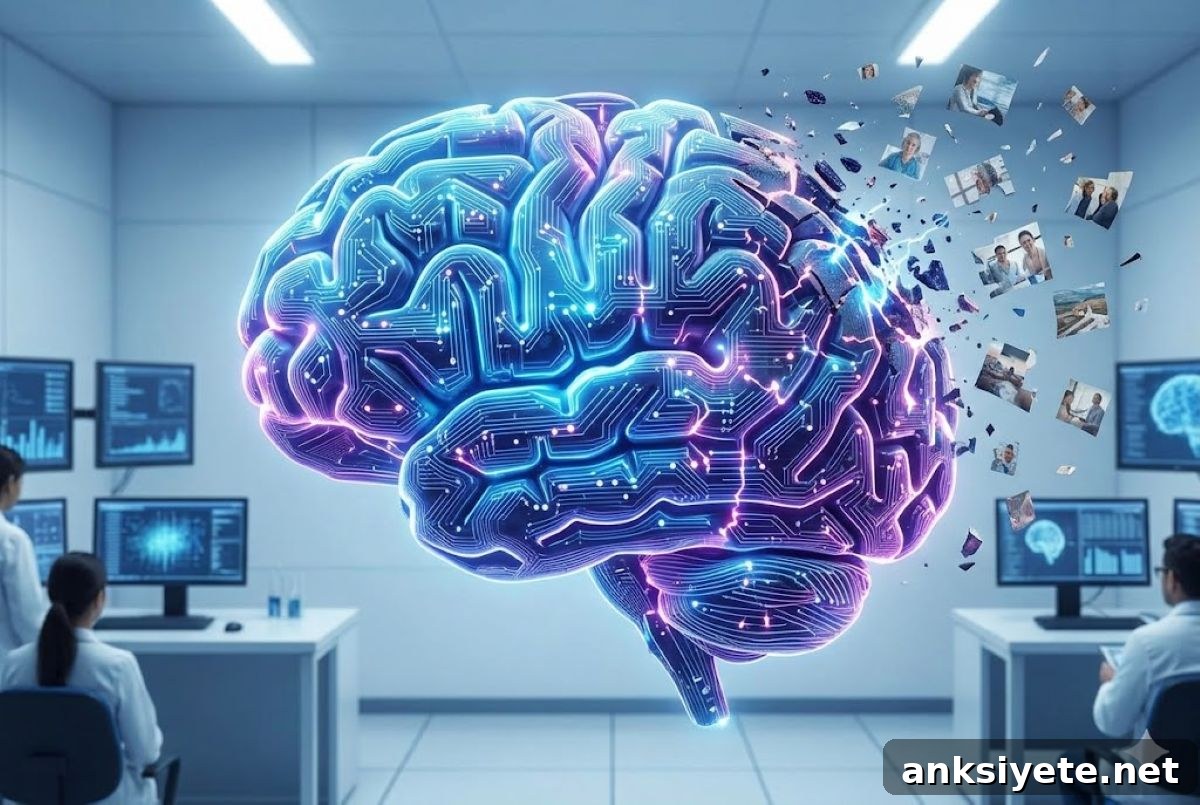
A central innovation is the multi-omic biomarker concept: by evaluating multiple omics domains concurrently, FINGERS-7B finds signal patterns that earlier single-domain analyses cannot detect. The model also pairs with AI agents in the FINGERPRINT system that automate complex multi-omic analyses, accelerating discovery and producing interpretable outputs for clinicians and researchers.
“Each of us carries a biological fingerprint—a unique combination of signals that reveal disease risk and, if properly understood, could enable prevention and treatment of Alzheimer’s disease,” said Adrian Noriega, MIT-Novo Nordisk AI Fellow and FINGERPRINT co-lead. Arvid Gollwitzer of the Broad Institute led the model’s design and training. “FINGERPRINT is a discovery acceleration engine composed of specialized agents and foundation models that interpret these biological signals to find novel biomarkers, prevention strategies, and therapeutics.”
FINGERS-7B has already identified novel diagnostic biomarkers for the preclinical stage of Alzheimer’s. These markers—detected through integrated analysis—support fourfold improvements in preclinical diagnostic accuracy and major gains in predicting which participants will respond to interventions.
The project builds on the original FINGER trial and the global WW-FINGERS network, which together span dozens of countries and tens of thousands of participants focused on lifestyle and risk-factor interventions. FINGERPRINT integrates those clinical and lifestyle datasets with biomarker, genomic, and proteomic data contributed by collaborating laboratories and industry partners to produce more robust, generalizable models.
MIT’s Aging Brain Initiative provided early funding that helped the team train FINGERS-7B and deploy it on the AD Workbench within ten months. By making the model and its tools available to research groups worldwide, the team aims to accelerate collaborative validation and improvement while keeping sensitive patient data within local infrastructures.
Project collaborators include investigators from the Picower Institute, Broad Institute, Yale University, Imperial College London, Brigham and Women’s Hospital, and industry partners such as Alamar Biosciences and Novo Nordisk. Partnerships with global organizations—including a collaboration announced with the Davos Alzheimer’s Collaborative—are focused on ensuring the model represents diverse global populations and supports equitable prevention efforts.
Key Questions Answered:
A: Not necessarily. FINGERS-7B aims to identify the preclinical stage, a window of ten or more years in which biological changes begin but memory remains intact. This provides an opportunity for lifestyle adjustments or early treatments that may prevent or delay progression.
A: A single person’s biological fingerprint can include millions of genetic markers and thousands of proteins. AI agents automate the integration and analysis of that vast data, performing complex, multi-omic computations in minutes that would otherwise take human teams months.
A: Today the model is offered as a research and clinical tool through the AD Workbench. Because FINGERS-7B is open source, the intention is for it to be integrated into healthcare workflows over time so clinicians can use routine exams and blood tests to monitor an individual’s brain-health fingerprint.
Editorial Notes:
- This article was edited by a Neuroscience News editor.
- The journal paper was reviewed in full.
- Additional context was added by staff for clarity and accuracy.
About this AI and Alzheimer’s disease research news
Author: David Orenstein, Picower Institute at MIT
Source: Picower Institute at MIT
Contact: David Orenstein – Picower Institute at MIT
Image: Image credit: Neuroscience News
Original Research: The model and findings will be presented at ICLR.