
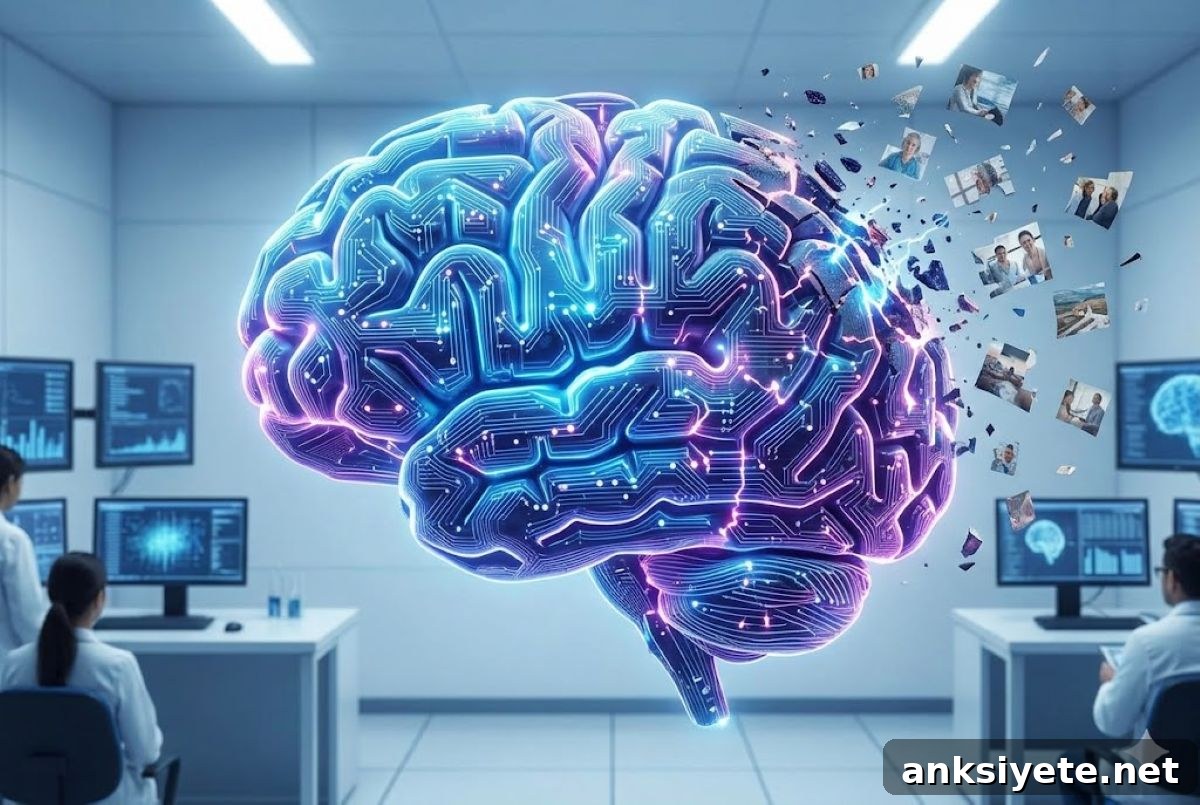
Summary: In a major advance for predictive medicine, researchers have introduced FINGERS-7B, the first AI foundation model built specifically to support prevention of Alzheimer’s disease.
FINGERS-7B produces substantially earlier and more accurate preclinical diagnoses by combining large-scale lifestyle, clinical, genomic, and proteomic data into a single “biological fingerprint.” By detecting disease-related changes up to a decade before symptoms appear, the model is designed to shift Alzheimer’s from an often unavoidable decline toward a condition that can be managed and, in some cases, prevented.
Key Facts
- The multi-omic advantage: Instead of analyzing one data domain at a time, FINGERS-7B ingests lifestyle, clinical, genomic, and proteomic signals together. This integrated approach uncovers multi-omic biomarkers that single-domain tools miss.
- Improved accuracy and stratification: On datasets from the WW-FINGERS global network, the model achieves roughly four times better preclinical diagnostic accuracy and about 130% improved responder stratification compared with previous methods, enabling clearer identification of who is likely to benefit from specific interventions.
- Personalized prognosis: For an individual’s data profile, FINGERS-7B estimates personalized risk, projects a likely timeline for cognitive decline, and indicates which lifestyle or therapeutic interventions are most likely to be effective.
- Open-source and widely accessible: The model weights, training code, and evaluation pipelines are open source and deployed in the AD Workbench, a secure cloud environment used by Alzheimer’s researchers around the world, allowing use without transferring sensitive patient records.
- Rapid, collaborative development: Seeded by MIT’s Aging Brain Initiative less than a year ago, the project advanced quickly through partnerships with academic and industry groups and coordination with the Davos Alzheimer’s Collaborative to ensure broad, diverse representation.
Source: Picower Institute at MIT
Early detection of Alzheimer’s provides the best chance for prevention.
A team of AI researchers, clinicians, and scientists centered at MIT has released FINGERS-7B, an AI foundation model created to enable earlier, more actionable risk prediction for Alzheimer’s disease. The group will present the model at ICLR in Rio de Janeiro on April 27th.
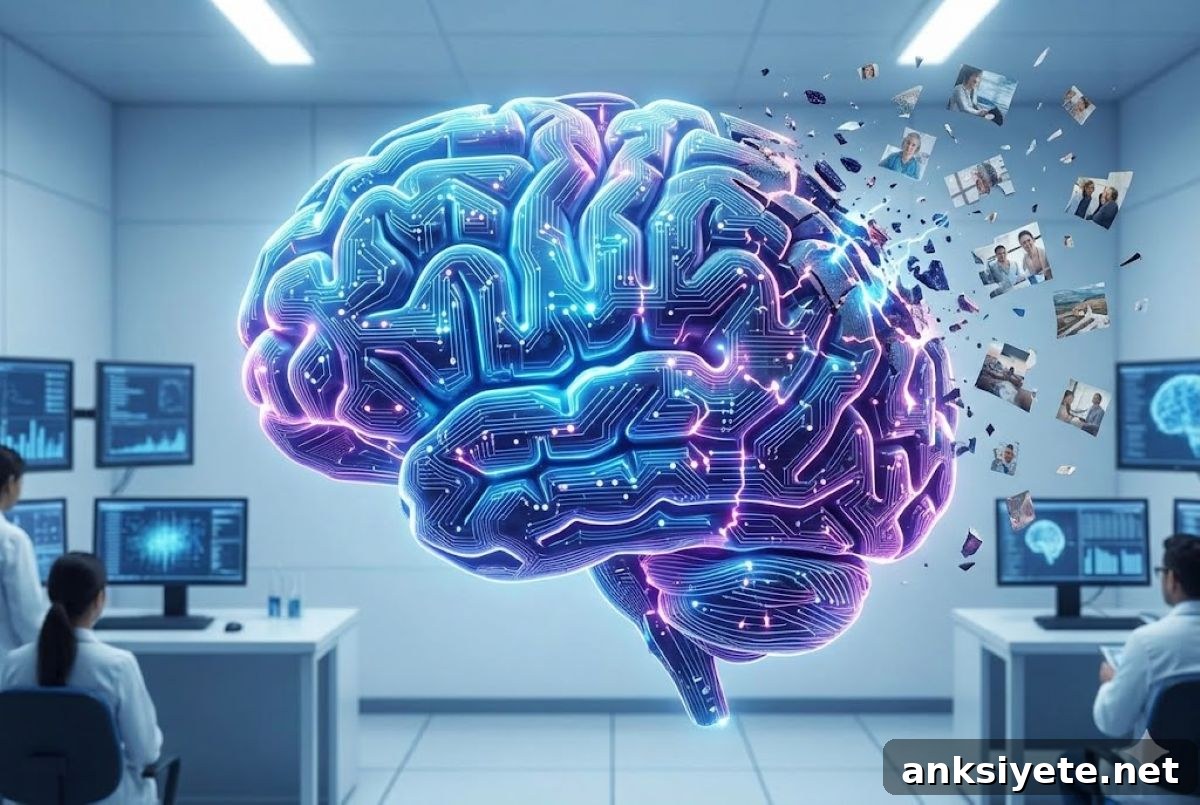
FINGERS-7B was trained on data from tens of thousands of individuals at elevated risk for Alzheimer’s, combining clinical records, lifestyle information, biomarker measurements, genomic profiles, and proteomic assays. The model and its companion AI agents—collected under the FINGERPRINT discovery platform—perform automated multi-omic analyses that accelerate biomarker discovery and clinical interpretation.
The core innovation is the identification of multi-omic biomarkers: patterns that only emerge when multiple biological domains are analyzed together. These cross-domain signatures enable earlier and more accurate detection than approaches that rely on a single type of data.
“Each person carries a biological fingerprint—a distinct combination of signals that can indicate disease risk and, if properly interpreted, guide prevention and treatment,” said Adrian Noriega, MIT-Novo Nordisk AI Fellow and co-lead of the FINGERPRINT effort, which was co-led with Arvid Gollwitzer, a research scholar at the Broad Institute who led the model’s design and training.
FINGERPRINT is built as a discovery engine: specialized AI agents and foundation models work together to extract interpretable biomarkers, propose prevention strategies, and prioritize therapeutic candidates for further study.
The team reports that FINGERS-7B has uncovered new diagnostic biomarkers for the preclinical stage of Alzheimer’s, a phase that can precede memory symptoms by ten years or more. These biomarkers enhance preclinical detection and improve the ability to stratify responders to interventions like behavioral programs or emerging therapeutics.
In practical terms, the model provides individualized output: a person’s estimated risk, an anticipated trajectory of cognitive decline if untreated, and the predicted impact of candidate interventions ranging from dietary adjustments to drug therapies.
“Labs can now generate vast genetic, epigenetic, and proteomic datasets, but integrating those sources into a coherent view of individual risk and treatment response has been difficult,” said Li-Huei Tsai, Picower Professor and director of the Picower Institute for Learning and Memory at MIT. “FINGERPRINT shows how AI can synthesize diverse data into clinically useful insights.”
The initiative builds on the original FINGER clinical trial and the WW-FINGERS international network—studies that span some 40 countries and more than 30,000 participants focused on lifestyle risk factors and prevention strategies. FINGERPRINT merges those clinical and lifestyle datasets with biomarker, genomic, and proteomic contributions from partner labs and industry collaborators.
MIT’s Aging Brain Initiative provided early funding for the project. Within ten months the team trained FINGERS-7B, deployed it into the AD Workbench, and released the model for external research use. This deployment enables researchers to run the model against their own cohorts while keeping patient data in place.
Collaborators on FINGERPRINT include Li-Huei Tsai, Giovanni Traverso, and Miia Kivipelto. Industry and institutional partners include Alamar Biosciences, Novo Nordisk, the Broad Institute, Yale University, Imperial College London, and Brigham and Women’s Hospital. The Davos Alzheimer’s Collaborative and the FINGERS Brain Health Institute have announced partnerships to apply the platform globally, with an emphasis on representing diverse populations.
“Someone was going to build the foundation model stack for Alzheimer’s prevention,” said Arvid Gollwitzer. “Making it open and accessible was essential.”
Key Questions Answered:
A: No. FINGERS-7B focuses on the preclinical stage, a period often lasting ten years or more when symptoms are not yet present but biological changes are emerging. Identifying risk at this stage creates a prevention window in which lifestyle changes or early treatments can substantially reduce the chance of progression.
A: The datasets involved are enormous—millions of genetic markers and thousands of protein measurements per individual. AI agents perform automated, reproducible multi-omic analyses that would take human teams months to complete, delivering rapid, interpretable results for researchers and clinicians.
A: Currently, FINGERS-7B is available to researchers and clinicians through the AD Workbench. Because the model and code are open source, the intent is to integrate these tools into clinical workflows over time so doctors can use routine exams and blood tests to monitor an individual’s brain-health fingerprint.
Editorial Notes:
- This article was edited by a Neuroscience News editor.
- The original journal paper was reviewed in full.
- Additional context was provided by staff.
About this AI and Alzheimer’s disease research news
Author: David Orenstein
Source: Picower Institute at MIT
Contact: David Orenstein – Picower Institute at MIT
Image: The image is credited to Neuroscience News
Original Research: The findings will be presented at ICLR.