
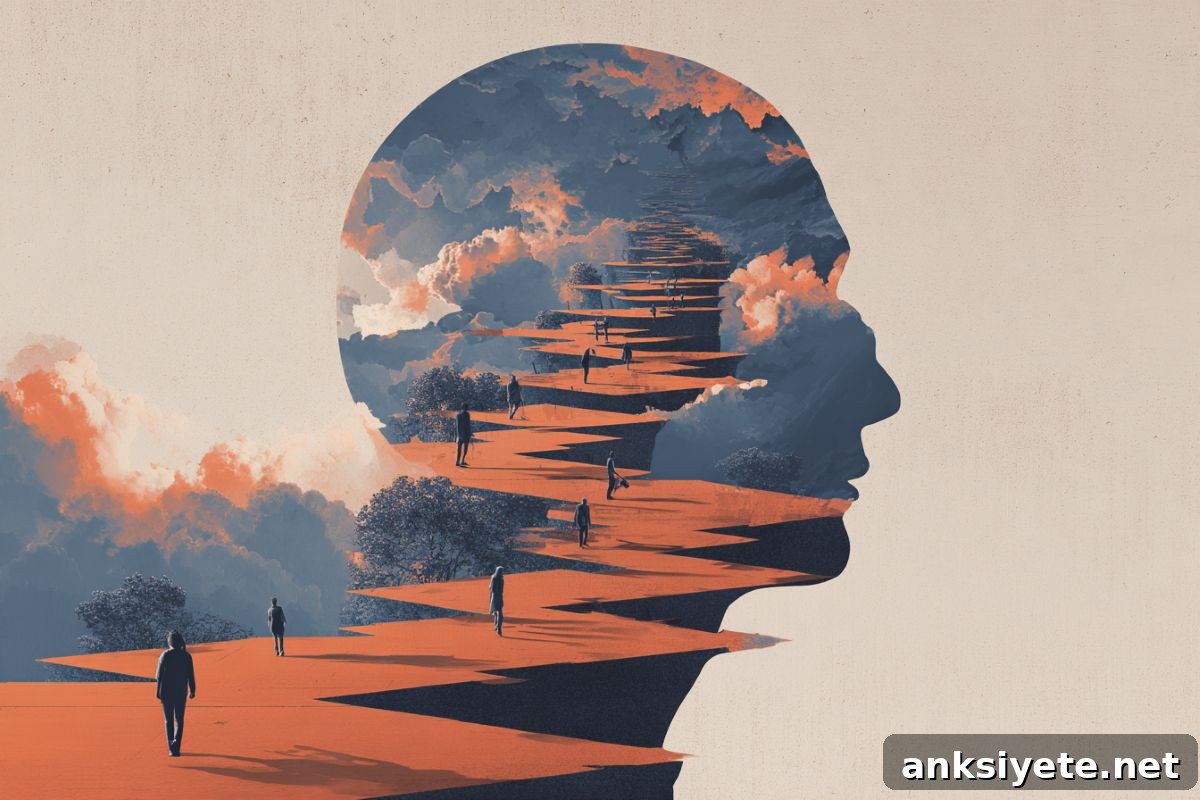
Summary: Why do some dreams feel like cinematic masterpieces while others come across as fragmented noise? A large-scale computational study has decoded the semantic structure of thousands of dream reports and found that dreams are neither purely random nor simple replays of daily events.
Using advanced natural language processing (NLP) and large-scale text analysis, researchers show that dreams are a sophisticated reinterpretation of waking life. Dream content reflects stable personal traits such as mind-wandering tendency and attitudes toward dreaming, cognitive habits, sleep quality, and even widespread social experiences like the COVID-19 pandemic.
Key Facts
- Reinterpretation over Replay: The brain rarely replays daily life exactly as it happened. Instead, it extracts fragments—scenes from work, school, or healthcare settings—and reorganizes them into immersive, often surreal landscapes.
- Link to Mind-Wandering: People who frequently daydream or mind-wander during waking hours tend to report dreams that are more fragmented, rapidly shifting, and less linear.
- Dream Belief and Vividness: Individuals who consider dreams meaningful and pay attention to them experience richer, more perceptually vivid dream imagery, suggesting that attitude toward dreams influences how the brain constructs them.
- Societal Echoes in Dreams: Dream reports collected during the 2020 COVID-19 lockdowns featured themes of constraint and heightened emotional intensity; these pandemic-related markers declined over time as people adapted psychologically.
- AI as a Scalable Interpreter: NLP models matched human evaluators in identifying emotional and thematic patterns in dream reports, enabling rapid, large-scale analysis of subconscious content.
Source: IMT
What makes some dreams vivid and immersive while others feel obscure or fleeting?
A multidisciplinary team from the IMT School for Advanced Studies Lucca combined computational linguistics, psychometrics, and sleep science to investigate how personal traits and shared experiences shape dream content. The researchers analyzed thousands of reports of dreams and waking experiences collected across multiple studies, using state-of-the-art NLP to quantify the semantic patterns that distinguish dreams from waking narratives.
Participants supplied daily entries recording dreams and waking experiences alongside detailed information about sleep habits, cognitive style, personality traits, and psychological measures. By examining the language people used to describe both waking life and dreams, the research revealed systematic transformations: waking, self-referential, thought-centered narratives tend to become perceptual, visually rich, and character-driven in dreams.
Rather than verbatim replay, daily occurrences are recomposed. Office scenes, classrooms, and clinical settings do not reappear unchanged; they are blended, shifted in perspective, and placed into unfamiliar or surreal contexts. These recombinations often create vivid scenarios with strong visuo-spatial detail, multiple characters, and unexpected events—qualities that distinguish dream semantics from typical waking reports.
Individual differences matter. People with high mind-wandering propensity report more fragmented and dynamically changing dream sequences. Those who value dreams and pay attention to them—what the study terms “dream interest” or belief in the significance of dreaming—tend to experience more immersive perceptual content. Subjective sleep quality and other stable traits also selectively influence which features dominate dream reports.
To examine the impact of a widespread external stressor, the team compared reports gathered during the early COVID-19 lockdown with data collected later. Lockdown-era dreams contained more references to constraints, limitations, and elevated emotional intensity, patterns that diminished over subsequent months and years as people psychologically adapted to the changing circumstances.
Lead author Valentina Elce of IMT explains: “Dreams are not simple echoes of our experiences. They are an active, dynamic process that reorganizes fragments of waking life in ways shaped by who we are and what we go through. Combining large datasets with computational tools let us detect subtle, systematic patterns that were previously hard to quantify.”
The study also demonstrates the growing role of artificial intelligence in consciousness and dream research. NLP models can capture the semantic structure and emotional tone of dream reports with accuracy comparable to trained human raters, enabling reproducible, scalable investigations into memory, emotion regulation, and mental health.
Funding: This research was supported by a grant from the BIAL Foundation (#091/2020) and by the TweakDreams ERC Starting Grant (#948891). The work was conducted at the IMT School for Advanced Studies Lucca in collaboration with colleagues at Sapienza University of Rome and the University of Camerino.
Key Questions Answered:
A: Not necessarily. The study shows that work often appears as a fragment the brain uses to build a dream. If your office is transformed into an unfamiliar or surreal landscape, that reflects the brain’s tendency to reinterpret events rather than replay them exactly. If an office scene repeats unchanged, it may indicate less of the usual surreal processing that helps emotional adaptation.
A: It may relate to your level of interest in dreams. People who consider dreams important and attend to them tend to report richer, more immersive dream content—likely because cognitive resources are allocated differently when dreams are valued.
A: Yes. Modern NLP does more than match keywords; it analyzes semantic relationships—how ideas and emotions connect. The models used here identified emotional and thematic patterns that align with human expert judgments, and they can scale this analysis to thousands of reports quickly.
Editorial Notes:
- This article was edited by a Neuroscience News editor.
- The journal paper was reviewed in full for accuracy.
- Additional context was added by editorial staff.
About this AI and dream research news
Author: Chiara Palmerini
Source: IMT
Contact: Chiara Palmerini – IMT
Image: Image credited to Neuroscience News
Original Research: Open access. “Individual traits and experiences predict the content of dreams” by Valentina Elce, Giorgia Bontempi, Serena Scarpelli, Bianca Pedreschi, Pietro Pietrini, Luigi De Gennaro, Michele Bellesi, Giulio Bernardi & Giacomo Handjaras. Communications Psychology. DOI: 10.1038/s44271-026-00447-2
Abstract
Individual traits and experiences predict the content of dreams
Dreams are universal yet highly personal experiences. While memory and daily concerns influence dream content, how these influences change over time and how stable individual traits shape dreaming have been less clear. The researchers quantified the semantic structure of thousands of dream and waking reports alongside demographic, cognitive, psychometric, and sleep measures, using a combination of hypothesis-driven, model-assisted evaluation and data-driven lexical analysis.
Compared with waking reports, dreams shift from self-referential, thought-centered narratives toward perceptual experiences dominated by visuo-spatial detail, multiple characters, and bizarre events. Stable traits—such as belief in the value of dreams, propensity to mind-wander, and subjective sleep quality—selectively modulate dream features. Analysis of an independent dataset collected during the 2020 COVID-19 lockdown showed increased references to limitations and heightened emotional intensity in dreams, with these effects gradually normalizing in later years.
Overall, the results show that both stable individual traits and transient experiences jointly shape dream semantics, and that computational approaches can reveal systematic patterns in how people construct dream imagery and narrative.