
Summary: Is the brain born as a blank slate (tabula rasa) or already richly connected (tabula plena)? New research indicates that, at least for the hippocampus—the region responsible for memory and spatial navigation—the brain begins life with abundant connectivity and then refines that circuitry through pruning.
The study shows that hippocampal networks are initially extremely dense and somewhat noisy right after birth. Development does not primarily add large numbers of new connections; instead, it removes and sharpens the early excess, sculpting an efficient and structured network that supports precise memory and information integration.
Key Facts
- The Pruning Model: Contrary to the idea that neural networks simply gain connections as learning proceeds, the CA3 region of the hippocampus becomes sparser over time. It begins saturated with connections and is then optimized by selective elimination.
- Exuberant Connectivity: In early postnatal days (P7–8 in mice) connections among CA3 neurons appear abundant and largely random. By adulthood (P45–50) the pattern is much more selective and organized.
- Integration Advantage: A richly connected starting point enables rapid linking of multiple sensory streams—visual, auditory, and olfactory—so information is available for association immediately. If the network began as a true blank slate, neurons would be too distant and unconnected to find each other efficiently.
- Precision Mapping: Using multicellular patch-clamp recordings combined with advanced microscopy and laser stimulation, researchers measured tiny electrical signals at identified synapses and showed that developmental thinning increases the specificity and computational power of the network.
Source: ISTA
Imagine a blank sheet of paper. You write on it, gradually creating structure and meaning—that is the tabula rasa idea. By contrast, a page already marked in many places requires adding, overwriting, or selectively erasing—this is tabula plena.
The tabula rasa versus tabula plena debate mirrors a central question in biology and neuroscience: to what extent are circuits preconfigured by genetic programs, and how much do experience and activity shape them afterward?
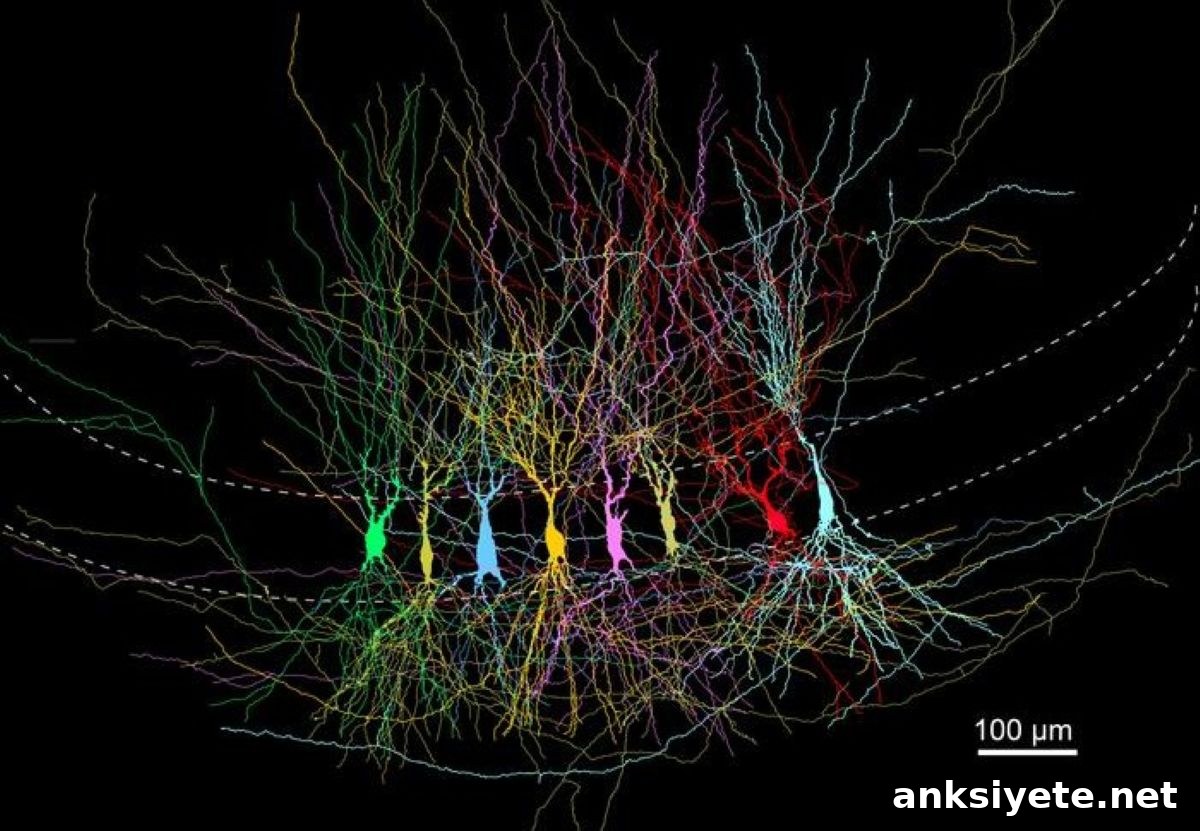
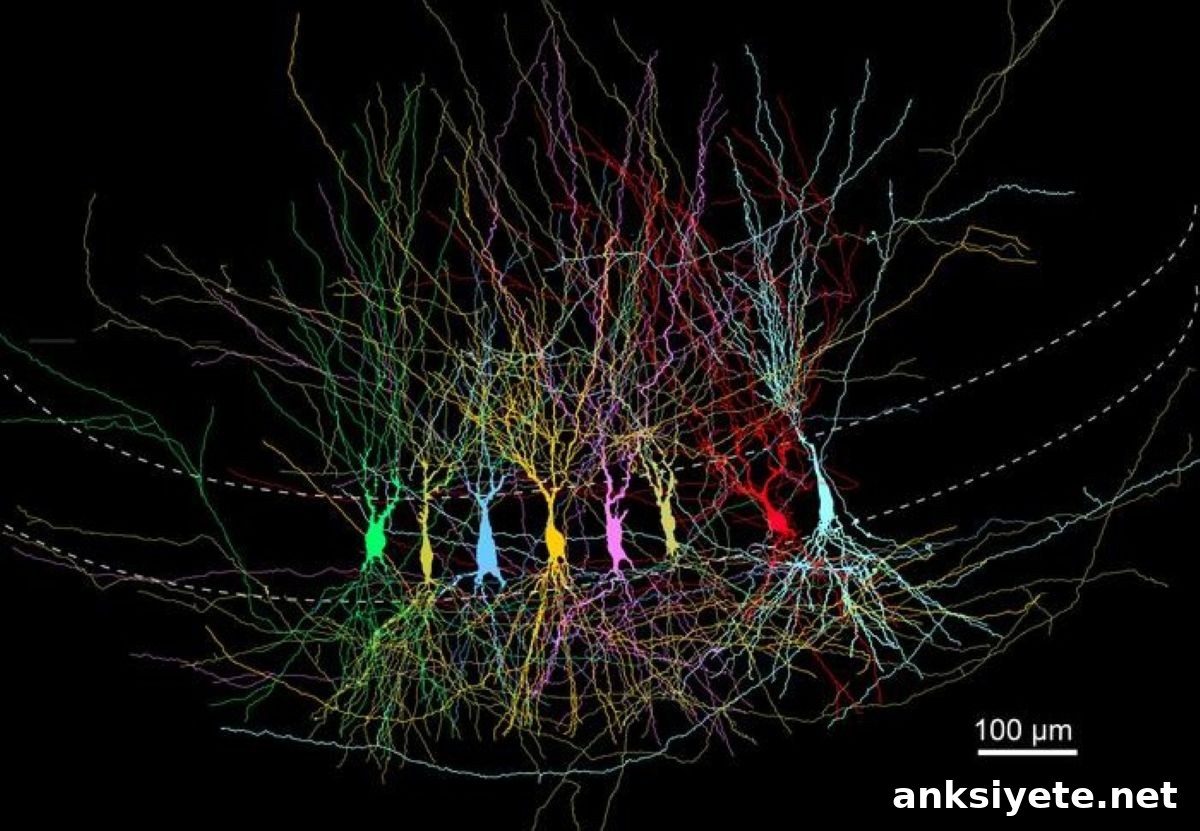
Researchers in the Jonas group at the Institute of Science and Technology Austria (ISTA) set out to test these alternatives for the hippocampal CA3 network, a central autoassociative circuit involved in memory storage and recall. Their goal was to determine whether CA3–CA3 recurrent connectivity is largely hardwired from birth or shaped progressively by experience.
First more, then less
The team examined CA3 pyramidal neurons across development in mice at three time points: early postnatal (P7–8), juvenile/adolescent (P18–25), and adult (P45–50). Using multicellular patch-clamp recordings they mapped connectivity among up to eight CA3 neurons simultaneously, measuring small synaptic currents and the ability of individual synapses to drive postsynaptic firing. Complementary laser-based stimulation and high-resolution imaging allowed them to identify connections with spatial precision and to observe intracellular processes contributing to synaptic strength and organization.
Their findings reveal a clear developmental trajectory. At the earliest ages examined, CA3 connectivity is dense and appears largely random—many neurons are connected with others nearby. As development proceeds, this exuberant connectivity is reduced: the network becomes more spatially distributed, sparser, and highly structured. In parallel, single synapses are functionally adjusted so that isolated synaptic events are powerful early on, while later behavior depends on coordinated input from several synapses.
“We expected networks to build up over time,” says Peter Jonas. “Instead we observed an initial overabundance of connections that is sculpted into an efficient, specialized circuit. The network starts full and is refined by pruning.”
Why a full slate can be advantageous
One interpretation is that a richly connected initial state guarantees immediate capacity for association and integration across sensory modalities. The hippocampus must link sights, sounds, smells, and spatial cues quickly to support episodic memory formation and navigation. If neurons began isolated, many useful associations might fail to form because potential partners would be too distant or absent. An initial surplus of connections therefore offers flexibility: the brain can rapidly preserve useful links and remove redundant or maladaptive ones based on experience.
Key Questions Answered:
A: Not smarter. Early brains are highly connected but unrefined—like a block of marble with potential everywhere. Maturation sculpts those possibilities into a leaner, more functional architecture tailored to real-world demands.
A: It’s an adaptive strategy. Forming many initial connections ensures that organisms are ready to link the sensory and contextual features they encounter. Pruning is faster and more flexible than growing entirely new connections later when new demands arise.
A: Both matter. Genes appear to establish a “full slate” scaffold, while experience acts as the sculptor, reinforcing useful circuits and eliminating others. The final functional network emerges from the interaction of innate wiring and activity-dependent refinement.
Editorial Notes:
- This article was edited by a Neuroscience News editor.
- The journal paper was reviewed in full by the editorial team.
- Additional context and clarifications were added by staff writers.
About this memory and neuroscience research news
Author: Veronika Oleksyn
Source: ISTA
Contact: Veronika Oleksyn – ISTA
Image credit: Jose Guzman / Jonas group at ISTA
Original Research: Open access. “Developmental emergence of sparse and structured synaptic connectivity in the hippocampal CA3 memory circuit” by Victor Vargas-Barroso, Jake F. Watson, Andrea Navas-Olive, Alois Schlögl & Peter Jonas. Nature Communications. DOI: 10.1038/s41467-026-71914-x
Abstract
Developmental emergence of sparse and structured synaptic connectivity in the hippocampal CA3 memory circuit
Hippocampal CA3 pyramidal neurons form one of the largest autoassociative networks in the mammalian brain. Whether recurrent CA3–CA3 connectivity is largely predetermined by genetic programs or shaped progressively during memory formation has been unclear.
To address this, the authors performed multicellular patch-clamp circuit mapping of up to eight CA3 pyramidal neurons at multiple postnatal stages (P7–8, P18–25, and P45–50). The results demonstrate a developmental transition from dense, local, and seemingly random connectivity to a more distributed, sparse, and structured network architecture.
Concurrently, single-synapse strength is downregulated: early in development, single synaptic events can reliably trigger postsynaptic spikes, whereas later on several inputs must be summed spatially to achieve firing. Computational models inspired by Hebbian plasticity and pattern completion indicate that these developmental changes enhance specific aspects of memory storage and retrieval.
Overall, the findings suggest a developmental transformation of coding and memory functions in the hippocampal CA3 network, where an initially exuberant connectivity is refined into a specialized and efficient circuit through experience-dependent processes.