
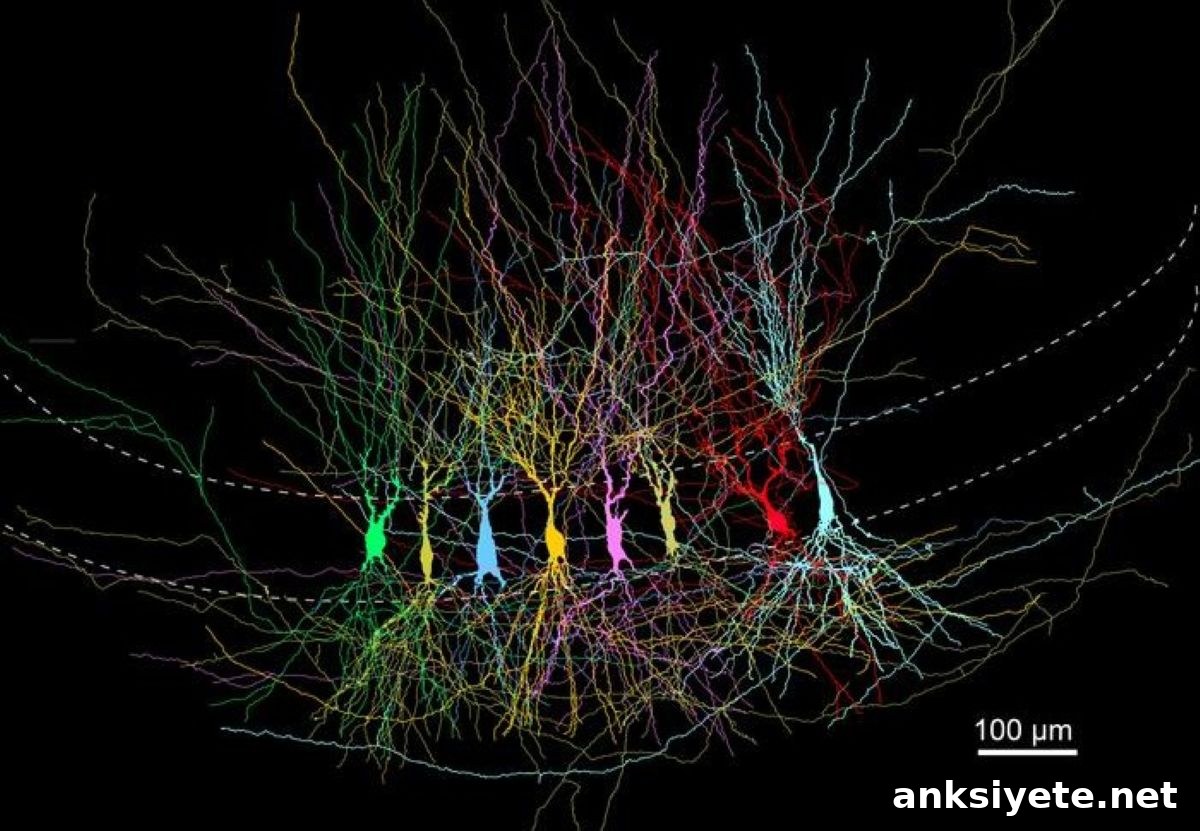
Summary: Does the brain begin life as a “blank slate” (tabula rasa) or as a “full slate” (tabula plena)? New findings show that, at least for the hippocampus — the brain’s center for memory and spatial navigation — development starts from a richly connected, noisy state that is later refined by pruning.
The research demonstrates that hippocampal networks are born extremely dense and disorganized. Throughout development the brain does not primarily build connections outward; instead it trims and sculpts an initial surplus of synapses into an efficient, well-organized network suited for memory and pattern completion.
Key Facts
- The Pruning Model: Contrary to the common intuition that neural circuits become denser as we learn, the CA3 hippocampal network follows an opposite course: it begins densely connected and is progressively pruned into a sparser, more optimized structure.
- Exuberant Connectivity: Early after birth (in mice, around days 7–8) CA3 neurons show highly abundant and apparently random connections. By adulthood (days 45–50), the network is far more selective and organized.
- Integration Benefit: A “full slate” early on permits rapid linking across sensory modalities — visual, auditory, olfactory — enabling the hippocampus to bind diverse information quickly. A true blank slate would leave neurons too distant to find and connect efficiently in time.
- Precision Measurements: Using multicellular patch-clamp recordings combined with high-resolution, laser-based microscopy, researchers measured electrical responses at single synapses and demonstrated that synaptic elimination, not growth, sharpens hippocampal function.
Source: ISTA
Imagine a blank sheet of paper before you, empty and ready for new marks. That is the essence of tabula rasa — a clean start that accumulates information over time.
Now imagine the sheet already crowded with marks. New input must find places to fit or overwrite what exists. That captures tabula plena — a starting state already rich with content.
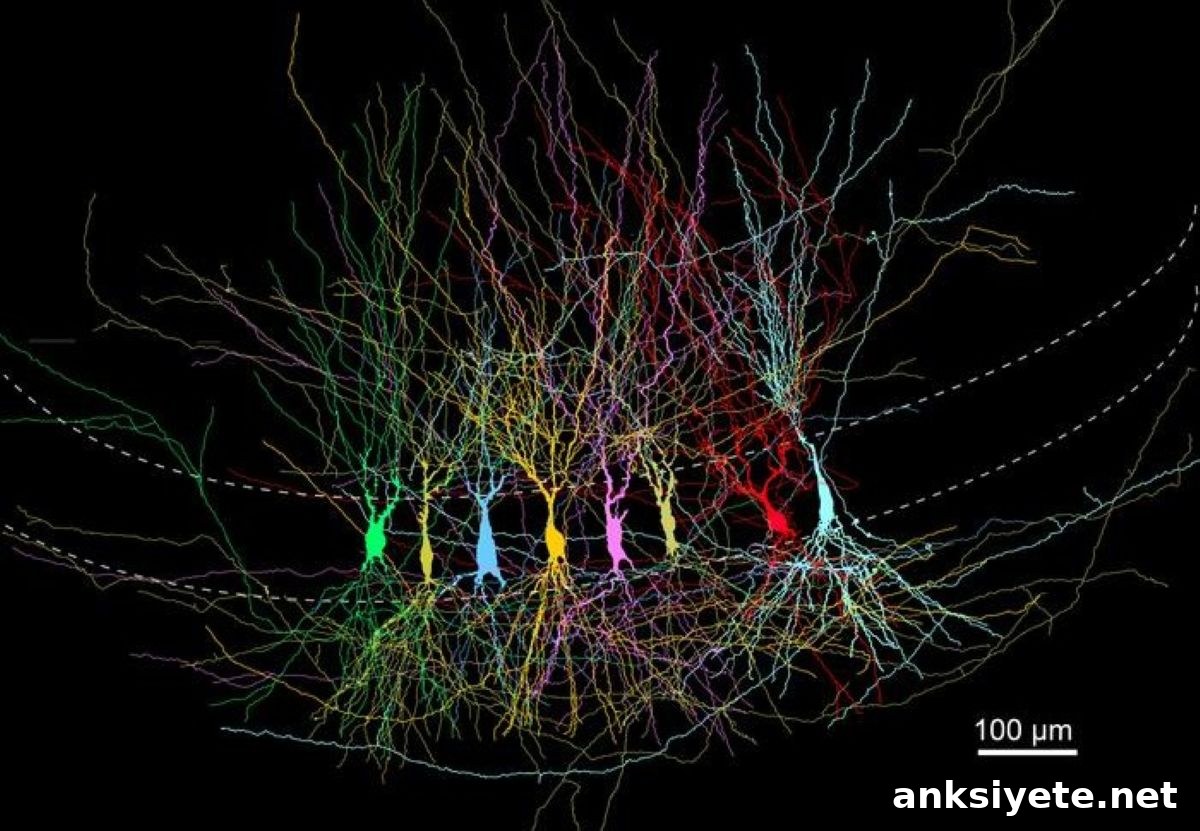
At stake is a classic question: how much of brain wiring is preset, and how much is shaped by experience? This study, led by the Jonas group at the Institute of Science and Technology Austria (ISTA), directly addresses that question in the hippocampus, a region essential for forming memories and guiding spatial behavior.
First more, then less
The team examined connectivity among CA3 pyramidal neurons, a key autoassociative network in the hippocampus that supports memory storage and retrieval through synaptic plasticity — the strengthening, weakening, and remodeling of synapses.
Victor Vargas-Barroso, an ISTA alumnus, mapped connections at three postnatal stages in mice: early postnatal (P7–8), juvenile/adolescent (P18–25), and adult (P45–50). The researchers used multicellular patch-clamp recordings to detect tiny electrical signals at presynaptic and postsynaptic sites and combined these recordings with laser-guided stimulation and high-resolution microscopy to resolve individual connections.
Their measurements reveal a clear developmental transformation: the immature CA3 network is densely and apparently randomly connected, while the mature network is sparser, more distributed, and highly structured. In parallel, single synapse strength declines: early in development, individual synaptic events can trigger spikes in the target neuron, whereas later on, multiple coincident inputs are required to elicit the same response.
“The pattern is surprising but consistent,” says Peter Jonas. “Instead of adding more connections with age, the hippocampus refines itself by removing many early links and preserving a subset that supports reliable memory functions.”
Why a full slate might be advantageous
The authors suggest that starting from an exuberant connectivity pattern guarantees that neurons are in the right vicinity to form useful links as sensory experience begins. This initial abundance enables immediate integration of multimodal inputs, which is essential for the hippocampus to bind sights, sounds, and smells into coherent memory traces.
If the network began with few or no connections, neurons would have to grow new processes long distances to find partners, delaying the formation of functional circuits. By contrast, pruning an existing surplus is a faster and more flexible strategy, allowing the environment to sculpt which connections persist.
Key Questions Answered:
A: Not necessarily smarter. Infants have an abundance of connections, but those connections are unrefined and inefficient. Maturation sculpts these links into specialized, reliable circuits suited to real-world tasks — like turning a block of marble into a detailed sculpture.
A: It’s an adaptive trade-off. Producing an initial surplus ensures the brain can connect relevant inputs from the outset, regardless of the environment. Pruning then eliminates unnecessary links, which is usually faster and more efficient than growing new ones when experience demands specific wiring.
A: It is a partnership. Genetic programs create a tabula plena that supplies a versatile starting network; environmental input acts as the sculptor, guiding which connections remain and which are removed to produce a functional adult circuit.
Editorial Notes:
- This article was edited by a neuroscience editor.
- The original journal paper was reviewed in full.
- Additional context was provided by the editorial staff.
About this memory and neuroscience research news
Author: Veronika Oleksyn
Source: ISTA
Contact: Veronika Oleksyn – ISTA
Image: Credit to Jose Guzman / Jonas group at ISTA
Original Research: Open access. Developmental emergence of sparse and structured synaptic connectivity in the hippocampal CA3 memory circuit by Victor Vargas-Barroso, Jake F. Watson, Andrea Navas-Olive, Alois Schlögl & Peter Jonas. Nature Communications. DOI: 10.1038/s41467-026-71914-x
Abstract
Developmental emergence of sparse and structured synaptic connectivity in the hippocampal CA3 memory circuit
Hippocampal CA3 pyramidal neurons form one of the largest autoassociative networks in the mammalian brain. It has been unclear whether CA3–CA3 recurrent connectivity is largely preconfigured by genetic programs or shaped by experience during memory formation.
To investigate, the researchers performed multicellular patch-clamp circuit mapping of up to eight CA3 pyramidal neurons in mouse hippocampus at three postnatal stages (P7–8, P18–25, and P45–50).
They found that the CA3 network shifts during development from dense, local, and apparently random connectivity to a distributed, sparse, and structured organization. Concurrently, the efficacy of single synapses is downregulated: early in development single synaptic events can drive postsynaptic spiking, whereas at later stages spatial summation of several inputs is required.
Modeling based on Hebbian synaptic plasticity and pattern completion indicates these developmental changes enhance specific aspects of memory storage and retrieval. Overall, the findings point to a developmental transformation of the neuronal code and memory functions within the hippocampal CA3 circuit.