
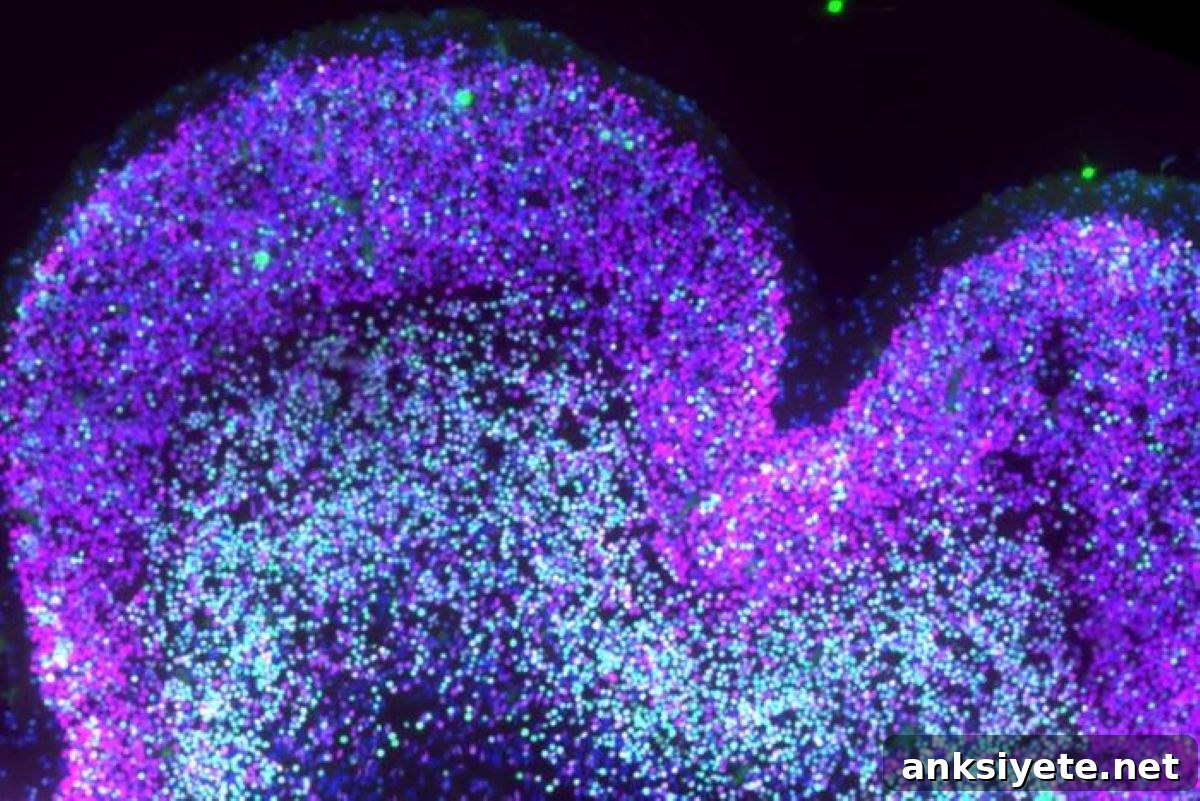
Summary: Researchers have produced the first cellular-resolution molecular map of how Down syndrome affects human brain development during the critical prenatal period. By profiling more than 100,000 nuclei, the team resolved discrepancies from prior model-based studies and identified a clear developmental mechanism that helps explain characteristic differences in brain size and cognition.
The study shows that Down syndrome disrupts the tightly timed sequence of cortical development: instead of progenitor (stem) cells expanding sufficiently before making neurons, many progenitors prematurely commit to neuronal fates. This exhausts the progenitor pool and alters the balance of neuron types, offering a new explanation for reduced brain volume and distinct cognitive features associated with Down syndrome.
Key facts
- Premature differentiation: In healthy development, progenitor cells replicate to build a large pool before differentiating. In Down syndrome, many progenitors differentiate too early, shrinking the foundational cell pool.
- Neuron-type imbalance: The premature shift produces relatively more upper-layer intratelencephalic (IT) neurons, which mediate cortical and interhemispheric connections, and fewer deep-layer corticothalamic (CT) neurons, which connect the cortex with subcortical structures and the spinal cord.
- Systems-level changes: Multi-omic analysis revealed altered metabolic programs and changes in neurovascular interactions that likely accelerate neurogenesis and contribute to the altered cell composition.
- Overlap with other disorders: Many disrupted gene-regulatory networks overlap with genetic risk factors for autism, epilepsy, and developmental delay, suggesting Down syndrome can illuminate mechanisms shared across neurodevelopmental and neuropsychiatric conditions.
Source: UCLA
UCLA scientists have created one of the first cellular-scale molecular atlases of the prenatal human neocortex in Down syndrome, providing a high-resolution resource that clarifies previous contradictions and points toward future therapeutic directions.
Published in Science, the study profiled over 100,000 nuclei from human prenatal neocortex samples collected from 26 pre-genotyped donors between gestational weeks 13 and 23 — the critical window when essentially all cortical neurons are generated for a lifetime.
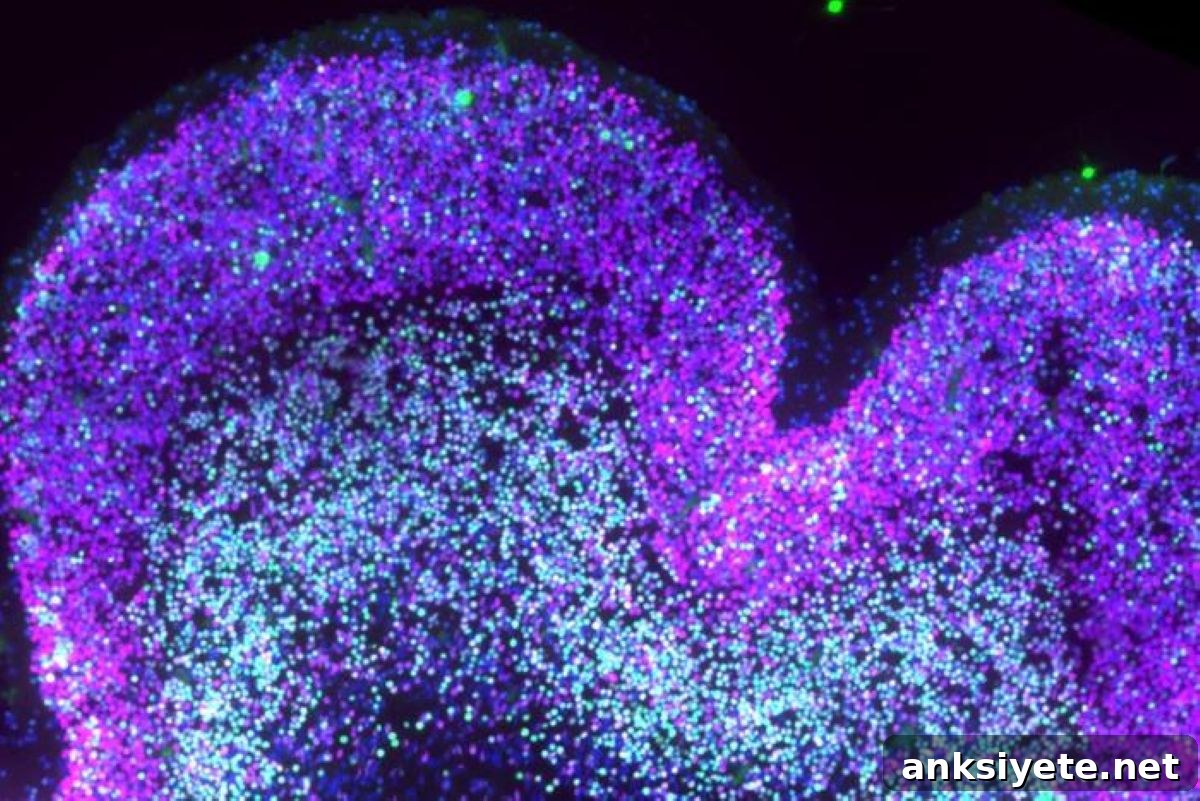
The results indicate that the developmental program that times progenitor expansion and neuronal differentiation is disrupted in Down syndrome, producing changes that likely influence learning, sensory processing, and cognition later in life.
“This dataset provides a level of detail that didn’t exist before,” said Luis de la Torre-Ubieta, the study’s senior author and a member of the Eli and Edythe Broad Center of Regenerative Medicine and Stem Cell Research at UCLA. “For the first time, we can systematically examine how the developing brain in Down syndrome differs at the single-cell level.”
Filling a critical gap
Historically, Down syndrome research has emphasized adult brain changes and the link to neurodegeneration; most individuals with Down syndrome develop Alzheimer’s disease by their 60s. However, the condition shows clear developmental signals — smaller brain volumes detectable by MRI and cognitive differences emerging within the first year — that have been less well characterized at the cellular and molecular level in humans.
Prior work relied heavily on mouse models and in vitro systems, which do not fully replicate human corticogenesis and have produced mixed results. Direct single-cell analysis of human prenatal tissue provides a much-needed reference standard for understanding early developmental mechanisms in Down syndrome.
A disrupted developmental sequence and its impact on brain size
Normal neocortical development follows a carefully timed sequence: progenitors expand through repeated divisions to build a progenitor pool, then begin differentiating into neurons in a defined order, producing deep-layer neurons first and upper-layer neurons later. The UCLA study found that in trisomy 21 this sequence is accelerated. Progenitors commit earlier to neuronal fates, reducing the progenitor reservoir and biasing newly born neurons toward upper-layer IT identities while reducing deep-layer CT neurons.
Because CT and IT neurons serve distinct circuits — CT neurons link cortex to subcortical targets and the spinal cord for sensation and movement, while IT neurons connect cortical areas and hemispheres for integrative processing — this shift could help explain characteristic cognitive and sensorimotor profiles in Down syndrome. Importantly, the study found less evidence for widespread neuronal death, suggesting that smaller brain size largely reflects progenitor depletion rather than massive cell loss.
A systems-level view of a systems-level disorder
Using paired single-nucleus multi-omics, the researchers measured both gene expression and chromatin accessibility in the same cells. Chromatin accessibility identifies regulatory DNA regions that control gene activity, enabling reconstruction of the regulatory programs that guide cell fate. This approach revealed broad dysregulation of proliferative and metabolic pathways that maintain progenitor pools and uncovered aberrant activation of gene programs that favor IT fate.
The multiomic data also indicated changes in the neurovascular niche and early microglial activation, pointing to intercellular and metabolic influences on neurogenesis that could accelerate neuronal differentiation in trisomy 21.
Implications beyond Down syndrome
The authors tested how the molecular disruptions in Down syndrome overlap with genetic signatures linked to autism, epilepsy, and developmental delay. They observed substantial convergence, especially in gene-regulatory networks that control the specification of IT versus CT neurons. These shared pathways suggest that insights from Down syndrome could inform broader mechanisms underlying intellectual disability and neuropsychiatric disorders.
“Down syndrome may serve as a model to uncover shared biology across disorders with cognitive impairment,” said de la Torre-Ubieta. “Understanding these early developmental differences helps reveal vulnerabilities that persist across the lifespan.”
Two papers, one continuous story
This publication appears alongside a companion paper from the University of Wisconsin–Madison that examines postnatal brain development in Down syndrome between roughly one and five years of age. Preliminary comparisons show that many prenatal changes observed by the UCLA team persist into early childhood, together providing a continuous molecular view of Down syndrome brain development from mid-gestation through infancy.
A foundation for future therapies
While the results do not indicate an immediate clinical treatment, they supply the clearest picture yet of the cellular and molecular events that distinguish the developing Down syndrome brain and identify candidate pathways for future intervention. The data reveal transcription factors and regulatory programs — including a chromosome 21–encoded factor, BACH1 — that drive pro‑IT programs and could be targeted by future therapies or gene modulation strategies to restore more typical developmental timing.
The study was led by Celine K. Vuong and Alexis Weber, with contributions from a multidisciplinary team at UCLA and collaborators. Funding came from multiple NIH institutes, the UCLA Broad Stem Cell Research Center, the California Institute for Regenerative Medicine, and other sources.
Key Questions Answered:
A: Mouse brain development differs significantly from human corticogenesis, and in vitro systems do not replicate the full array of human brain cell types and tissues. This study analyzed actual human prenatal samples during the precise 10-week window (gestational weeks 13–23) when cortical neurons are generated, creating a human-specific reference for the field.
A: The study focuses on early development and provides foundational data about how neural circuits are initially built. These early differences may contribute to vulnerabilities that increase risk for neurodegeneration and Alzheimer’s later in life, but direct causal links require further study.
A: Researchers are cautious. By identifying molecular “drivers” that accelerate progenitor differentiation, the study points to potential targets for future drugs or gene-based interventions that might correct developmental timing, but translation to clinical therapies will require extensive additional research.
Editorial Notes:
- This article was edited by a Neuroscience News editor.
- The journal paper was reviewed in full by the editorial team.
- Additional context was added by editorial staff.
About this neurodevelopment and Down syndrome research news
Author: Ani Vahradyan
Source: UCLA
Contact: Ani Vahradyan – UCLA
Image: Image credit: de la Torre-Ubieta Lab
Original Research: Closed access.
Title: A single-cell multiomic analysis identifies molecular and gene-regulatory mechanisms dysregulated in developing Down syndrome neocortex.
DOI: 10.1126/science.aea1259
Abstract
A single-cell multiomic analysis identifies molecular and gene-regulatory mechanisms dysregulated in developing Down syndrome neocortex
INTRODUCTION
Down syndrome (DS), caused by triplication of human chromosome 21 (Ts21), is the most common genetic cause of intellectual disability. Individuals with DS show deficits in learning, memory, and attention, delayed language and motor development, and atypical sensory processing. Early structural abnormalities in the neocortex and early cognitive differences suggest corticogenesis is altered in DS, yet the precise molecular and cellular mechanisms remain incompletely defined.
RATIONALE
The human brain develops through precisely timed molecular programs that control cell-type specific gene expression. Animal and in vitro models only partially capture these processes. To address this gap, the authors applied paired single-nucleus multiomics — measuring both gene expression and chromatin accessibility — to control and Ts21 human neocortex samples during peak neurogenesis to map cellular composition and regulatory mechanisms disrupted in DS.
RESULTS
The team profiled neocortex from 26 donors (control and Ts21) spanning gestational weeks 13–23, capturing gene expression and open chromatin across roughly 113,000 nuclei. They identified altered cell composition in Ts21, including fewer progenitors and mis-specified excitatory neurons. Neurogenesis was accelerated, with newborn neurons biased toward upper-layer IT identities at the expense of deep-layer CT neurons.
Systematic analysis of gene expression and coexpression networks revealed widespread dysregulation in proliferative and metabolic pathways that maintain the progenitor pool, along with ectopic activation of pro‑IT programs in newborn and deep-layer neurons. These cellular and molecular changes were recapitulated in primary human neural progenitor cells derived from control and Ts21 donors. Intercellular interaction analyses showed proneurogenic signals in the neurovascular niche and early microglial activation. Integrating gene expression with chromatin accessibility identified gene-regulatory networks and transcription factors — including the chromosome 21–encoded BACH1 — that activate pro‑IT programs.
Comparative analyses revealed shared molecular mechanisms between DS and other neurodevelopmental and psychiatric disorders, with deep-layer neuron specification programs emerging as a common vulnerability point.
CONCLUSION
This study maps the neurodevelopmental changes in Ts21 neocortex and defines the gene-regulatory mechanisms that drive them. The findings clarify early events leading to Down syndrome and provide a foundational resource to guide future therapeutic research.