
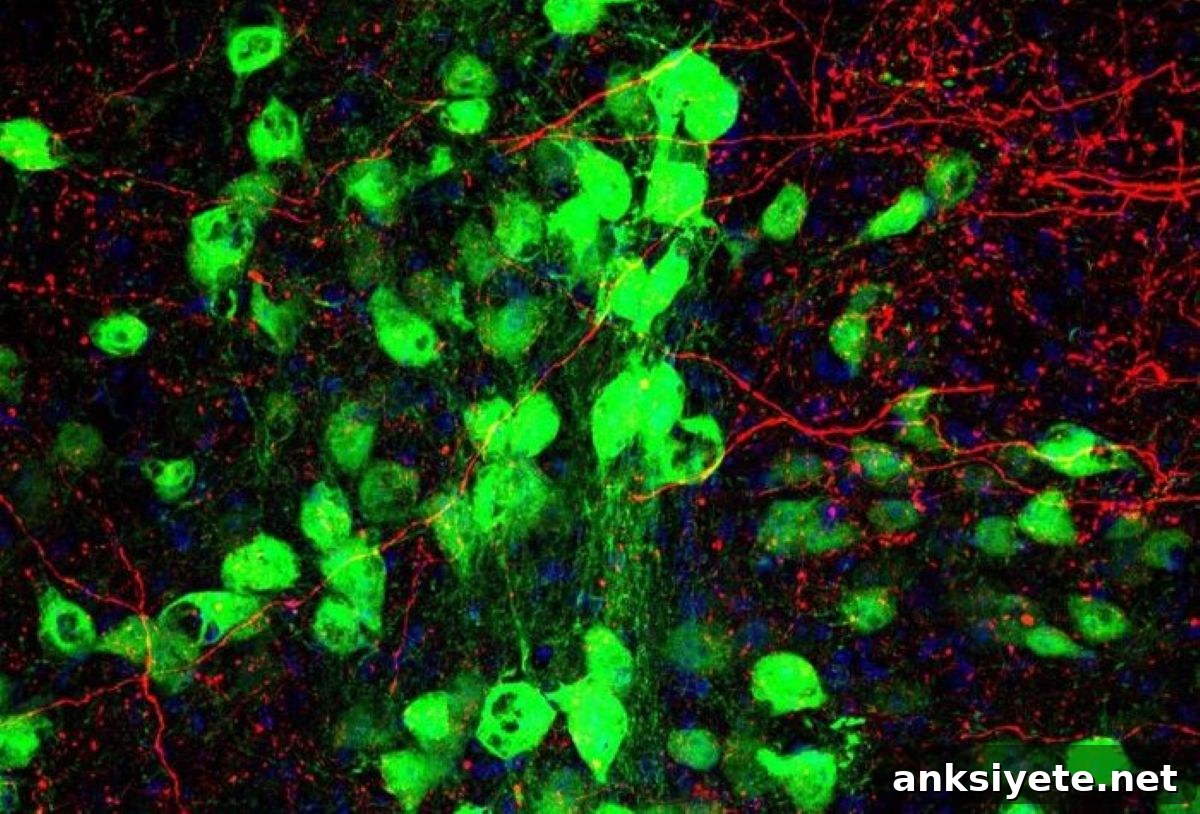
Summary: While motor tics have long been associated with dysfunction in the brain’s motor cortex, the emotional and sensory features of Tourette syndrome have been less well understood. A research team has now identified a neural pathway that links movement and emotion centers in the brain, offering a biological explanation for how motor dysfunction can spread to affect internal sensation and emotional processing.
The study maps a circuit running from the motor cortex through an intralaminar thalamic relay to the insular cortex. This pathway clarifies how abnormal motor signals can influence emotional awareness and sensory urges, shedding light on the combined presence of tics, premonitory sensations, and psychiatric comorbidities such as OCD and ADHD in people with Tourette syndrome.
Key Facts
- The insular connection: Scientists identified a specific neuronal route linking the motor cortex (movement control) to the insular cortex (emotion and internal awareness) via an intralaminar thalamic relay.
- Reducing tic intensity: In mice, inhibiting this thalamo-insular pathway significantly reduced the strength or intensity of motor tics without changing their frequency.
- Explaining co-occurrence: This bridge between motor and limbic regions helps explain why Tourette syndrome often coexists with obsessive-compulsive disorder, attention deficit hyperactivity disorder, and the sensory “premonitory urge” many patients report.
- Potential non-invasive therapy: The pathway provides a specific target for less invasive interventions such as ultrasound neuromodulation, which could offer an alternative to invasive deep brain stimulation.
Source: Kobe University
Background
Tourette syndrome and other tic disorders are common neuropsychiatric conditions that can profoundly affect children and adolescents. Although researchers have long recognized abnormal circuitry in the motor cortex as a driver of motor tics, the mechanisms linking those motor disturbances to emotional and sensory symptoms were unclear. Clinical imaging studies have reported atypical activity in the insular cortex of people with tic disorders, implicating that region in the condition’s broader symptom profile, but the anatomical and functional connections between motor areas and the insula were not well defined.
New findings and experimental approach
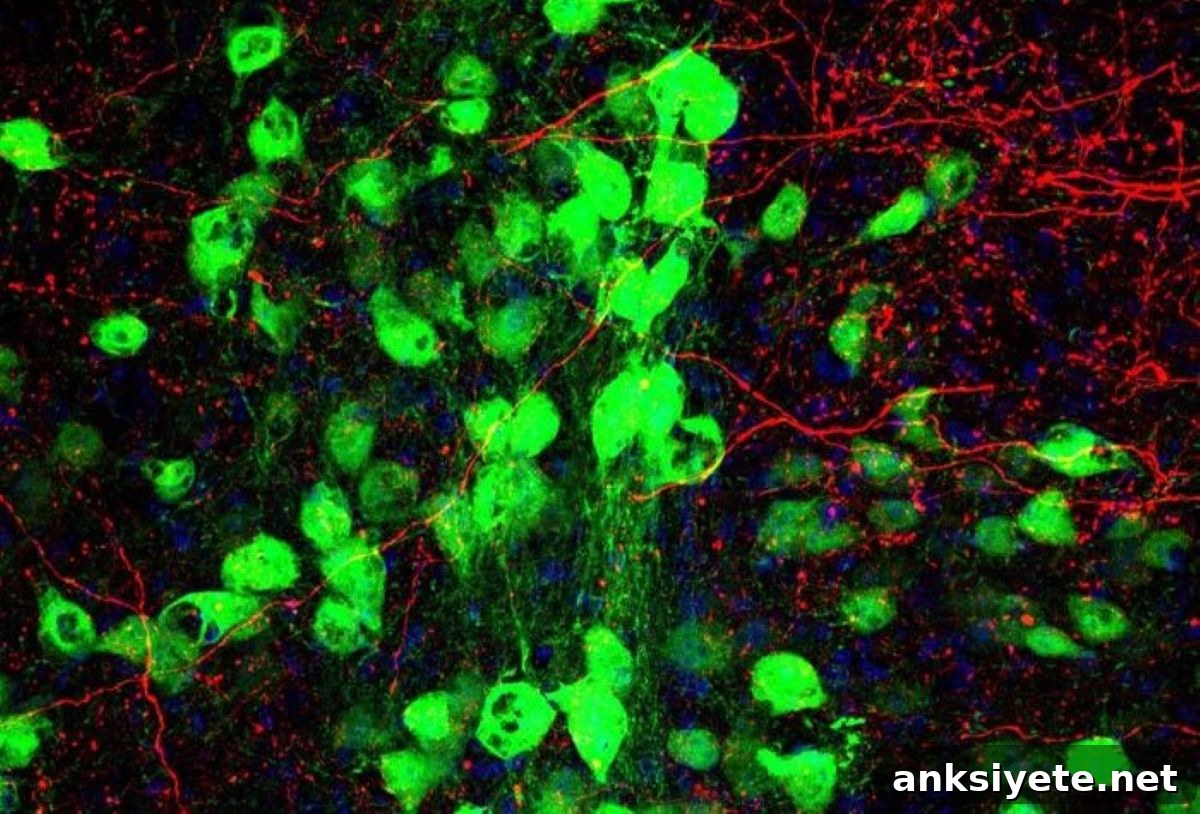
The researchers used a mouse model in which tic-like movements were induced by unilateral injection of a GABA(A) receptor antagonist into the striatum. This manipulation triggered c-Fos activation—a marker of neural activity—in both motor and limbic regions, including the insular cortex. Fiber photometry in behaving animals revealed tic-associated neural activity in both the primary motor cortex (M1) and the insular cortex (IC). Viral tracing experiments showed that outputs from basal ganglia nuclei reach the insula through intralaminar thalamic nuclei (ITN).
Crucially, chemogenetic inhibition of either the insular cortex itself or the thalamo-insular pathway reduced the intensity of tic-like behaviors and lowered tic-associated cortical activity. These results point to the insular cortex as a key node in the circuit that amplifies motor output into conscious sensory urges and emotional responses, while the intralaminar thalamus acts as a relay linking motor and limbic systems.
Implications for understanding and treating Tourette syndrome
The study supports the view that motor tics likely originate from abnormal activity in motor circuits, but it demonstrates how that dysfunction can propagate to emotional and interoceptive centers, producing the distinctive blend of sensory urges and psychiatric symptoms seen in Tourette syndrome. Identifying the intralaminar thalamus and the thalamo-insular pathway as functional relays provides a mechanistic explanation for why stimulating those thalamic regions has sometimes benefited patients with deep brain stimulation, even when the rationale was previously unclear.
From a therapeutic perspective, the circuit-level target may enable development of less invasive treatments. Deep brain stimulation is effective for some patients but is invasive and carries surgical risks. Non-invasive neuromodulation approaches that specifically target the identified relay—such as focused ultrasound neuromodulation—could offer safer alternatives that modulate the same circuit dynamics without brain surgery.
Funding
This research was supported by the Japan Society for the Promotion of Science (grants 18K06852, 22K19732, 24H00422, 24K02339, 24H00620), the Taiju Life Social Welfare Foundation, and the Japan Agency for Medical Research and Development (grant JP23wm0625001). The work was conducted in collaboration with researchers from the National Institute for Physiological Sciences and the Graduate University for Advanced Studies (SOKENDAI).
Key Questions Answered
Q: Why does a dental mouthguard help some people with Tourette’s?
A: Jaw and oral muscle movements generate sensory signals that feed back to the brain. This research suggests those signals reach the insular cortex and influence the circuit connecting movement and emotion. Altering sensory input with a mouthguard can change that feedback loop, reducing the amplification of tic-related sensations.
Q: Is the insular cortex the “source” of tics?
A: No. The motor cortex remains the likely generator of tics. The insular cortex appears to act as an amplifier that increases the perceived strength of tics and links them to emotional and cognitive symptoms, making the sensations more intrusive.
Q: How soon could ultrasound neuromodulation be available?
A: With the relay station identified, researchers can pursue targeted human trials to test whether focused ultrasound or similar non-invasive methods can modulate the circuit and reduce tic severity. Such research is a priority because it could offer a safer alternative to surgical deep brain stimulation.
Editorial Notes
- This article was edited by a Neuroscience News editor.
- The journal paper was reviewed in full by staff.
- Additional context was added by the editorial team.
About this research and reporting
Author: Daniel Schenz
Source: Kobe University
Contact: Daniel Schenz – Kobe University
Image credit: H. Kuno et al., Cell Reports
Original research (open access):
“Intralaminar thalamus relays basal ganglia output to the insular cortex to drive tic generation” by Hiroto Kuno, Natsumi Tsuji, Kenta Kobayashi, Toru Takumi, and Yoshihisa Tachibana. Cell Reports. DOI: 10.1016/j.celrep.2026.117272
Abstract
Intralaminar thalamus relays basal ganglia output to the insular cortex to drive tic generation
Motor and vocal tics accompanied by premonitory urges are hallmark symptoms of Tourette syndrome, yet the neuronal mechanisms remain incompletely understood. The authors developed a mouse model of tic-like movements by unilateral striatal injection of a GABA(A) receptor antagonist. This model produced c-Fos activation in motor and limbic structures, including the insular cortex. Fiber photometry detected tic-associated activity in both the primary motor cortex and the insular cortex. Viral tracing showed that basal ganglia output from the substantia nigra pars reticulata is transmitted to the insular cortex via intralaminar thalamic nuclei. Chemogenetic inhibition of the insular cortex or the thalamo-insular pathway suppressed tic-like behaviors and reduced tic-associated cortical activity. These findings identify the insular cortex as a node involved in tic generation and highlight the intralaminar thalamus as a relay linking motor and limbic circuits. Aberrant thalamo-insular signaling may contribute to tic-related pathophysiology and represents a potential circuit-level therapeutic target.